Pinanga simplicifrons
(Miq.) Becc.
iNaturalist· cc-by-nc-nd
(c) loupok, some rights reserved (CC BY-NC-ND)
Description
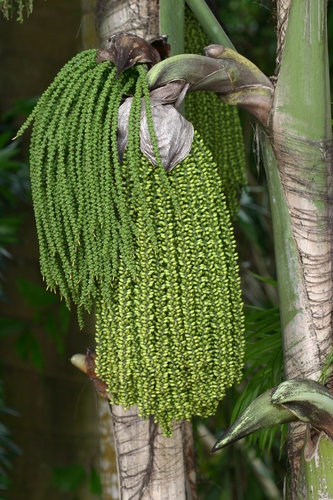
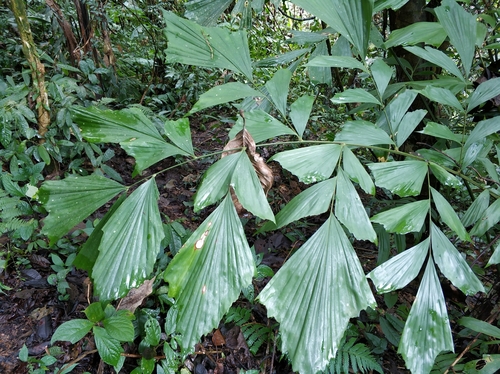
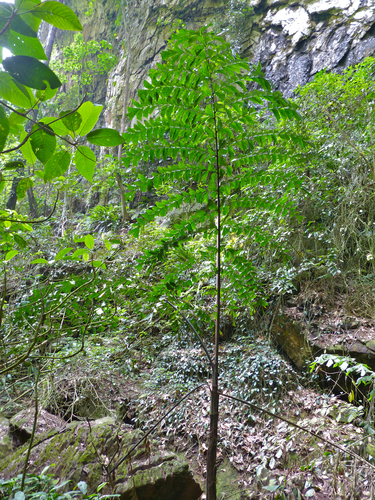
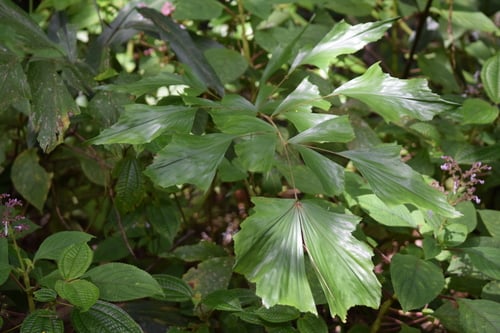
A palm. It grows 1.5 m tall. The stems are very slender and wave from side to side. They are 1.3 m tall and 1.3 cm wide. The palm forms spreading clumps about 1 m tall. There is a loose, poorly developed crown-shaft along the upper side of the stem. The leaves are simple and undivided. They are 30 cm long. They are oblong in shape and with a deep fork at the tip. They are scattered along the stem. The fruiting stalk is inside the sheath on the stem. The fruit are small and scarlet. They are horn shaped. The fruit are 1.3 cm long.
Edible Uses
The nuts are sometimes used as a betel substitute and are chewed as a masticatory.
Traditional Uses
Nut sometimes used as a betel substitute.
This uses section is brief — help expand it
Distribution
A tropical plant. It grows naturally in Malaysian lowland rainforest along the flooded plains of streams. It needs a shady location.
Where It Grows
Asia, Australia, Brunei, Indochina, Indonesia, Malaysia, Myanmar, SE Asia, Thailand,
Cultivation
Plants can be grown from seed, suckers or aerial layers.
Propagation
Seed - Division of new growths at the base
Other Uses
The leaves are used for thatching. The tough outer portions of the stems are used as laths.
References (3)
- Johnson, D.V., 1998, Tropical palms. Non-wood Forest products 10. FAO Rome. p 48
- Jones, D.L., 2000, Palms of Australia 3rd edition. Reed/New Holland. p 206
- Riffle, R.L. & Craft, P., 2003, An Encyclopedia of Cultivated Palms. Timber Press. p 416