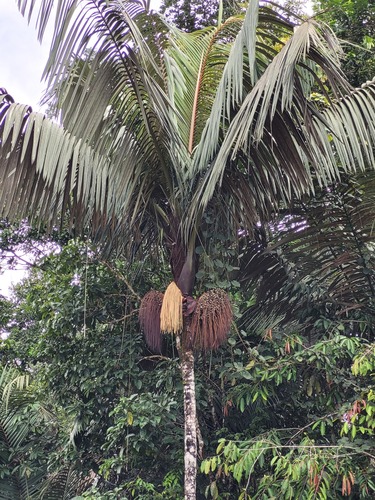
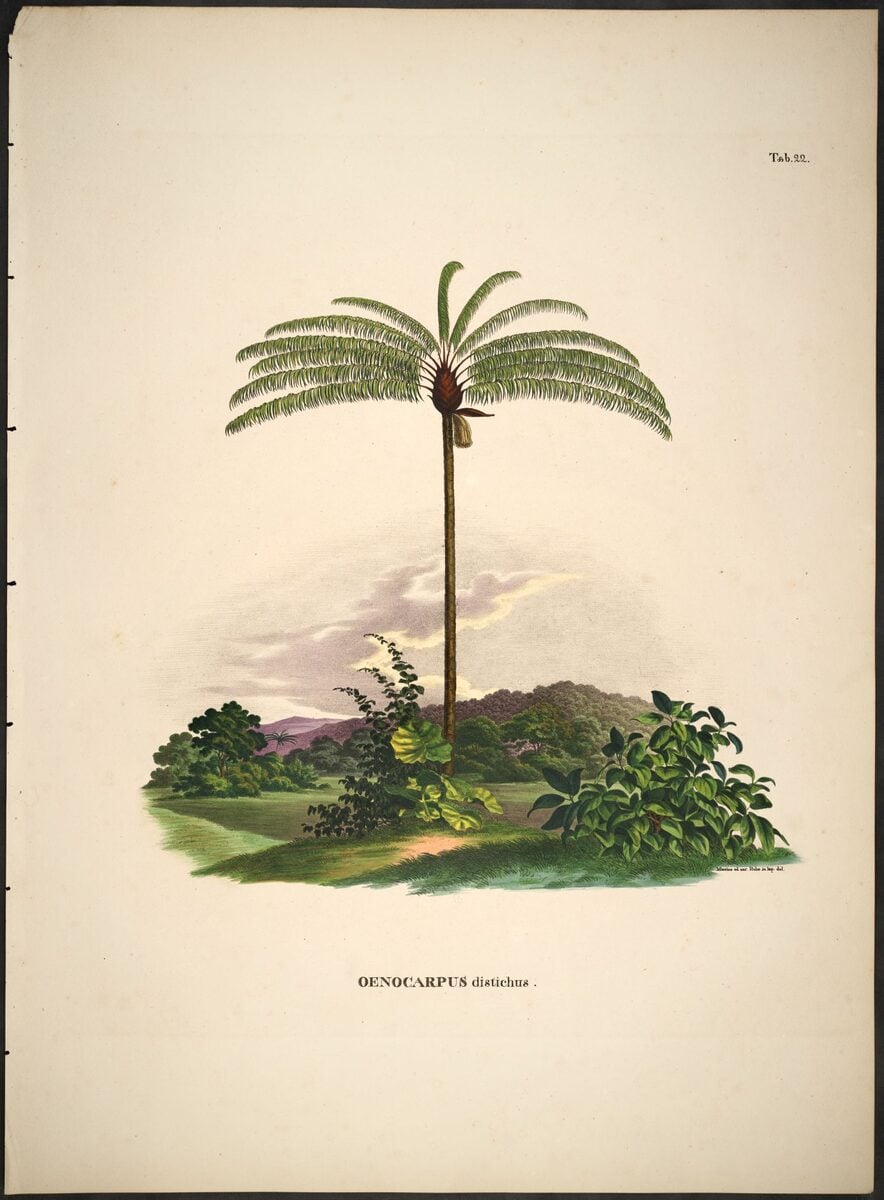
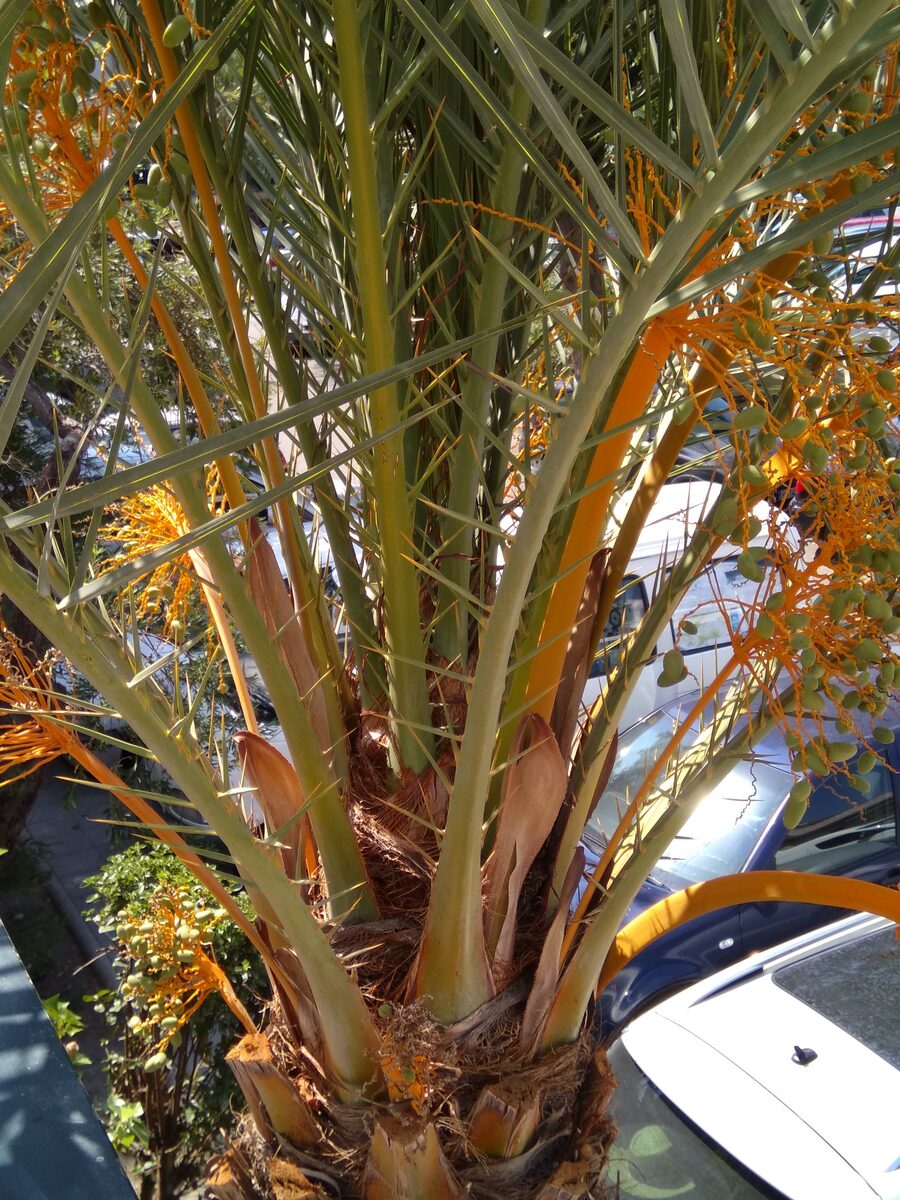
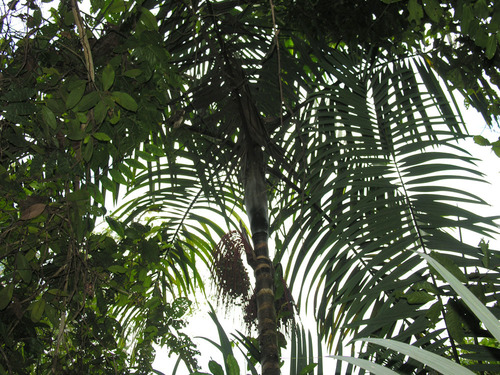
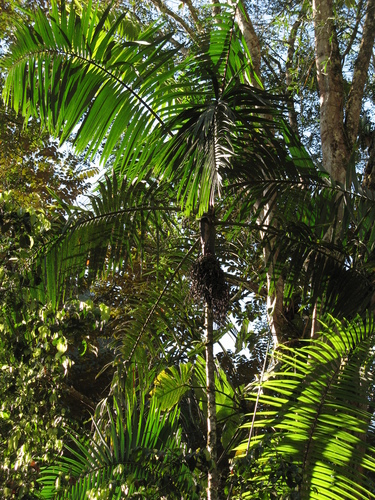
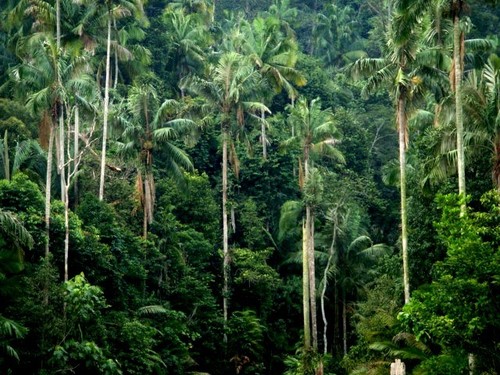
Marojejya insignis
Humbert
iNaturalist· cc0
不保留任何权利, 由 Romer N. Rabarijaona 上传
iNaturalist· cc0
no rights reserved
Summary
Source: WikipediaMarojejya insignis is a species of flowering plant in the palm family Arecaceae. It is found only in Madagascar. It is threatened by habitat loss. It is most noteworthy for unusual leaves in which a proximal (inner) portion is entire, while the distal (outer) portion is divided into leaflets. It was described by Humbert in 1955.
Description
A solitary palm. It has a very large crown. It grows 2-8 m tall. The trunk is 14-40 cm across. The trunk is covered with sheath remnants. The leaf stalk is 1.3 m long. There are many regularly spaced leaflets. These are 1 m long. Male and female flower stalks are borne separately on the same plant.
Edible Uses
The palm heart and cabbage are edible portions.
Distribution
A tropical plant. It grows between 350-1150 m altitude in Madagascar. It grows in the mountainous rainforest of Madagascar. It suits humid locations.
Where It Grows
Africa, East Africa, Madagascar,
Notes
There are 2 Marojejya species.
Also Known As
Beondroka, Besofina, Betofoka, Fohitanana, Hovotralanana, Mandanzezika, Maroalavehivavy, Menamoso
References (5)
- Dransfield, J. & Beentje, H., 1995, The Palms of Madagascar. Royal Botanical Gardens, Kew and The International Palm Society. p 433
- Haynes, J., & McLaughlin, J., 2000, Edible palms and Their Uses. University of Florida Fact sheet MCDE-00-50-1 p 10
- Johnson, D.V., 1998, Tropical palms. Non-wood Forest products 10. FAO Rome. p 114
- Jones, D.L., 2000, Palms of Australia 3rd edition. Reed/New Holland. p 182 (Genus)
- Riffle, R.L. & Craft, P., 2003, An Encyclopedia of Cultivated Palms. Timber Press. p 384