Veitchia vitiensis
(H. Wendl.) H. E. Moore
Niu sakiki
wikimedia· cc-by
Wikimedia Commons - scott.zona from Miami, Florida, USA
wikimedia· cc0
Wikimedia Commons - National Museum of Natural History
Summary
Source: WikipediaVeitchia vitiensis is a species of flowering plant in the family Arecaceae. It is found only in Fiji.
Description
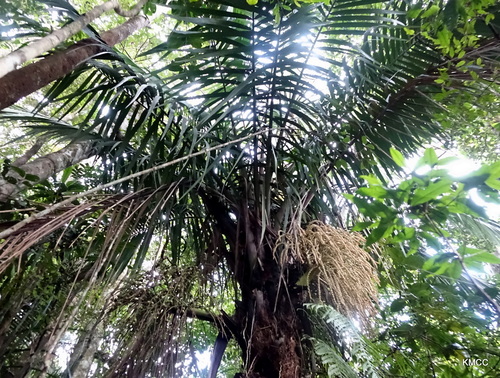
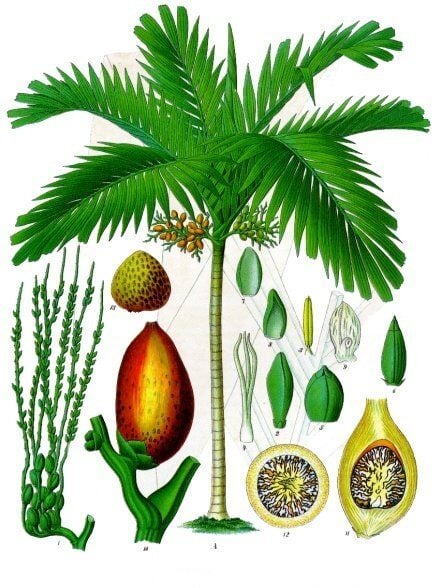
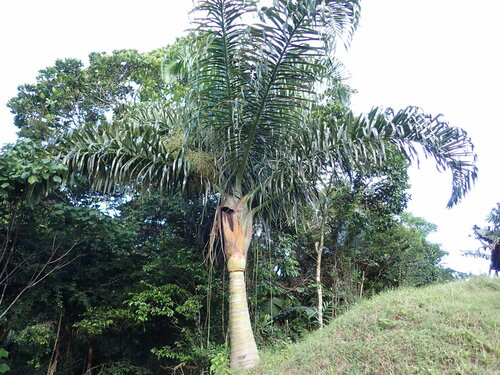
A solitary palm. The trunk is slender and grey. It is about 15 m tall and 20 cm across. The crown has about 8 fronds. The fronds can be 3 m long. They arch over and then hang down as they become older. The leaflets are widely spaced. They end abruptly. They are jagged at the ends. The crown-shaft is green. The flowering stalk branches 4 times. It comes out below the crown-shaft. The flowers are green. The fruit are red and oval. They are about 2.2 cm long.
Edible Uses
The seeds, flowers, and palm heart are all edible. The tender cabbage (heart) can also be consumed.
Traditional Uses
The seed is edible. The flower is edible. The palm heart is edible.
This uses section is brief — help expand it
Medicinal Uses
No medicinal uses mentioned in the data.
Distribution
A tropical plant. In Fiji it grows from sea level to 1250 m altitude. It grows in the forest.
Where It Grows
Fiji, Pacific,
Cultivation
Mature seed germinate in 4-6 weeks. It is best to have light shade when young.
Synonyms
Also Known As
Kaivatu, Sakiki
References (10)
- Dowe, J.L., 1989, Palms of the South-West Pacific. Palm and Cycad Society of Australia. p 66
- Haynes, J., & McLaughlin, J., 2000, Edible palms and Their Uses. University of Florida Fact sheet MCDE-00-50-1 p 13
- Johnson, D.V., 1998, Tropical palms. Non-wood Forest products 10. FAO Rome. p 79
- Jones, D.L., 1994, Palms throughout the World. Smithtonian Institution, Washington. p 56, 374
- Marinelli, J. (Ed), 2004, Plant. DK. p 379
Show all 10 references Hide references
- Reis, S. V. and Lipp, F. L., 1982, New Plant Sources for Drugs and Foods from the New York Botanical Garden herbarium. Harvard. p 19
- Riffle, R.L. & Craft, P., 2003, An Encyclopedia of Cultivated Palms. Timber Press. p 470
- Smith, A.C., 1979, Flora Vitiensis Nova: A New flora of Fiji, Hawai Botanical Gardens, USA Vol 1 p 412
- The Pacific Islands Food Composition Tables http://www.fao.org/docrep No F075
- Watling, D., 2005, Palms of the Fiji Islands. Environmental Consultants (Fiji) Ltd. p 140