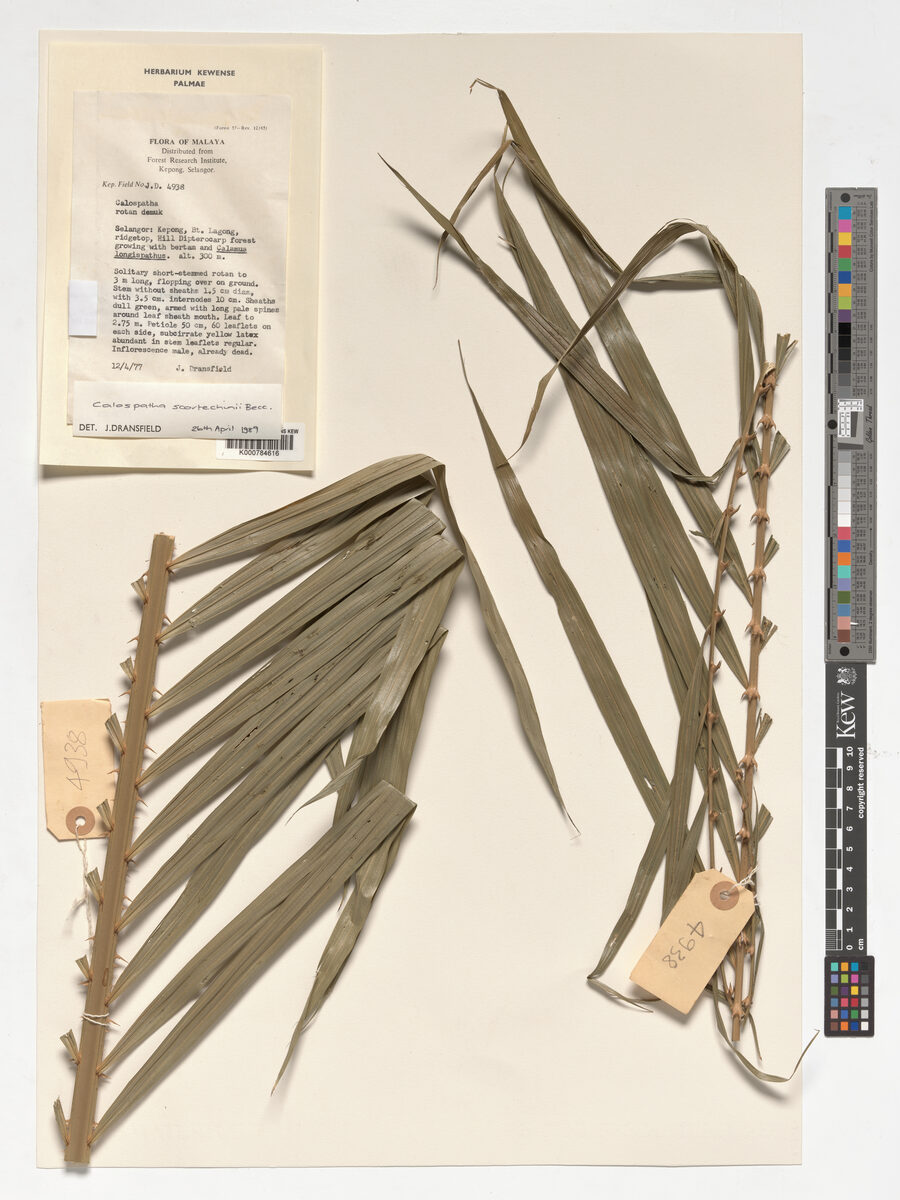
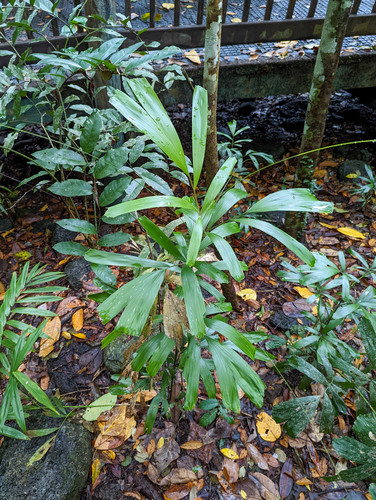
Calamus vitiensis
Warb. ex Becc.
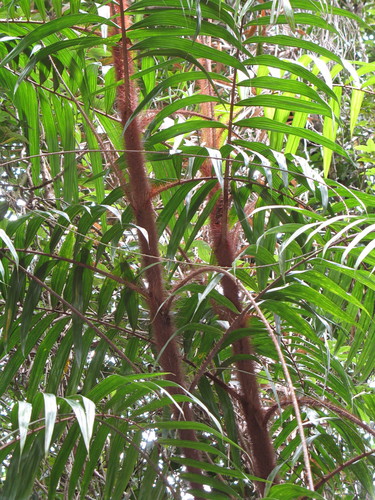
Solitary lawyer vine
iNaturalist· cc-by
(c) coenobita, some rights reserved (CC BY), uploaded by coenobita
iNaturalist· cc-by-nc
(c) SBERRY, some rights reserved (CC BY-NC)
iNaturalist· cc-by-nc
(c) SBERRY, some rights reserved (CC BY-NC)
Summary
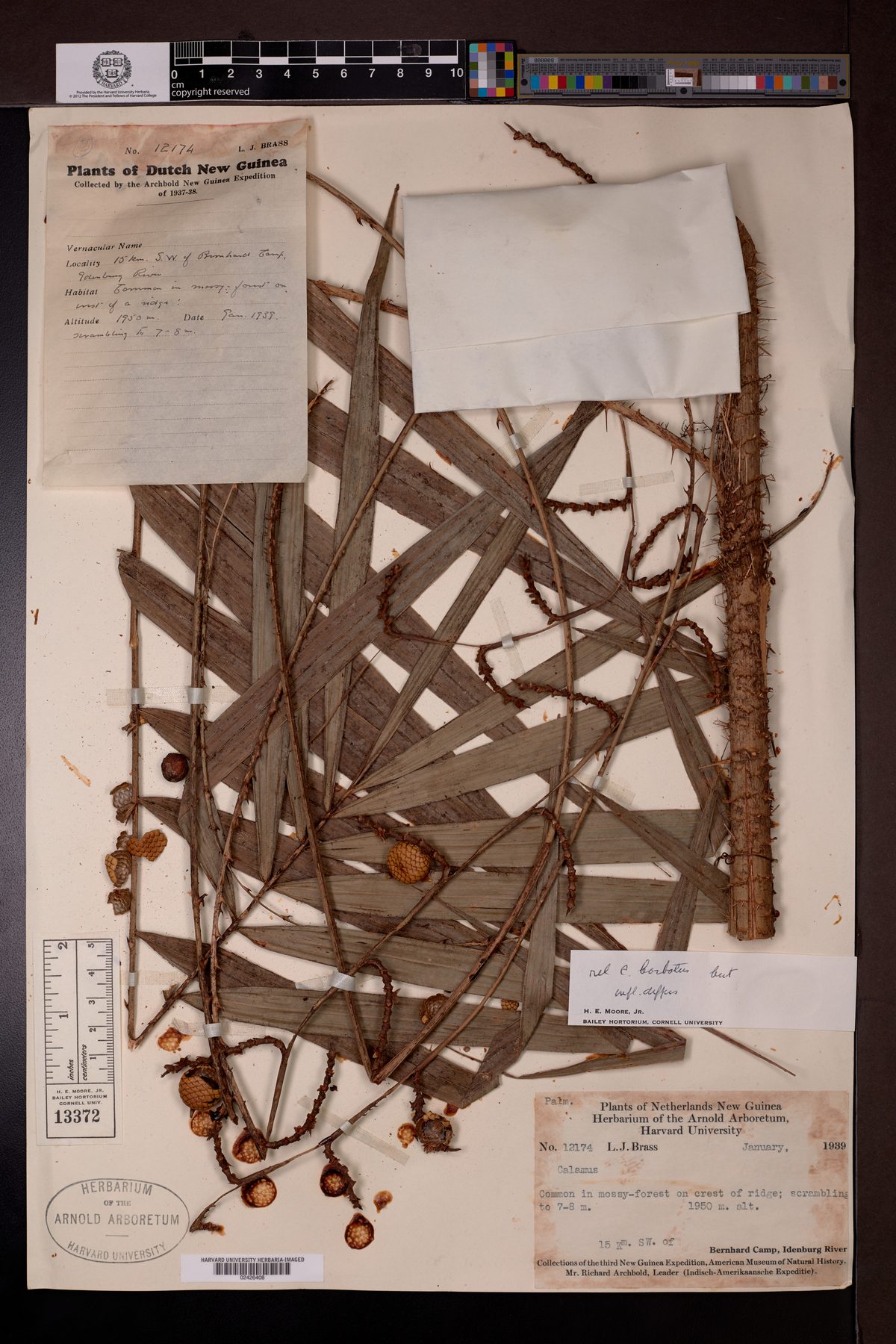
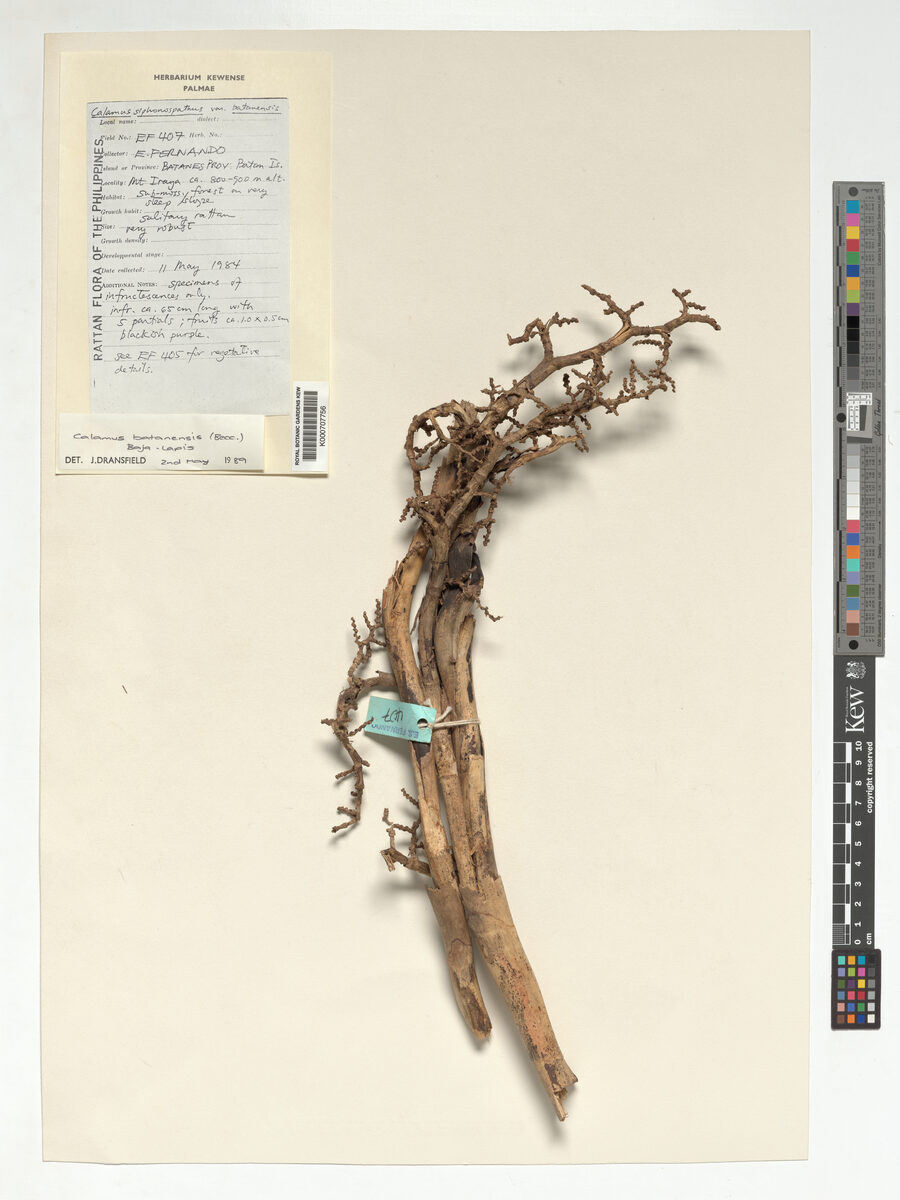
Source: WikipediaCalamus vitiensis, commonly known as the Dunk Island lawyer vine, solitary lawyer vine or Mission Beach wait-a-while, is a climbing palm in the family Arecaceae. It is found from the Maluku Islands east through New Guinea and the Solomon Islands to Fiji and Vanuatu, and south to Queensland, Australia. It is a solitary (i.e. not clumping) palm with a stem diameter up to 3 cm (1.2 in). The leaves have 25–40 leaflets and the midrib extends into a barbed cirrus up to 150 cm (59 in) long. It grows in lowland rainforest up to about 150 m (490 ft). It was first described in 1908.
Description
A climbing palm or rattan. It is a large plant with solitary stems which can be 35 m long. They are 5 cm across. The leaves are 4 m long. They are slightly arching. The leaflets are limp and hang downwards. They are broadly sword shaped and dark glossy green. They are about 40 cm long. It climbs by 2 m long stalks on the ends of the leaves.
Edible Uses
The stem sap is drunk and the shoots are eaten.
Distribution
A tropical plant. It grows in the rainforest. It grows from sea level to 1600 m altitude in Vanuatu.
Synonyms
Also Known As
Dunk Island lawyer vine, Loya ken, Mission Beach wait-a-while
References (4)
- Haynes, J., & McLaughlin, J., 2000, Edible palms and Their Uses. University of Florida Fact sheet MCDE-00-50-1 p 4
- Johnson, D.V., 1998, Tropical palms. Non-wood Forest products 10. FAO Rome. p 79
- Lebot, V. & Sam, C., Green desert or ‘all you can eat’? How diverse and edible was the flora of Vanuatu before human introductions?. Terra australis 52 p 409 (As Calamus vanuatensis)
- Riffle, R.L. & Craft, P., 2003, An Encyclopedia of Cultivated Palms. Timber Press. p 285