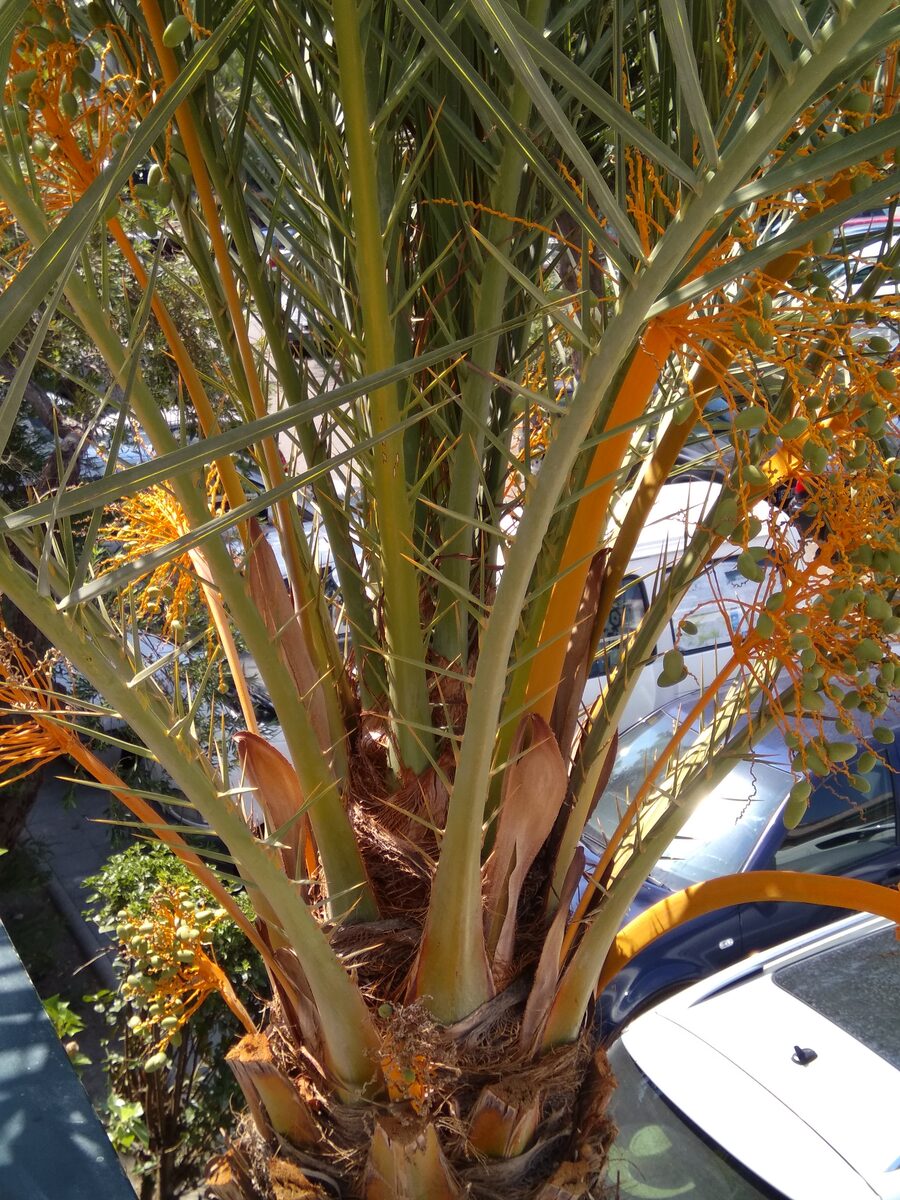
Calamus calospathus
(Ridl.)W. J. Baker & J. Dransf.
Rotan demuk
gbif· cc-by
Royal Botanic Gardens, Kew
gbif· cc-by
Royal Botanic Gardens, Kew
gbif· cc-by
Royal Botanic Gardens, Kew
Summary
Source: WikipediaCalamus calospathus is a rare species of flowering plant in the palm family found in peninsular Malaysia, where it is referred to as rotan demuk. It is not common in collections, nor has it been found in the wild for several years, leading some to conclude that the species may have become extinct. Under the synonym Calospatha scortechinii, it has been regarded as the sole species in the genus Calospatha. The epithet calospatha is a combination of two Greek words meaning 'beautiful' and 'spathe'.
Description
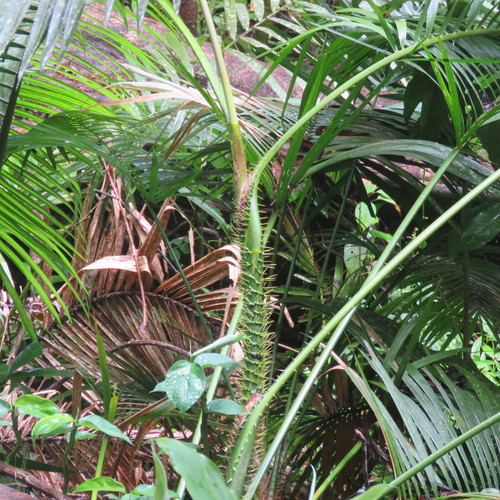
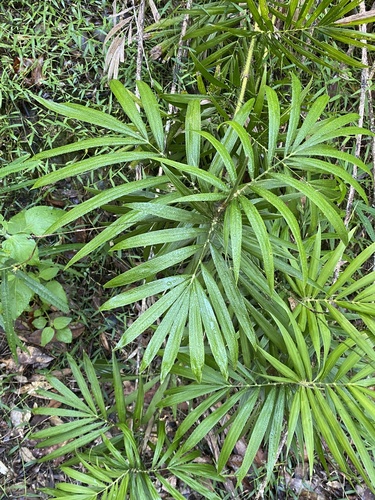
A climbing palm or rattan. It has one trunk. It has leaflets along the stalk. The separate male and female flowers are on separate plants. There are curved spines on the leaf stalks and these are used for climbing. The leaves are large with many leaflets. These have teeth along their edges. They also have bristles along the veins. The fruit are small, round and scaly. Now
Edible Uses
Fruit. The fruit is up to 20mm in diameter, containing 1 - 3 seeds. Although we have no specific information for this species, many members of this genus have potentially edible young shoots. Indeed, in Laos the shoots are considered to be a delicacy and over half the species growing there are said to be cooked and eaten as a vegetable. The top 100cm of the plant is used. If the leaf sheaths are left in place until just before cooking then the shoot will remain fresh for up to one week.
Distribution
A tropical plant.
Where It Grows
Asia, Malaysia, SE Asia,
Cultivation
Most species in this genus are more or less vigorous climbing plants in rainforests. Leaves of young plants are normally damaged if exposed to too much light, though leaves of older plants will usually tolerate full sun. In general, plants are likely to grow best with their roots in the shade but with enough gap in the canopy to encourage their stems to grow up towards the light. They are also likely to grow best in a humus-rich soil. Many of the species require fairly moist conditions for good growth, in fact several of them grow in wet soils or in areas with seasonal inundation - where we have the information it will be included under the plant’s habitat. Overhead shade should be manipulated at about 6-monthly intervals for the first 2 - 3 years of a young plant’s life to ensure they receive sufficient light to grow vigorously. About 40 - 50% light penetration is generally considered to be ideal for promoting stem growth. Little care is needed once the seedlings are established. It is important, however, to weed the area surrounding the seedlings occasionally until the plants are more than 2 metres tall. A dioecious species, both male and female forms need to be grown if fruit and seed are required.
Propagation
Seed - it has a fairly short viability and is best sown as soon as it is ripe.
Other Uses
A yellow latex exudes from cut stems and sheaths. The long and slender stems of Calamus species are put to various uses according to their size, length, flexibility, elasticity and toughness. The most slender canes are employed entire for binding purposes, and in making chairs, blinds, mats, wicker or basketwork, fishing implements, etc. Twisted together, they make very strong cables. The largest and more resistent canes are used entire as cables, the framework of wicker chairs etc. Usually, however, for many purposes the stems are split throughout their length into 2 - 4 or more strips from which the inner soft brittle and spongy portion is removed by means of a knife or same other instrument, so as to leave the external portion, which is hard, tough, flexible, elastic and has its outer surface very clean and smooth as if it had been varnished.
Notes
There are 2 Calospatha species. This species may be extinct or is very rare.
Synonyms
References (3)
- Haynes, J., & McLaughlin, J., 2000, Edible palms and Their Uses. University of Florida Fact sheet MCDE-00-50-1 p 4 (As Calospatha scortechinii)
- Johnson, D.V., 1998, Tropical palms. Non-wood Forest products 10. FAO Rome. p 66 (As Calospatha scortechinii)
- Riffle, R.L. & Craft, P., 2003, An Encyclopedia of Cultivated Palms. Timber Press. p 286 (As Calospatha scortechinii)