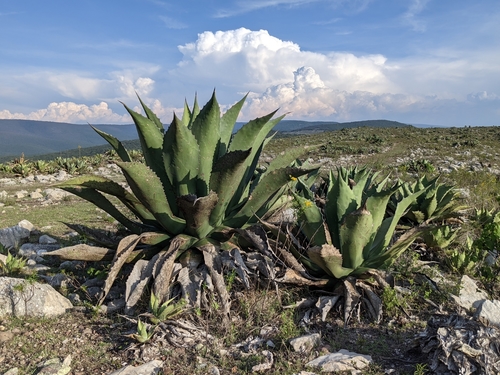
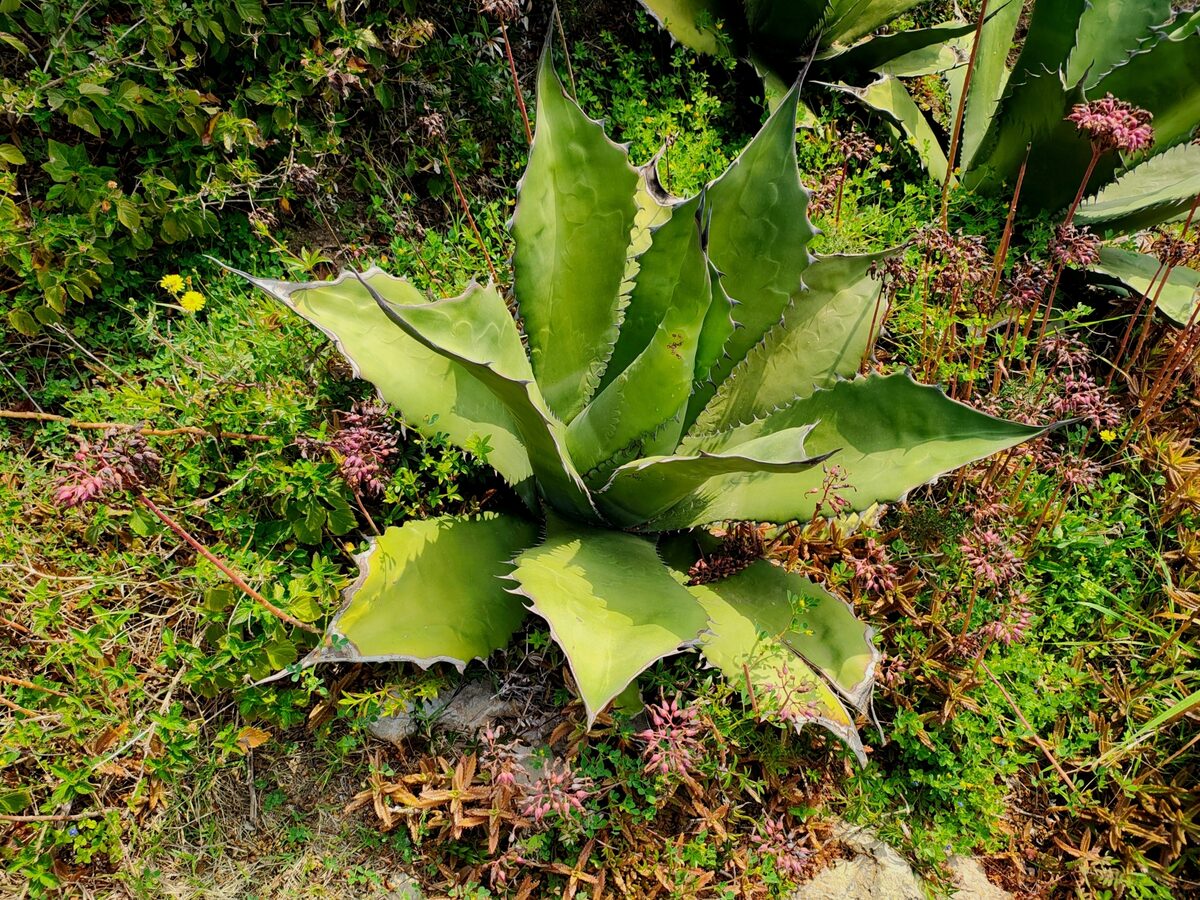
Yucca gloriosa
L.
Candle yucca
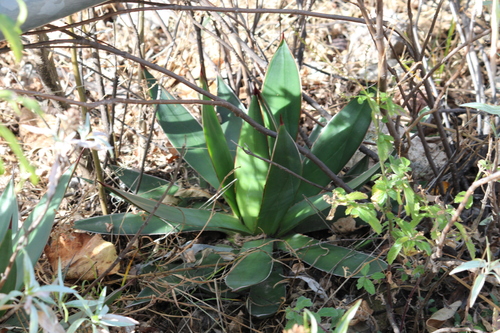
iNaturalist· cc-by-nc
(c) Matt, some rights reserved (CC BY-NC), uploaded by Matt
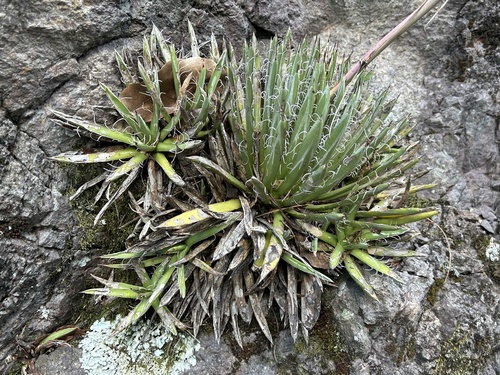
iNaturalist· cc-by-nc
(c) Павел Несмеянов, some rights reserved (CC BY-NC), uploaded by Павел Несмеянов
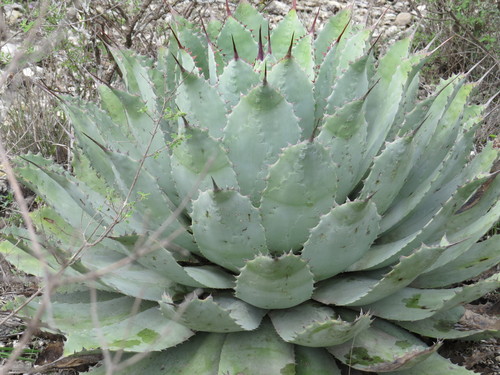
iNaturalist· cc-by-nc
(c) goblekitepe, some rights reserved (CC BY-NC)
Summary
Source: WikipediaYucca gloriosa, also known as moundlily yucca or soft-tipped yucca, is a species of flowering plant in the asparagus family, native to the southeastern United States. Growing to 2.5 m (8 ft), it is an evergreen shrub. It is widely cultivated as an ornamental for its architectural qualities, and has reportedly become established in warmer climates in the wild in various parts of the world.
Description
A shrub. It grows 1.8-2.5 m high and spreads 1.2-1.8 m wide. The trunk is woody. The leaves form a ring at the ends of branches and are blue-green to dark green. The leaves are 60 cm long. They have spines at the tips. The flowers form a spike of bell-shaped flowers. These are creamy-white to pink and can be 1.8 m high. They are at the ends of branches and on a stout stem. They are 40-60 cm long. The fruit has 6 ribs. but does not split when dry.
Edible Uses
The fruit, up to 10cm long and 26mm wide, can be eaten raw or cooked, though it is very rarely produced in the wild. Flowers are delicious raw and can also be dried, crushed and used as a flavouring. The flowering stem is cooked and used like asparagus. The root can be cooked, dried, ground into a powder and made into bread.
Traditional Uses
CAUTION: The fruit are purgative. A starch is extracted from the rhizome. The flowers are eaten raw or cooked.
This uses section is brief — help expand it
Medicinal Uses
The fruit is purgative. The root is detergent.
Known Hazards
The roots contain saponins. Whilst saponins are quite toxic to people, they are poorly absorbed by the body and so tend to pass straight through. They are also destroyed by prolonged heat, such as slow baking in an oven. Saponins are found in many common foods such as beans. Saponins are much more toxic to some creatures, such as fish, and hunting tribes have traditionally put large quantities of them in streams, lakes etc in order to stupefy or kill the fish.
Distribution
It grows on sand dunes in Mediterranean regions. It can tolerate salt exposure. In Melbourne Botanical Gardens. It suits hardiness zones 7-10.
Where It Grows
Antigua and Barbuda, Argentina, Asia, Australia, Britain, Central America, China, Costa Rica, Cuba, Europe, Hawaii, India, Indochina, Indonesia, Italy, Korea, Malaysia, Marshall Islands, Mediterranean, Mexico, Micronesia, Myanmar, North America*, Pacific, SE Asia, South America, Thailand, USA, Vietnam, West Indies,
Cultivation
Thrives in any soil but prefers a sandy loam and full exposure to the south. Plants are hardier when grown on poor sandy soils. Established plants are very drought resistant. Judging by its native habitat, this plant should tolerate maritime exposure. Very cold hardy, tolerating temperatures down to at least -15°c, or to -25°c according to another report, but plants are subject to injury and decay by winter damp and snow. A very ornamental plant, there are some named varieties. Plants do not flower every year, requiring hot summers to initiate flowering. The flowers are produced in the autumn and are often damaged by early frosts. The scent of the flowers is most pronounced at night. In the plants native environment, its flowers can only be pollinated by a certain species of moth. This moth cannot live in Britain and, if fruit and seed is required, hand pollination is necessary. This can be quite easily and successfully done using something like a small paint brush. Individual crowns are monocarpic, dying after flowering. However, the crown will usually produce a number of sideshoots before it dies and these will grow on to flower in later years. Plants in this genus are notably resistant to honey fungus. Members of this genus seem to be immune to the predations of rabbits.
Propagation
Sow seed in spring in a greenhouse; pre-soaking for 24 hours in warm water may speed germination. Seed typically germinates within 1–12 months at 20°C. Prick seedlings into individual pots and grow on under glass for at least their first two winters. Plant out in early summer, providing winter protection — a simple pane of glass usually suffices — for at least the first outdoor winter. In Britain, seed is only produced with hand pollination. For root cuttings, lift in April/May, remove small buds from the base of the stem and rhizomes, dip in dry wood ash to prevent bleeding, and pot in sandy soil in a greenhouse until established. Cuttings of the tops of old plants can also be taken and normally root readily during the growing season.
Other Uses
Leaf fibre is used to make cloth, ropes, baskets and mats. The roots are rich in saponins and can be used as a soap substitute.
Notes
There are about 40 Yucca species. Also put in the family Agavaceae.
Synonyms
Also Known As
Bayoneta, Bunga lilin putih, Bunga tombak raja, Chii-hup, Cucaracha, Du ca, Espino, Fengweilan, Huali Silan, Magnificent Silk Orchid, Moundlily Yucca, Palm lily, Phoenix-tail Orchid, Roman candle, Spanish dagger
References (15)
- Ambasta, S.P. (Ed.), 2000, The Useful Plants of India. CSIR India. p 696
- Blamey, M and Grey-Wilson, C., 2005, Wild flowers of the Mediterranean. A & C Black London. p 488
- Cundall, P., (ed.), 2004, Gardening Australia: flora: the gardener's bible. ABC Books. p 1492
- Dharani, N., 2002, Field Guide to common Trees & Shrubs of East Africa. Struik. p 280
- Engel, D.H., & Phummai, S., 2000, A Field Guide to Tropical Plants of Asia. Timber Press. p 184
Show all 15 references Hide references
- Harter, J.(Ed.), 1988, Plants. 2400 copyright free illustrations. Dover p 13.1, 14.3
- Hibbert, M., 2002, The Aussie Plant Finder 2002, Florilegium. p 310
- Kermath, B. M., et al, 2014, Food Plants in the Americas: A survey of the domesticated, cultivated and wild plants used for Human food in North, Central and South America and the Caribbean. On line draft. p 934
- Little, E.L., 1980, National Audubon Society Field Guide to North American Trees. Alfred A. Knopf. p 317
- Plants for a Future database, The Field, Penpol, Lostwithiel, Cornwall, PL22 0NG, UK. http://www.scs.leeds.ac.uk/pfaf/
- Sp. pl. 1:319. 1753
- Staples, G.W. and Herbst, D.R., 2005, A tropical Garden Flora. Bishop Museum Press, Honolulu, Hawaii. p 584
- Sukarya, D. G., (Ed.) 2013, 3,500 Plant Species of the Botanic Gardens of Indonesia. LIPI p 1049
- Valder, P., 1999, The Garden Plants of China. Florilegium. p 343
- Vander Velde, N, 2003, The Vascular Plants of Majuro Atoll, Republic of the Marshall Islands. Atoll research Bulletin. No. 503. Smithsonian Institute. p 16