Xerophyllum tenax
(Purs.) Nutt.
Indian basket grass, Bear grass
iNaturalist· cc-by
(c) David Anderson, some rights reserved (CC BY), uploaded by David Anderson
iNaturalist· cc-by-nc
(c) Garrett Haynes, some rights reserved (CC BY-NC), uploaded by Garrett Haynes
iNaturalist· cc-by
(c) Nelson Balcar, some rights reserved (CC BY), uploaded by Nelson Balcar
Summary
Source: WikipediaXerophyllum tenax is a species of plants in the corn lily family. It is known by several common names, including bear grass, soap grass, quip-quip, and Indian basket grass. Beargrass can grow to be a little over 1.2 metres (4 ft) tall when in a preferred habitat and ideal conditions. The plant typically blooms at irregular intervals, depending on environmental factors such as moisture and temperature. The plant is found in the same forested and meadowed areas where bears are commonly present. It thrives in environments such as the Pacific Northwest, California, and parts of the Rocky Mountains. Bears are known to feed on the softer leaf bases of the plant, which may have influenced its common name. The rootstock and pods were cooked and eaten by Native Americans, who also used the long, fibrous leaves for weaving.
Description
A herb. It grows up to 1.5 m high. It is smooth and light green. It keeps growing from year to year. It has a thick rootstock. There are many lower leaves which are long, tough and narrow. They are 2-4 mm wide. The leaves on the stem are like needles and much shorter. The flowers occur as many together in a long raceme. The lower flowers open first. The fruit is an oval capsule.
Edible Uses
The root is edible and prepared by baking.
Traditional Uses
The rhizomes are stringy but edible. They are best roasted or boiled.
This uses section is brief — help expand it
Medicinal Uses
The roots are styptic. A poultice of chewed root has been applied to wounds, and a decoction of grated root used as a wash on bleeding wounds, sprains, and broken limbs. The washed roots can be rubbed to produce a lather suitable for washing sore eyes.
Distribution
It is a temperate plant. It grows on dry hillsides and subalpine meadows in the Rocky Mountains.
Where It Grows
Canada, North America, USA,
Propagation
Sow seed in a cold frame as soon as it is ripe if possible, otherwise in early spring. Prick seedlings out into individual pots when large enough to handle and grow on in a greenhouse for at least their first winter. Plant out into permanent positions in late spring or early summer, after the last expected frosts. Division can be done as the plant comes into growth in spring.
Other Uses
The leaves can be woven into watertight baskets suitable for cooking food. Fibres are split from the leaves for weaving, and the plant is also used decoratively on baskets. Small leaves have been fashioned into dresses. Plants were burned annually, and leaves harvested in spring as they emerged from the charred rhizome. Before use, leaves were soaked in water to make them pliable — soaking too long causes them to turn green. Dried and bleached leaves are woven into hats and capes.
References (4)
- Cormack, R. G. H., 1967, Wild Flowers of Alberta. Commercial Printers Edmonton, Canada. p 46
- MacKinnon, A., et al, 2009, Edible & Medicinal Plants of Canada. Lone Pine. p 192
- Plants for a Future database, The Field, Penpol, Lostwithiel, Cornwall, PL22 0NG, UK. http://www.scs.leeds.ac.uk/pfaf/
- Porsild, A.E., 1974, Rocky Mountain Wild Flowers. Natural History Series No. 2 National Museums of Canada. p 104
More from Melanthiaceae
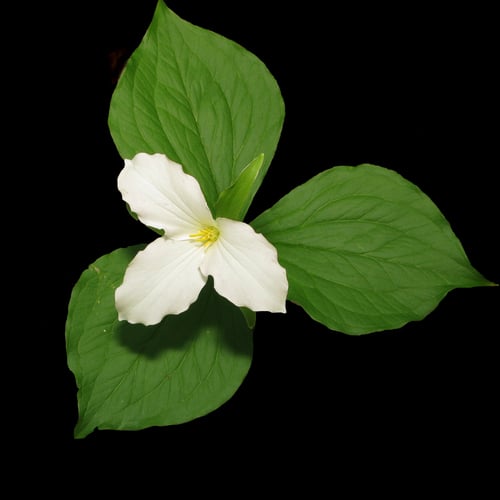
Trillium grandiflorum
White trilium, Wake robin, White wake robin, Grand trillium, Showy trillium, Large-flowered trillium
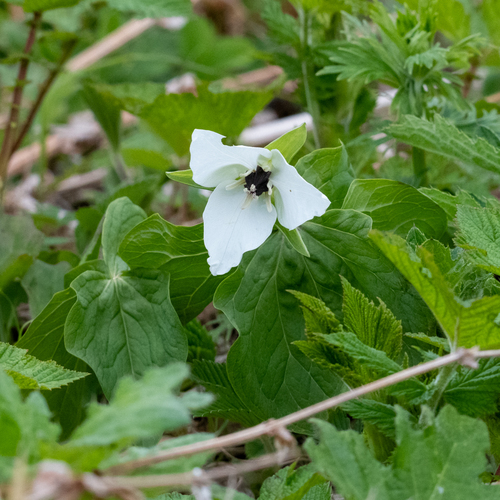
Trillium kamtschaticum
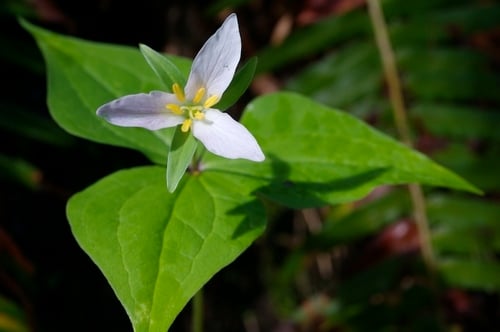
Trillium ovatum
Wakerobin, Western trillium, Pacific trillium
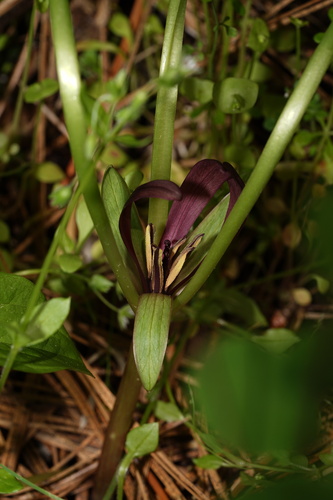
Trillium petiolatum
Idaho trillium, Purple trillium, Round-leaved trillium
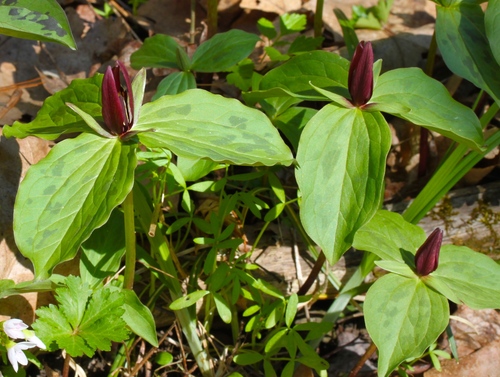
Trillium sessile
Toadshade, Red trillium, Wake robin, Sessile trillium
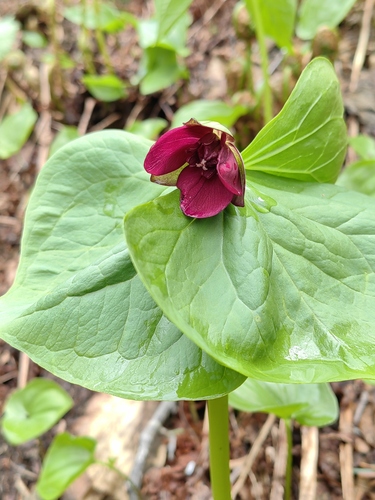
Trillium smallii
Enrei-So