Vitis vinifera
L.
Grapevine, European grape
iNaturalist· cc-by
(c) andrey_p, some rights reserved (CC BY), uploaded by andrey_p
iNaturalist· cc-by-sa
(c) Andreas Rockstein, some rights reserved (CC BY-SA)
iNaturalist· cc-by-nc
(c) Valerio Lazzeri, some rights reserved (CC BY-NC), uploaded by Valerio Lazzeri
Summary
Source: WikipediaVitis vinifera, the common grape vine, is a species of flowering plant, native to the Mediterranean region, Central Europe, and southwestern Asia, from Morocco and Portugal north to southern Germany and east to northern Iran. As of 2012, there were between 5,000 and 10,000 varieties of Vitis vinifera grapes though only a few are of commercial significance for wine and table grape production. The wild grape is sometimes classified as Vitis vinifera var. sylvestris (in some classifications considered Vitis sylvestris), with Vitis vinifera var vinifera restricted to cultivated forms. Domesticated vines have hermaphrodite flowers, but V. vinifera var. sylvestris is dioecious (male and female flowers on separate plants) and pollination is required for fruit to develop. Grapes can be eaten fresh or dried to produce raisins, sultanas, and currants. Grape leaves are used in the cuisine of many cultures. The fresh grapes can also be processed into juice that is fermented to make wine and vinegar. Cultivars of Vitis vinifera form the basis of the majority of wines produced around the world. All of the familiar wine varieties belong to Vitis vinifera, which is cultivated on every continent except for Antarctica, and in all the major wine regions of the world.
Description
A woody vine which keeps growing from year to year. It is often pruned to reduce its size. It climbs by coiled tendrils which attach to objects. It has large leaves which are roughly heart shaped. They can be entire or be deeply divided into 3-5 lobes. Leaves can be 20 cm across. The edges of the leaf are sharply and irregularly toothed. The tip of the leaf is pointed and the base is rounded. Sometimes the leaves are hairy. The flowers are small and yellow-green. They occur in clusters which are 5-20 cm long and beside the leaves. The 5 green petals drop off together to show 5 central stamens and the ovary. These bear clusters of fleshy fruit. The fruit is a berry which is generally oval and juicy. The skin can be yellow or violet-black. They are 1-4 cm long. The flesh is edible. They contain a few hard seeds. There are 10,000 cultivated varieties.
Edible Uses
The fruit can be eaten fresh or dried for winter use — dried grapes form the raisins, sultanas and currants of commerce, with different varieties producing each type. A fully ripe fresh grape is sweet, juicy and delicious, and the juice can be concentrated and used as a sweetener. The fruit is also widely used in winemaking. Young leaves are cooked, often wrapped around other foods and baked to impart a pleasant flavour. Young tendrils can be eaten raw or cooked. Flower clusters are used as a vegetable. The seed yields an edible oil similar to sunflower oil; it requires refining before use and, being polyunsaturated, is suitable for mayonnaise and cooking, especially frying. The sap has a sweet taste and can be used as a drink, harvested in spring and early summer — though it should not be taken in large quantities as this will weaken the plant. Roasted seeds can be used as a coffee substitute. Cream of tartar (potassium bitartrate), a crystalline salt, is extracted from the residue of pressed grapes and from the sediment of wine barrels, and is used in making baking powder.
Traditional Uses
The fruit are eaten ripe and also used for juice and wines, champagnes and brandies . Sometimes young slightly acid leaves are eaten. The leaves are used for sarma in Turkey. They are rolled around a filling of rice or minced meat. The dried fruit are eaten as raisins. The flowering shoots are eaten as a vegetable. They can also be pickled.
Medicinal Uses
Grapes are a nourishing and mildly laxative fruit that can support the body through illness, particularly of the gastro-intestinal tract and liver. Because the nutrient content of grapes closely resembles that of blood plasma, grape fasts are recommended for detoxification purposes. The fresh fruit is antilithic, constructive, cooling, diuretic, strengthening and analgesic. A diet based entirely on the fruit is especially recommended for torpid liver or sluggish biliary function, and the fruit is also helpful in treating varicose veins, haemorrhoids and capillary fragility. The dried fruit is demulcent, cooling, mildly expectorant, laxative and stomachic, with a slight effect in easing coughs. The leaves — particularly red leaves — are anti-inflammatory and astringent. A decoction is used to treat threatened abortion, internal and external bleeding, cholera, dropsy, diarrhoea and nausea, and can be applied as a wash for mouth ulcers or used as a douche for vaginal discharge. Red grape leaves also help in treating varicose veins, haemorrhoids and capillary fragility; leaves are harvested in early summer and used fresh or dried. The seed is anti-inflammatory and astringent. The sap of young branches is diuretic, used as a remedy for skin diseases and as a lotion for the eyes. The tendrils are astringent, and a decoction is used to treat diarrhoea. The plant is used in Bach flower remedies, with the prescribing keywords being 'Dominating', 'Inflexible' and 'Ambitious'.
Distribution
A subtropical plant. It mainly grows in Mediterranean-type climates with hot dry summers and cool rainy winters. It needs shelter from the wind. In Nepal it grows up to 1400 m altitude. A pH of 6.5-7.5 is suitable. It suits hardiness zones 6-9.
Where It Grows
Afghanistan, Africa, Albania, Algeria, Andes, Andorra, Argentina, Armenia, Asia, Australia, Azerbaijan, Balkans, Bangladesh, Bhutan, Bosnia and Herzegovina, Brazil, Britain Bulgaria, Cambodia, Cape Verde, Caucasus, Central Asia, Chile, China, Colombia, Cook Islands, Costa Rica, Croatia, Cuba, Cyprus, East Africa, East Timor, Easter Island, Ecuador, Egypt, Eswatini, Ethiopia, Europe, Fiji, France, Georgia, Germany, Ghana, Greece, Guyana, Haiti, Hawaii, Himalayas, India, Indochina, Indonesia, Iran, Iraq, Italy, Jordan, Kazakhstan, Korea, Kosovo, Kyrgyzstan, Laos, Lebanon, Liechtenstein, Lithuania, Macedonia, Madagascar, Malaysia, Maldives, Mediterranean, Mexico, Middle East, Moldova, Myanmar, Nauru, Nepal, New Zealand, Niger, North Africa, North America, Pacific, Pakistan, Palestine, Papua New Guinea, PNG, Philippines, Portugal, Romania, Russia, San Marino, Sao Tome and Principe, Saudi Arabia, SE Asia, Serbia, Sicily, Slovenia, Solomon Islands, South Africa, Southern Africa, South America, Spain, Sri Lanka, Swaziland, Switzerland, Syria, Tajikistan, Tasmania, Thailand, Timor-Leste, Tokelau, Turkey, Türkiye, Turkmenistan, Uganda, Ukraine, Uruguay, USA, Uzbekistan, Vietnam, West Africa, West Indies, Yugoslavia, Zimbabwe,
Cultivation
Prefers a deep rich moist well-drained moderately fertile loam. Grows best in a calcareous soil, but dislikes excessively chalky soils. Prefers a pH in the range 6.5 to 7 but tolerates a range from 4.3 to 8.6. Succeeds in sun or partial shade though a warm sunny sheltered position is required for the fruit to ripen. Very commonly grown in the temperate zones of the world for its edible fruit, there are many named varieties, some of which have been developed for their use as a dried fruit, others for dessert use and others for wine. Good and regular crops are a bit problematical in Britain, grapes are on the northern most limits of their range in this country and the British summer often does not provide enough heat to properly ripen the fruit. Late frosts can also damage young growth in spring, though dormant shoots are very hardy, tolerating temperatures down to about -20°c. Nonetheless, there are a number of commercial vineyards in Britain (usually producing wine grapes) and, given a suitably sunny and sheltered position, good dessert grapes can also be grown. In general it is best to grow the dessert varieties against the shelter of a south or west facing wall. There are a number of varieties that have been bred to cope with cooler summers. Grapes are very susceptible to attacks by phylloxera, this disease is especially prevalent in some areas of Europe and it almost destroyed the grape industry. However, American species of grapes that are resistant to phylloxera are now used as rootstocks and this allows grapes to be grown in areas where the disease is common. Britain is free of the disease at the present (1989) and grapes are usually grown on their own roots. Plants in this genus are notably susceptible to honey fungus. The flowers are intensely fragrant. Grapes grow well in the company of hyssop, chives, basil and charlock. They grow badly with radishes, both the grapes and the radishes developing an off taste. Plants climb by means of tendrils. Any pruning should be carried out in winter when the plants are dormant otherwise they bleed profusely. The cultivated grape is thought to have been derived from V. vinifera sylvestris. (Gmel.)Hegi. This form has dioecious flowers and produces small black grapes. Woody. Growth habit is a single or multiple shooting vine from a crown. Grapes are usually harvested in late summer to early autumn, specifically from late summer through fall, depending on the variety and climate. Grapes typically flower in late spring to early summer. Grapes are considered fast-growing vines, often reaching maturity within 3 to 4 years, depending on the variety and growing conditions. Many varieties of Vitis vinifera are self-fertile, meaning they can produce fruit without cross-pollination.
Propagation
Seed is best sown in a cold frame as soon as it is ripe. Six weeks of cold stratification improves germination, so stored seed should also be sown in a cold frame as soon as it is obtained. Germination usually occurs in the first spring, but may take another 12 months. Prick out seedlings into individual pots once large enough to handle, grow on in a cold frame through their first winter, then plant out in early summer. Cuttings of mature wood from the current season's growth can be taken in December or January and rooted in a frame. These can be 15–30cm long, or short single-bud sections around 5cm long. For the shorter sections, remove a thin strip of bark about 3cm long from the lower half of one side to encourage callusing and root formation — these smaller cuttings need a more sheltered environment than the longer ones. Layering is also an option.
Other Uses
Grapevines can be used as ground cover to prevent soil erosion and support biodiversity, providing habitat for beneficial insects and wildlife, and are suited to arbor plantings. A yellow dye is obtained from fresh or dried leaves. Seed oil is used for lighting and as an ingredient in soaps and paints. Cream of tartar, extracted from pressed grape residue, is used in making fluxes for soldering. In hotter climates, the stems of very old vines can attain a good size and yield a highly durable timber. The flowers produce nectar attractive to bees and other pollinators. The fruit is consumed by birds, mammals and insects, and the foliage and leaf litter provide shelter for various invertebrates.
Other Information
It is a cultivated food plant. Only very occasional plants occur in hot humid tropical places like Papua New Guinea and produce very poorly. They are suited to drier Mediterranean places.
Notes
There are 60 to 70 species of Vitis.
Dangerous Lookalikes
This plant can be confused with the following toxic species. Always verify identification carefully before consuming any wild plant.
Canadian Moonseed
Menispermum canadense
Cbaile19
Grapevine
Vitis vinifera
(c) andrey_p, some rights reserved (CC BY), uploaded by andrey_p
Canadian Moonseed: No tendrils, single crescent/moon-shaped seed, leaf stem attaches to underside of leaf.
Grapevine: Vine with tendrils, round seeds, leaf stem at edge of leaf, bark that peels.
Nutrition
| Part | Moisture | kJ | kcal | Protein | Vit A | Vit C | Iron | Zinc |
|---|---|---|---|---|---|---|---|---|
| Fruit dried | 19.2 | 1184 | 283 | 4.1 | 7 | 4.7 | 3.3 | 0.7 |
| Leaves | 73.3 | 389 | 93 | 5.6 | 2699 | 11.1 | 2.6 | 0.7 |
| Fruit raw | 80.6 | 297 | 71 | 0.7 | 7 | 10.8 | 0.3 | 0.1 |
Synonyms
Also Known As
Angoor, Angur, Aris, Bejuco parra, Diva loza, Grozde yagorida, Khaghogh, Meyv, Motiribe, Parra, Sa-pyit, Tiyek, Tumpeang ba'y chu, Uva, Vid, Vigne, Vino, Vinograd, Weinrebe, Yana uva
References (74)
- Abbiw, D.K., 1990, Useful Plants of Ghana. West African uses of wild and cultivated plants. Intermediate Technology Publications and the Royal Botanic Gardens, Kew. p 46
- Ambasta, S.P. (Ed.), 2000, The Useful Plants of India. CSIR India. p 684
- Bernal, R., et al, (Eds), 2016, Catalogo de Plantas y Liquenes de Colombia, Volumen 2, Magnoliaceae a Zygophyllaceae. Universidad Nacional de Colombia. p 2558
- Bernholt, H. et al, 2009, Plant species richness and diversity in urban and peri-urban gardens of Niamey, Niger. Agroforestry Systems 77:159-179
- Bianchini, F., Corbetta, F., and Pistoia, M., 1975, Fruits of the Earth. Cassell. p 158
Show all 74 references Hide references
- Blamey, M and Grey-Wilson, C., 2005, Wild flowers of the Mediterranean. A & C Black London. p 130
- Bodkin, F., 1991, Encyclopedia Botanica. Cornstalk publishing, p 1020
- Bremness, L., 1994, Herbs. Collins Eyewitness Handbooks. Harper Collins. p 285
- Burkill, I.H., 1966, A Dictionary of the Economic Products of the Malay Peninsula. Ministry of Agriculture and Cooperatives, Kuala Lumpur, Malaysia. Vol 2 (I-Z) p 2289
- Bussman, R. W., et al, 2016, A comparative ethnobotany of Khevsureti, Samtskhe-Javakheti, Tusheti, Svaneti, and Racha-Lechkhumi, Republic of Georgia (Sakartvelo), Caucasus. Journal of Ethnobiology and Ethnomedicine.
- Bussman, R. W. et al, 2017, Ethnobotany of Samtskhe-Javakheti, Sakartvelo (Republic of Georgia), Caucasus. Indian Journal of Traditional Knowledge Vol. 16(1) pp 7-24
- Bussman, R. W., et al, 2021, Unity in diversity—food plants and fungi of Sakartvelo (Republic of Georgia), Caucasus. Journal of Ethnobiology and Ethnomedicine (2021) 17:72 p 15
- Cheifetz, A., (ed), 1999, 500 popular vegetables, herbs, fruits and nuts for Australian Gardeners. Random House p 255
- Cundall, P., (ed.), 2004, Gardening Australia: flora: the gardener's bible. ABC Books. p 1478
- D'Ambrosio, U., & Puri, R. K., 2016, Foodways in transition: food plants, diet and local perceptions of change in a Costa Rican Ngäbe community. Journal of Ethnobiology and Ethnomedicine (2016) 12:3 p 27
- Dogan, Y., et al, 2015, Of the importance of a leaf: the ethnobotany of sarma in Turkey and the Balkans. Journal of Ethnobiology and Ethnomedicine, 11:56
- Dzhangaliev, A. D., et al, 2003, The Wild Fruit and Nut Plants of Kazakhstan, Horticultural Reviews, Vol. 29. pp 305-371
- Facciola, S., 1998, Cornucopia 2: a Source Book of Edible Plants. Kampong Publications, p 246
- French, B.R., 1986, Food Plants of Papua New Guinea, A Compendium. Asia Pacific Science Foundation p 300
- French, B.R., 2010, Food Plants of Solomon Islands. A Compendium. Food Plants International Inc. p 263
- Galalaey, A. M. K., et al, 2021, Ethnobotanical study of some wild edible plants in Hujran Basin, Kurdistan Region of Iraq. ZANCO Journal of Pure and Applied Sciences. Salahaddin University-Erbil p 28
- Hancer, C. K., et al, 2020, Traditional Knowledge of Wild Edible Plants of Biga (Çanakkale), Turkey. Acta Societatis Botanicorum Poloniae / 2020 / Volume 89 / Issue 1 / Article 8914
- Hedrick, U.P., 1919, (Ed.), Sturtevant's edible plants of the world. p 686
- Heywood, V.H., Brummitt, R.K., Culham, A., and Seberg, O. 2007, Flowering Plant Families of the World. Royal Botanical Gardens, Kew. p 335
- Hibbert, M., 2002, The Aussie Plant Finder 2002, Florilegium. p 308
- Hu, Shiu-ying, 2005, Food Plants of China. The Chinese University Press. p 536
- INFOODS:FAO/INFOODS Databases
- Jardin, C., 1970, List of Foods Used In Africa, FAO Nutrition Information Document Series No 2.p 168
- Katende, A.B., Birnie, A & Tengnas B., 1995, Useful Trees and Shrubs for Uganda. Identification, Propagation and Management for Agricultural and Pastoral Communities. Technical handbook No 10. Regional Soil Conservation Unit, Nairobi, Kenya. p 664
- Kaya, O. M., et al, 2020, An ethnobotanical research in Sanhurfa central district and attached Villages (Turkey). Indian Journal of Traditional Knowledge. Vol. 19(1) pp 7-23
- Khan, D. & Shaukat, S.S., 2006, The Fruits of Pakistan: Diversity, Distribution, Trends of Production and Use. Int. J. Biol. Biotech., 3(3):463-499
- Kizilarslan, C. & Ozhatay, N., 2012, An ethnobotanical study of the useful and edible plants of İzmit. Marmara Pharmaceutical Journal 16: 134-140, 2012.
- Kremer, B.P., 1995, Shrubs in the Wild and in Gardens. Barrons. p 165
- Kremer, B.P., 1995, Shrubs in the Wild and in Gardens. Barrons. p 165 (As Vitis sylvestris)
- Kybal, J., 1980, Herbs and Spices, A Hamlyn Colour Guide, Hamlyn Sydney p 204
- John, L., & Stevenson, V., 1979, The Complete Book of Fruit. Angus & Robertson p 142
- Lazarides, M. & Hince, B., 1993, Handbook of Economic Plants of Australia, CSIRO. p 248
- Lorenzi, H., Bacher, L., Lacerda, M. & Sartori, S., 2006, Brazilian Fruits & Cultivated Exotics. Sao Paulo, Instituto Plantarum de Estuados da Flora Ltda. p 635
- Macmillan, H.F. (Revised Barlow, H.S., et al) 1991, Tropical Planting and Gardening. Sixth edition. Malayan Nature Society. Kuala Lumpur. p 319
- Manandhar, N.P., 2002, Plants and People of Nepal. Timber Press. Portland, Oregon. p 479
- Martin, F. W., et al, 1987, Perennial Edible Fruits of the Tropics. USDA Handbook 642 p 64
- Mashile, S. P., et al, 2019, Indigenous fruit plants species of the Mapulana of Ehlanzeni district in Mpumalanga province, South Africa. South African Journal of Botany 122 (2019) 180–183
- Miguel, E., et al, 1989, A checklist of the cultivated plants of Cuba. Kulturpflanze 37. 1989, 211-357
- Moerman, D. F., 2010, Native American Ethnobotany. Timber Press. p 599
- Nanagulyan, S., et al, 2020, Wild plants and fungi sold in the markets of Yerevan (Armenia). Journal of Ethnobiology and Ethnomedicine 16:26
- Nedelcheva A., 2013, An ethnobotanical study of wild edible plants in Bulgaria. EurAsian Journal of BioSciences 7, 77-94
- Olmo, H.P., 1979, Grapes, in Simmonds, N.W., (ed), Crop Plant Evolution. Longmans. London. p 294
- Omawale, 1973, Guyana's edible plants. Guyana University, Georgetown p 21
- Phon, P., 2000, Plants used in Cambodia. © Pauline Dy Phon, Phnom Penh, Cambodia. p 629
- Pieroni, A. & Soukand, R., 2017, Are Borders more Important than Geographical Distance? The Wild Food Ethnobotany of the Boykos and its Overlap with that of the Bukovinian Hutsuls in Western Ukraine. Journal of Ethnobiology 37(2): 326–345
- Pieroni, A. & Soukand, R., 2017, The disappearing wild food and medicinal plant knowledge in a few mountain villages of North-Eastern Albania. Journal of Applied Botany and Food Quality 90, 58 - 67
- Plants for a Future database, The Field, Penpol, Lostwithiel, Cornwall, PL22 0NG, UK. http://www.scs.leeds.ac.uk/pfaf/
- Plants of Haiti Smithsonian Institute http://botany.si.edu/antilles/West Indies
- Rivera, C., et al, 2005, The Ethnobotanical Study of Local Mediterranean Food Plants as Medicinal Resources in Southern Spain. Journal of Physiologyand Pharmacology. 56, Suppl. 1, 97-114
- Roa, J. A. G. & Boada, D. S. G., 2018, Fundación para el Fortalecimiento de la Fruticultura y Plantas Alimenticias no Convencionales en Colombia.
- Ruiters-Welcome, A. K., 2019, Food plants of southern Africa. Ph.D. thesis. Univ. of Johannesburg p 108
- Segura, S., et al, 2018, The edible fruit species in Mexico. Genet Resour Crop Evol (2018) 65:1767–1793 (As subsp.)
- Sharma, B.B., 2005, Growing fruits and vegetables. Publications Division. Ministry of Information and broadcasting. India. p 63
- Small, E., 2009, Top 100 Food Plants. The world's most important culinary crops. NRC Research Press. p 279
- Sp. pl. 1:202. 1753
- Staples, G.W. and Herbst, D.R., 2005, A tropical Garden Flora. Bishop Museum Press, Honolulu, Hawaii. p 574
- Terra, G.J.A., 1973, Tropical Vegetables. Communication 54e Royal Tropical Institute, Amsterdam, p 80
- Thaman, R. R., et al, 1994, The Flora of Nauru. Atoll Research Bulletin No. 392. Smithsonian Institute p 208
- Torre, de la, L., et al, 2008, Enciclopedia de las Plantas Útiles del Ecuador. Herbario QCA. Pontificia Universidad Católica del Ecuador. p 622
- Upreti, K., et al, 2010, Diversity and Distribution of Wild Edible Fruit Plants of Uttarakhand. Bioversity Potentials of the Himalaya. p 194
- USDA, ARS, National Genetic Resources Program. Germplasm Resources Information Network - (GRIN). [Online Database] National Germplasm Resources Laboratory, Beltsville, Maryland. Available: www.ars-grin.gov/cgi-bin/npgs/html/econ.pl (10 April 2000)
- Valder, P., 1999, The Garden Plants of China. Florilegium. p 198
- van Wyk, B., 2005, Food Plants of the World. An illustrated guide. Timber press. p 384
- Vlkova, M., et al, 2015, Edible Plants Sold on Marginal Rural Markets in Fergana Valley, Southern Kyrgyzstan. Bulgarian Journal of Agricultural Science, 21 (No 2) 2015, 243–250
- Wiersema, J. H. & Leon, B., 2013, World Economic Plants. A Standard Reference CRC Press. 2nd Ed. p 726
- World Checklist of Useful Plant Species 2020. Royal Botanic Gardens, Kew
- Yasukawa, K., Medicinal and Edible Plants as Cancer Preventive Agents. Drug Discovery Research in Pharmacognosy. p185 www.intechopen.com
- Yesil, Y., et al, 2019, Traditional knowledge of wild edible plants in Hasankeyf (Batman Province, Turkey). Acta Societatis Botanicorum Poloniae. 88(3):3633
- Zeven, A. C. & de West, J. M. J., 1982, Dictionary of cultivated plants and their regions of diversity. Wageningen. p 102, 119
More from Vitaceae
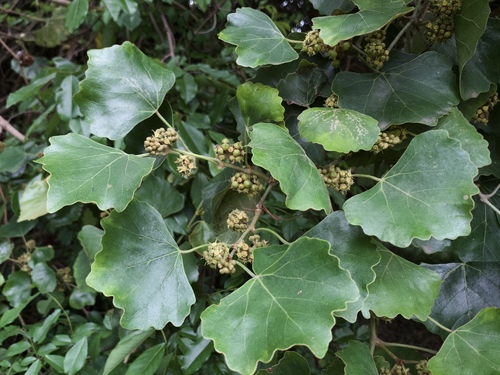
Rhoicissus capensis
Cape grape, Evergreen grape
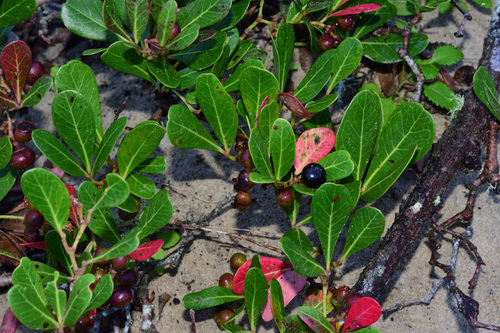
Rhoicissus digitata
South African grape, Baboon grape
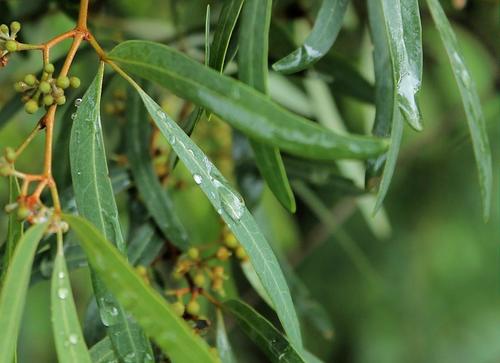
Rhoicissus revoilii
Bushveld grape, Warty grape
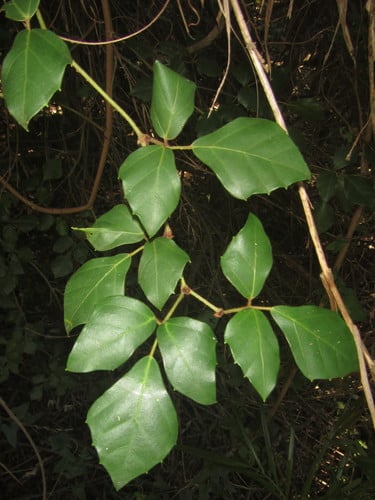
Rhoicissus rhomboidea
Rope-wood grape, Glossy forest grape
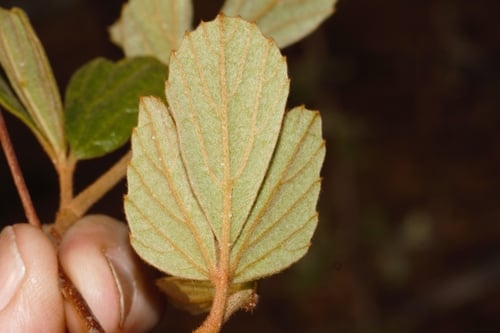
Rhoicissus tridentata
Droog-my-keel grape, Bitter grape, Bushman's grape
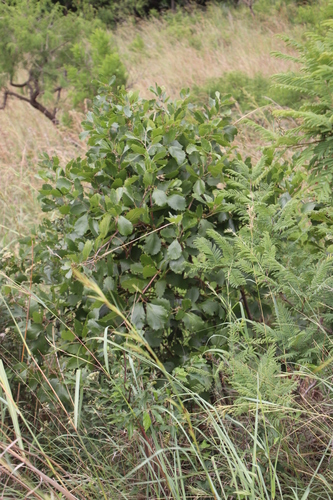
Rhoicissus tridentata subsp. cuneifolia