Cayratia maritima
Jackes
Wild grape, Bitter potato, Oenpelli grape
iNaturalist· cc-by
(c) Thomas Mesaglio, some rights reserved (CC BY)
iNaturalist· cc-by
(c) Thomas Mesaglio, some rights reserved (CC BY)
iNaturalist· cc-by
(c) Thomas Mesaglio, some rights reserved (CC BY)
Description
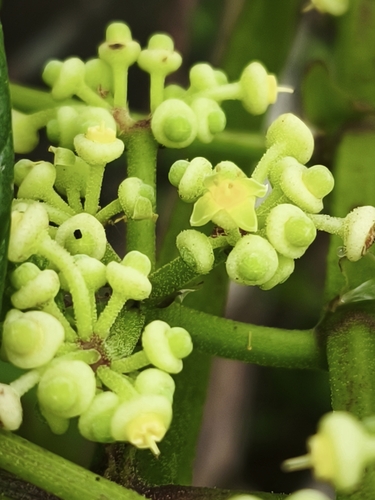
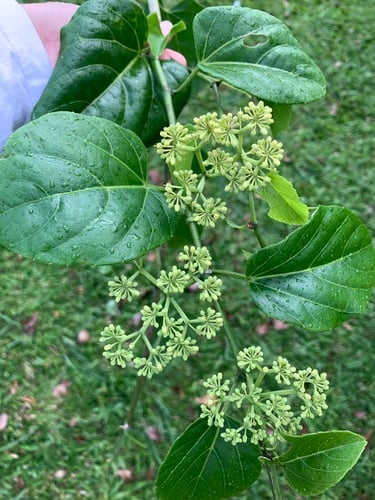
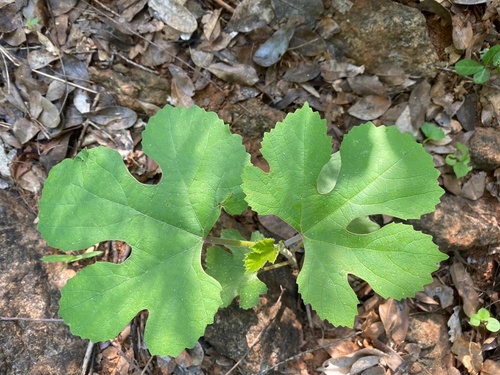
A scrambling vine. Each year the top dies down but the plant re-grows from the rootstock. The plant has tendrils which are divided into 3 at the tip. The leaves occur one after another along opposite sides of the stalk. Each leaf is made up of 3 leaflets. The central leaflet is oval and 4-9 cm long by 3-5 cm wide. The side leaflets are unequal in shape and 3-8 cm long by 2.4 cm wide. The edges of all the leaflets have teeth. The leaflets do not have hairs except for a row of hooked hairs along the midrib. The flower cluster has 3-5 branches and grows from the axil of the leaf. The cluster is made up of many flowers and is 10 cm wide. The flowers are greenish-white and 1-2 mm across. The fruit is rounded but also flattened. It is 1.5 cm across and 1 cm long. The fruit are black when ripe. Inside there are 2-4 seeds. These are boat shaped and 5-7 mm long. They have ridges.
Edible Uses
The fruit can be eaten raw, though it has a strong taste.
Traditional Uses
The fruit can be eaten raw. It has a strong taste.
This uses section is brief — help expand it
Distribution
A tropical plant. Plants grow on the edges of monsoon forest near the coast. They commonly occur near permanent water.
Where It Grows
Asia, Australia, Indonesia, Pacific, Papua New Guinea, PNG, SE Asia, Taiwan,
Cultivation
Plants can regrow from the underground tuber. Plants grow in the wet season and die back in the dry season.
Production
In northern Australia flowering occurs from April to June and the fruit are ripe May and June.
Other Information
It is not known if it is used for food in Papua New Guinea.
Notes
There are about 45 Cayratia species. They are mainly in tropical areas.
References (4)
- Hiddins, L., 1999, Explore Wild Australia with the Bush Tucker Man. Penguin Books/ABC Books. p 156
- Townsend, K., 1994, Across the Top. Gardening with Australian Plants in the tropics. Society for Growing Australian Plants, Townsville Branch Inc. p 128
- Wightman, Glenn et al. 1991. Alawa Ethnobotany: Aboriginal Plant Use from Minyerri, Northern Australia. Northern Territory Botanical Bulletin No 11. Parks and Wildlife Commission of the Northern Territory. p 10.
- Wightman, G. M. & Andrews, M.R., 1989, Plants of Northern Territory Monsoon Vine Forests (Vol 1). Conservation Commission of Northern Territory. p 116