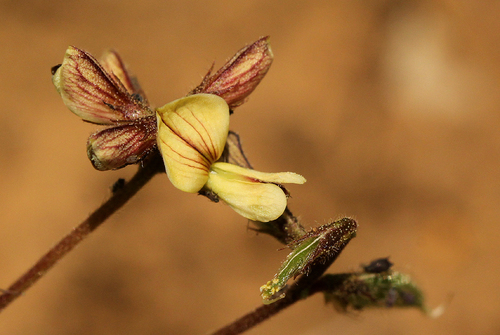
Vicia sativa
L.
Common Vetch, Winter tares, Lentil of Canada
iNaturalist· cc-by
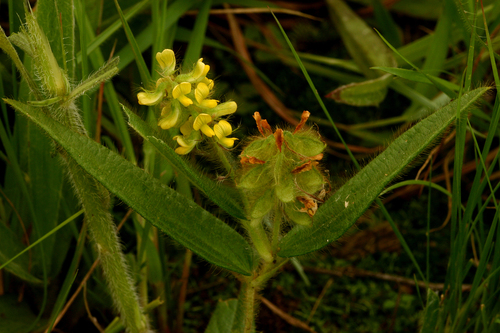
(c) Gabriel Campbell-Martinez, some rights reserved (CC BY), uploaded by Gabriel Campbell-Martinez
iNaturalist· cc-by-nc
(c) Alenka Mihoric, some rights reserved (CC BY-NC), uploaded by Alenka Mihoric
iNaturalist· cc-by-nc
(c) identigy, some rights reserved (CC BY-NC), uploaded by identigy
Summary
Source: WikipediaVicia sativa, known as the common vetch, garden vetch, tare or simply vetch, is a nitrogen-fixing leguminous plant in the family Fabaceae. It is now naturalised throughout the world occurring on every continent, except Antarctica and the Arctic. The centre of diversity is thought to be the Fertile Crescent, although gold standard molecular confirmation is currently not available. Global common vetch cultivation is limited due to anti-nutritional compounds in the seed although it is grown in dryland agricultural zones in Australia, China and Ethiopia due to its drought tolerance and very low nutrient requirements compared to other legumes. In these agricultural zones common vetch is grown as a green manure, livestock fodder or rotation crop. In cultivated grainfields, like lentils, it is often considered a weed due to downgrading of harvested mixed grain, resulting in farmers receiving less financial returns.
Description
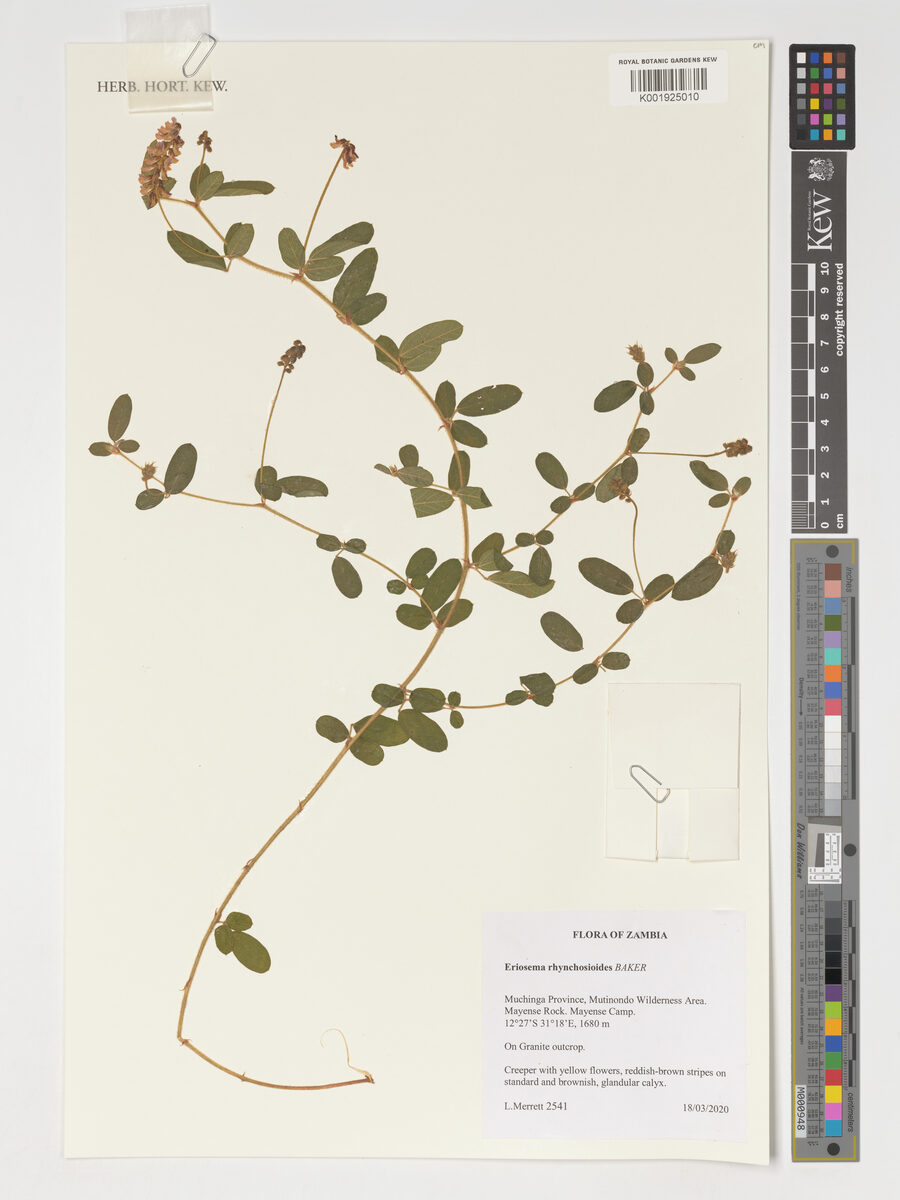
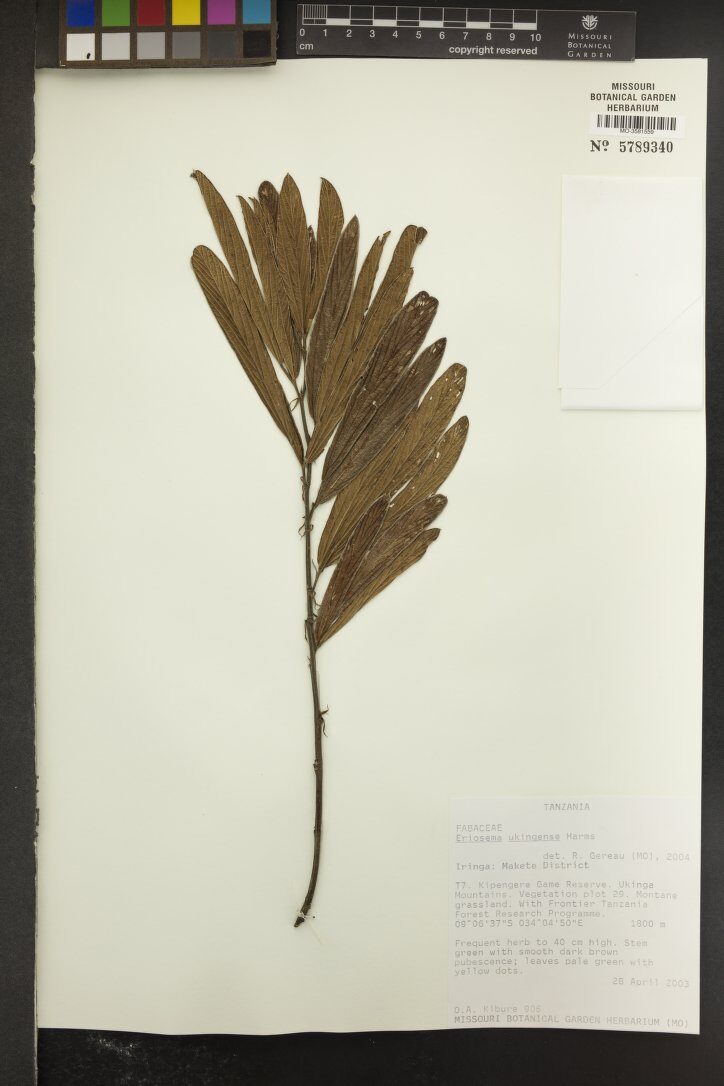
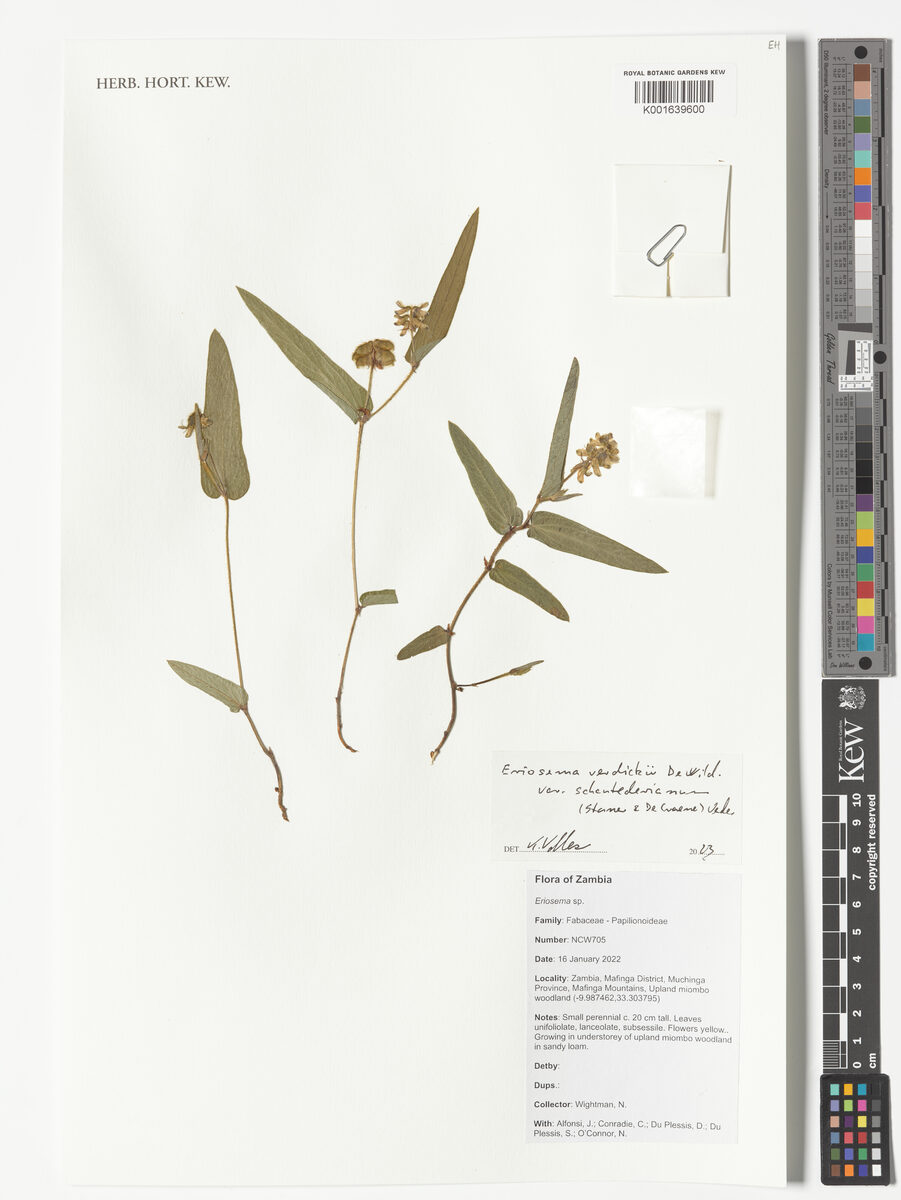
A straggling annual herb. It is 10-70 cm long. The stems can be hairy. The leaflets are 2-12 and vary in shape. They are 0.3-4 cm long by 0.2-1.5 cm wide. They often have a projecting sharp tip. They are wedge-shaped at the base. There is a branched tendril at the end of the upper leaves. The flower is pea like and the standard is pale blue. Flowers are 2-2.5 cm long. The fruits are pods 4-5.7 cm long and 6-8 mm wide. There are 8-10 seeds. The seeds are 4-5 mm across.
Edible Uses
The seeds are cooked but are not particularly palatable or digestible, though they are very nutritious. They can also be dried, ground into a powder, and blended with cereal flour to make bread, biscuits, cakes, and similar baked goods — the beans complement the protein in the cereal, making it more complete. Some caution is advised regarding toxicity. Leaves, young shoots, and young pods are all eaten cooked. The leaves also make a tea substitute.
Traditional Uses
Afghanistan, Africa, Argentina, Asia, Australia, Balkans, Bhutan, Brazil, Britain, Caucasus, Central Asia, Chile, China, Cuba, Czech Republic, Dominican Republic, East Africa, Ecuador, Ethiopia, Europe, Falklands, France, Georgia, Haiti, Himalayas, India, Indochina, Iraq, Ireland, Italy, Japan, Jordan, Kazakhstan, Korea, Kyrgyzstan, Libya, Luxembourg, Macedonia, Mediterranean, Middle East, Mongolia, Mozambique, Myanmar, Nepal, New Zealand, North Africa, Northeastern India, Norway, Pacific, Pakistan, Papua New Guinea, PNG, Portugal, Russia, Saudi Arabia, Scandinavia, SE Asia, Sicily, Slovenia, South America, Spain, St Helena, Tajikistan, Tasmania, Tibet, Turkey, Türkiye, Turkmenistan, Uruguay, Uzbekistan, Vietnam, West Indies,
Medicinal Uses
None known.
Known Hazards
There is some evidence that the seed may be toxic but this has only been shown under laboratory conditions, there are no recorded cases of poisoning by this plant in Britain.
Distribution
A temperate or Mediterranean climate plant. It grows in the highlands in the tropics. It does not suit acid soils or shady positions. It needs a well-drained but moist soil. In China it grows from sea level to 3,700 m above sea level. Tasmania Herbarium. In Sichuan and Yunnan.
Where It Grows
TEMPERATE ASIA: Oman, Saudi Arabia, Yemen (north), Afghanistan, Cyprus, Egypt (Sinai), Iran, Iraq, Israel, Jordan, Lebanon, Syria, Turkey, Armenia, Azerbaijan, Russian Federation (Checheno-Ingushetia, Dagestan, Kabardino-Balkaria, Karacaevo-Cerkesskaja Respublika, Krasnodar, North Ossetia, Stavropol), Russian Federation-Western Siberia (Western Siberia (south)), Russian Federation (Irkutsk, Krasnoyarsk, Kurganskaja oblast, Novosibirsk, Sverdlovsk, Tomsk), Kazakhstan, Kyrgyzstan, Tajikistan, Turkmenistan, Uzbekistan, China, Korea, Japan, Taiwan TROPICAL ASIA: Bhutan, India, Nepal, Pakistan EUROPE: Denmark, Finland, United Kingdom, Ireland, Norway, Sweden, Czechoslovakia, Austria, Belgium, Switzerland, Germany, Hungary, Netherlands, Poland, Belarus, Estonia, Lithuania, Latvia, Moldova, Russian Federation (Cuvašskaja Respublika, Karelia, Komi, Marij Èl, Respublika, Mordovija, Respublika, Tatarstan, Udmurtia, Arkhangelsk, Belgorod, Bryansk, Ivanovo, Kaliningrad, Kalužskaja oblast, Kirov, Kostroma, Kursk, Leningradskaja oblast, Lipeckaja oblast, Moscow, Murmansk, Novgorod, Orel, Penza, Perm, Pskovskaja oblast, Rostov, Ryazan, Saratov, Smolensk, Tambov, Tula, Ulyanovsk, Vladimir, Volgogradskaja oblast, Vologda, Voronezh, Yaroslavl), Ukraine (incl. Krym), Former Yugoslavia, Albania, Bulgaria, Greece (incl. Crete), Italy (incl. Sardinia, Sicily), Malta, Romania, Spain (incl. Baleares), France (incl. Corsica), Portugal AFRICA: Spain (Canarias), Portugal (Madeira Islands), Algeria, Egypt, Libya, Morocco, Tunisia, Kenya
Cultivation
Succeeds in any well-drained soil in a sunny position if the soil is reliably moist throughout the growing season, otherwise it is best grown in semi-shade. The sub-species V. sativa leucosperma. Ser. is the form usually grown for food. This species has a symbiotic relationship with certain soil bacteria, these bacteria form nodules on the roots and fix atmospheric nitrogen. Some of this nitrogen is utilized by the growing plant but some can also be used by other plants growing nearby.
Propagation
Pre-soak seed for 24 hours in warm water, then sow in situ from late winter to early summer and again in autumn.
Other Uses
A highly valuable green manure crop that can be sown in spring or as late as October. It is deep-rooted and fast-growing, winter hardy, an effective weed suppresser, produces good bulk, and fixes a large amount of nitrogen. Also used as a dynamic accumulator.
Production
There are about 140 Vicia species. They are mostly temperate.
Nutrition
| Part | Moisture | kJ | kcal | Protein | Vit A | Vit C | Iron | Zinc |
|---|---|---|---|---|---|---|---|---|
| Seeds | 11.1 | 1434 | 343 | — | — | — | 9.3 | — |
Synonyms
Also Known As
Akra, Akta, Alverjana, Alverjilla comun, Ankari, Ankra, Arverja, Arvejilla, Arwari, Avica, Chatri-matri, Ch’ek’unt’elai, Chilow, Chirinji arxa, Chirinji, Choni, Ervilhaca, Forvikke, Ful rumi, Jangli lobia, Jangli rawan, Jangli rewari, Jawaal, Jhilo arxa, Jhilo sag, Jibban, Kalimarana, Kishnac matar, Matra, Mutri, Navadna grašica, Nuojiefei, Pe-ni-gale, Pervatha, Pesan-ban, Pikhongjai, Rothi, Soqil, Soqila mara, Taw-pe, Vicia comun
References (54)
- Al-Qura'n, S. A., 2010, Ethnobotanical and Ecological Studies of Wild Edible Plants in Jordan. Libyan Agriculture Research Center Journal International 1(4):231-243
- Al-Sodany, Y. M., et al, 2013, Medicinal Plants in Saudi Arabia: I. Sarrwat Mountains at Taif, KSA. Academic Journal of Plant Sciences 6 (4): 134-145
- Ambasta, S.P. (Ed.), 2000, The Useful Plants of India. CSIR India. p 675
- Asfaw, Z., Conservation and use of traditional vegetables in Ethiopia. FAO
- Asfaw, Z. and Tadesse, M., 2001, Prospects for Sustainable Use and Development of Wild Food Plants in Ethiopia. Economic Botany, Vol. 55, No. 1, pp. 47-62
Show all 54 references Hide references
- Bhatia, H., et al, 2018, Traditionally used wild edible plants of district Udhampur, J&K, India. Journal of Ethnobiology and Ethnomedicine (2018) 14:73
- Blamey, M and Grey-Wilson, C., 2005, Wild flowers of the Mediterranean. A & C Black London. p 90
- Bussman, R. W., et al, 2016, A comparative ethnobotany of Khevsureti, Samtskhe-Javakheti, Tusheti, Svaneti, and Racha-Lechkhumi, Republic of Georgia (Sakartvelo), Caucasus. Journal of Ethnobiology and Ethnomedicine (2016) 12:4
- Bussman, R. W., et al, 2021, Unity in diversity—food plants and fungi of Sakartvelo (Republic of Georgia), Caucasus. Journal of Ethnobiology and Ethnomedicine (2021) 17:72 p 9
- Cerne, M., 1992, Wild Plants from Slovenia used as Vegetables. Acta Horticulturae 318
- Cordero, S. E., Abello, L. A., & Galvez, F. L., 2017, Plantas silvestres comestibles y medicinales de Chile y otras partes del mundo. CORMA p 256
- Curtis, W.M., 1956, The Students Flora of Tasmania Vol 1 p 164
- Devi, O. S., et al, 2021, Wild edible plants associated with the people of Thoubal Khunou village and its migrated villagers. Int. J. Adv. Res. Biol. Sci. 8(9): 72-90
- Ertug, F, Yenen Bitkiler. Resimli Türkiye Florası -I- Flora of Turkey - Ethnobotany supplement
- Facciola, S., 1998, Cornucopia 2: a Source Book of Edible Plants. Kampong Publications, p 112
- Flora of Pakistan. www.eFloras.org
- Galalaey, A. M. K., et al, 2021, Ethnobotanical study of some wild edible plants in Hujran Basin, Kurdistan Region of Iraq. ZANCO Journal of Pure and Applied Sciences. Salahaddin University-Erbil p 27
- Gonzalez, J. A., et al, 2011, The consumption of wild and semi-domesticated edible plants in the Arribes del Duero (Salamanca-Zamora, Spain): an analysis of traditional knowledge. Genetic. Resour Crop Evolution 58:991-1006
- Haj, F., et al, 2012, Species Diversity and Ethno Botanical Classes of the Flora of Allai Valley District Battagram Pakistan. International Journal of Plant Research 2012, 2(4): 111-123
- Harris, S., Buchanan, A., Connolly, A., 2001, One Hundred Islands: The Flora of the Outer Furneaux. Tas Govt. p 246
- Hedrick, U.P., 1919, (Ed.), Sturtevant's edible plants of the world. p 678
- http://www.botanic-gardens-ljubljana.com/en/plants
- Hussey, B.M.J., Keighery, G.J., Cousens, R.D., Dodd, J., Lloyd, S.G., 1997, Western Weeds. A guide to the weeds of Western Australia. Plant Protection Society of Western Australia. p 162
- Hu, Shiu-ying, 2005, Food Plants of China. The Chinese University Press. p 487
- Hyde-Wyatt, B.H. & Morris D.I., 1975, Tasmanian Weed Handbook. Dept of Ag Tasmania. p 102
- Irving, M., 2009, The Forager Handbook, A Guide to the Edible Plants of Britain. Ebury Press p 242
- Jardin, C., 1970, List of Foods Used In Africa, FAO Nutrition Information Document Series No 2.p 30
- Khan, A. H., et al, 2023, Traditional foraging for ecological transition? Wild food ethnobotany among three ethnic groups in the highlands of the eastern Hindukush, North Pakistan. Journal of Ethnobiology and Ethnomedicine 19:9
- Kiple, K.F. & Ornelas, K.C., (eds), 2000, The Cambridge World History of Food. CUP p 1875
- Lamp, C & Collet F., 1989, Field Guide to Weeds in Australia. Inkata Press. p 326
- Lazarides, M. & Hince, B., 1993, Handbook of Economic Plants of Australia, CSIRO. p 246
- Mahklouf, M. H., 2019, Ethnobotanical Study of Edible Wild Plants in Libya. European Journal of Ecology. 5(2): 30-40
- Majeed, M., et al, 2021, Gathered Wild Food Plants among Diverse Religious Groups in Jhelum District, Punjab, Pakistan. Foods 2021, 10, 594.
- Malezas Comestibles del Cono Sur, INTA, 2009, Buernos Aires
- Marandi, R. R. & Britto, S. J., 2015, Medicinal Properties of Edible Weeds of Crop Fields and Wild plants Eaten by Oraon Tribals of Latehar District, Jharkhand. International Journal of Life Science and Pharma Research. Vo. 5. (2) April 2015
- Paczkowska, G . & Chapman, A.R., 2000, The Western Australian Flora. A Descriptive Calatogue. Western Australian Herbarium. p 453
- Pasta, S., et al, 2020, An Updated Checklist of the Sicilian Native Edible Plants: Preserving the Traditional Ecological Knowledge of Century-Old Agro-Pastoral Landscapes. Frontiers in Plant Science. Volume 11|Article 388
- Pham-Hoang Ho, 1999, An Illustrated Flora of Vietnam. Nha Xuat Ban Tre. p 976
- Plants for a Future database, The Field, Penpol, Lostwithiel, Cornwall, PL22 0NG, UK. http://www.scs.leeds.ac.uk/pfaf/
- Plants of Haiti Smithsonian Institute http://botany.si.edu/antilles/West Indies
- Sher, Z., Hussain, F., & Ibrar, M., 2014, Traditional knowledge on plant resources of Ashezai and Salarzai Valleys, District Buner, Pakistan. African Journal of Plant Science. Vol. 8(1), pp. 42-53, January 2014
- Simkova, K. et al, 2014, Ethnobotanical review of wild edible plants used in the Czech Republic. Journal of Applied Botany and Food Quality 88, 49-67
- Sp. pl. 2:736. 1753
- Tardio, J., et al, Ethnobotanical review of wild edible plants in Spain. Botanical J. Linnean Soc. 152 (2006), 27-71
- Tareen, N. M., et al, 2016, Ethnomedicinal Utilization of Wild Edible Vegetables in District Harnai of Balochistan Province - Pakistan. Pakistan Journal of Botany 48(3): 1159-1171
- Torre, de la, L., et al, 2008, Enciclopedia de las Plantas Útiles del Ecuador. Herbario QCA. Pontificia Universidad Católica del Ecuador. p 363
- Upson, R., & Lewis R., 2014, Updated Vascular Plant Checklist and Atlas for the Falkland Islands. Falklands Conservation and Kew.
- Urgamal, M., Oyuntsetseg, B., Nyambayar, D. & Dulamsuren, Ch. 2014. Conspectus of the vascular plants of Mongolia. (Editors: Sanchir, Ch. & Jamsran, Ts.). Ulaanbaatar, Mongolia. “Admon“ Press. 334pp. (p. 121-143).
- Verdcourt, B., 1979, Manual of New Guinea Legumes. Botany Bulletin No 11, Division of Botany, Lae, Papua New Guinea. p 556
- Wang, J., et al, 2020, An ethnobotanical survey of wild edible plants used by the Yi people of Liangshan Prefecture, Sichuan Province, China. Journal of Ethnobiology and Ethnomedicine 16:10 p 8
- Xu, You-Kai, et al, 2004, Wild Vegetable Resources and Market Survey in Xishuangbanna, Southwest China. Economic Botany. 58(4): 647-667.
- Yesil, Y., et al, 2019, Traditional knowledge of wild edible plants in Hasankeyf (Batman Province, Turkey). Acta Societatis Botanicorum Poloniae. 88(3):3633
- Zeven, A. C. & de West, J. M. J., 1982, Dictionary of cultivated plants and their regions of diversity. Wageningen. p 98
- Zhang, L., et al, 2016, Ethnobotanical study of traditional edible plants used by the Naxi people during droughts. Journal of Ethnobiology and Ethnomedicine. 12:39