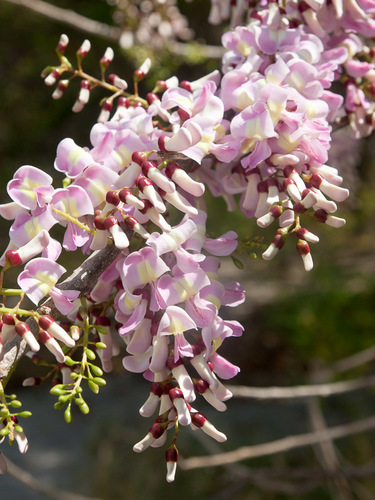
Crotalaria cleomifolia
Welw. ex Baker
iNaturalist· cc-by-nc-sa
(c) Marco Schmidt, some rights reserved (CC BY-NC-SA), uploaded by Marco Schmidt
iNaturalist· cc-by-nc-sa
(c) Marco Schmidt, some rights reserved (CC BY-NC-SA)
Description
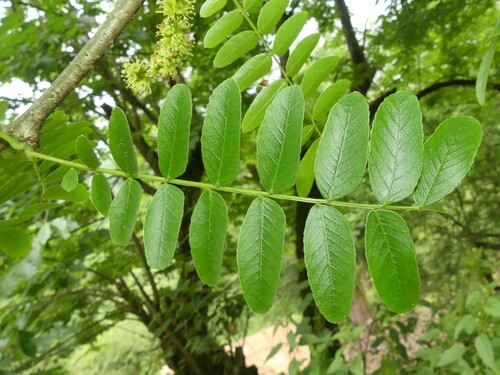
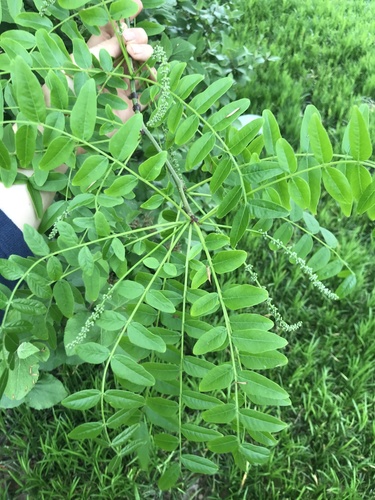
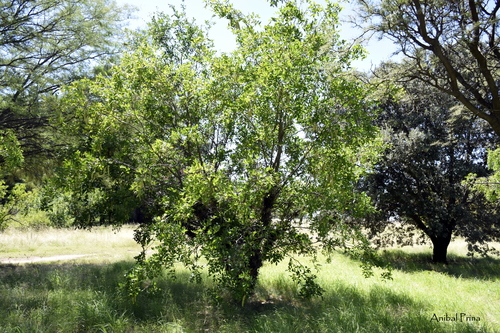
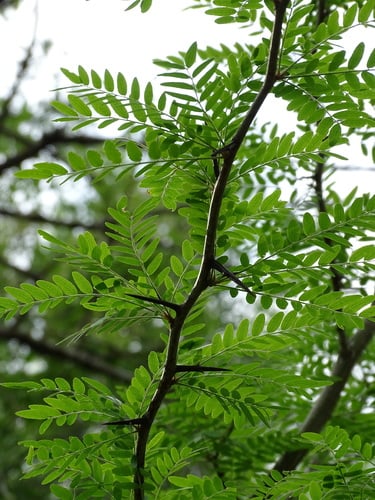
A semi-woody shrub. It grows 2-4 m high. The leaves are compound. They have 3-5 leaflets each 5-11 cm long. The flowers are yellow. They are in groups 20-40 cm long at the ends of branches. The fruit are pods 4-5 cm long and contain 30-40 seeds.
Edible Uses
The leaves are cooked and eaten as a green vegetable. The fruit pods can also be eaten.
Traditional Uses
The leaves are cooked and eaten as a green vegetable.
This uses section is brief — help expand it
Distribution
It is a tropical plant. It grows in grassy or wooded savannah in damp sites near streams in West Africa. It grows between 1,150-2,650 m above sea level. It can grow in arid places.
Where It Grows
Africa, Angola, Asia, Benin, Burkina Faso, Burundi, Cameroon, Central Africa, Central African Republic, CAR, Congo, East Africa, Ethiopia, Guinea, Guinée, Indochina, Kenya, Liberia, Malawi, Mali, Mozambique, Niger, Nigeria, Rwanda, Sahel, SE Asia, Sierra Leone, South Africa, Sudan, Tanzania, Togo, Uganda, Vietnam, West Africa, Zambia, Zimbabwe,
Cultivation
Plants can be grown from seeds. They can also be grown from semi-ripe cuttings.
Also Known As
Sucsac la-mangmang, Zumba
References (7)
- Abukutsa-Onyango, M.O., 2004. Crotalaria brevidens Benth. [Internet] Record from Protabase. Grubben, G.J.H. & Denton, O.A. (Editors). PROTA (Plant Resources of Tropical Africa), Wageningen, Netherlands. < http://database.prota.org/search.htm>. Accessed 15 October 2009.
- Burkill, H. M., 1985, The useful plants of west tropical Africa, Vol. 3. Kew.
- East African Herbarium records, 1981,
- Fowler, D. G., 2007, Zambian Plants: Their Vernacular Names and Uses. Kew. p 36
- Grubben, G. J. H. and Denton, O. A. (eds), 2004, Plant Resources of Tropical Africa 2. Vegetables. PROTA, Wageningen, Netherlands. p 234
Show all 7 references Hide references
- Peters, C. R., O'Brien, E. M., and Drummond, R.B., 1992, Edible Wild plants of Sub-saharan Africa. Kew. p 131
- Royal Botanic Gardens, Kew (1999). Survey of Economic Plants for Arid and Semi-Arid Lands (SEPASAL) database. Published on the Internet; http://www.rbgkew.org.uk/ceb/sepasal/internet [Accessed 28th April 2011]