Vicia ervilia
(L.) Willd.
Bitter vetch, Lentil vetch
iNaturalist· cc-by-nc
(c) Вадим, some rights reserved (CC BY-NC), uploaded by Вадим
iNaturalist· cc-by-nc
(c) Ron Frumkin, some rights reserved (CC BY-NC), uploaded by Ron Frumkin
iNaturalist· cc-by-nc-sa
(c) יאיר אור, some rights reserved (CC BY-NC-SA), uploaded by יאיר אור
Summary
Source: WikipediaVicia ervilia, called ervil or bitter vetch, is an ancient legume crop of the Mediterranean region. Besides the English names, other common names include: gavdaneh (Persian), kersannah (Arabic), yero (Spanish), rovi (Greek), and burçak (Turkish).
Description
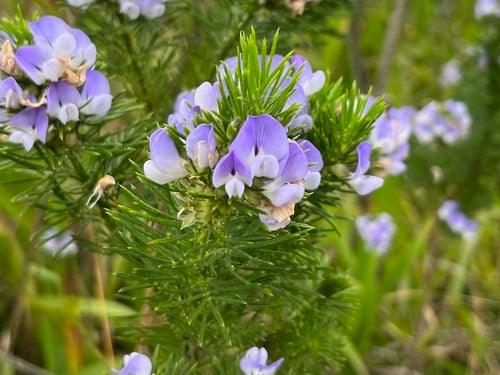
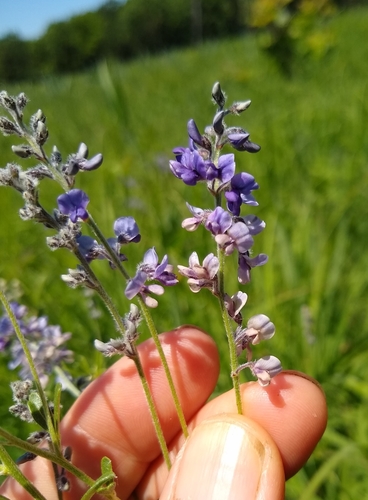
An annual herb. It is low and does not have tendrils. It grows up to 70 cm high. The leaves end with a short awn. There are 8-15 pairs of leaflets. The flowers are white with purple or red tinges. They are 6-9 mm long. There are 1-4 flowers in a group. The pods are yellow or red. They are 10-30 mm long and constricted between the seeds.
Edible Uses
Seeds are eaten cooked, used in the same way as lentils and occasionally added to soups. Some caution is advised regarding toxicity.
Traditional Uses
The seed are eaten in soup. They can also be boiled, roasted and made into flour.
This uses section is brief — help expand it
Medicinal Uses
None known.
Distribution
It grows in waste places and on stony ground. It grows in areas with an annual rainfall between 300-1,160 mm. It can grow in acid, neutral or alkaline soils. It can grow in soils with a pH between 5.6-8.2. It grows in areas with an annual temperature between 9°-20° C. It can grow from sea level up to 2,700 m above sea level in some locations. It can tolerate frost and drought. It can grow in arid places.
Where It Grows
Afghanistan, Africa, Albania, Algeria, Armenia, Asia, Austria, Balkans, Bulgaria, Canary Islands, Caucasus, Cyprus, Czech Republic, East Africa, Egypt, Europe, France, Germany, Greece, Iran, Iraq, Israel, Italy, Jordan, Kenya, Lebanon, Libya, Mediterranean, Middle East, Morocco, Mozambique, North Africa, North America, Pakistan, Portugal, Slovakia, Slovenia, Spain, Switzerland, Syria, Tunisia, Turkey, Türkiye, USA, Yugoslavia,
Cultivation
Plants are grown from seeds. It is often grown with cereal crops.
Propagation
Pre-soak the seed for 24 hours in warm water, then sow in situ in spring or autumn.
Other Uses
Functions as a nitrogen fixer.
Production
The average yield is 1,600 kg/ha.
Other Information
It is cultivated.
Notes
There are about 140 Vicia species. They are mostly temperate. The plant is used for cattle feed.
Nutrition
| Part | Moisture | kJ | kcal | Protein | Vit A | Vit C | Iron | Zinc |
|---|---|---|---|---|---|---|---|---|
| Seeds | 9.1 | 1511 | 361 | 20.2 | — | — | — | — |
Synonyms
Also Known As
Bakil, Ervil, Garfallah, Kersana, Kersenne, Kizin, Kiznok, Kurushna, Lečnata grašica
References (12)
- Blamey, M and Grey-Wilson, C., 2005, Wild flowers of the Mediterranean. A & C Black London. p 88
- Demir, I. & Ayaz, N., 2022, Wild edible plants contributing to the traditional foods of Mardin (Turkey) Province. Indian Journal of Traditional Knowledge Vol 21(3), July 2022, pp 569-582
- Food Composition Tables for the Near East. http://www/fao.org/docrep No. 207
- Hedrick, U.P., 1919, (Ed.), Sturtevant's edible plants of the world. p 674
- Hermandez Bermejo, J.E., and Leon, J. (Eds.), 1994, Neglected Crops. 1492 from a different perspective. FAO Plant Production and Protection Series No 26. FAO, Rome. p 263, 281
Show all 12 references Hide references
- http://www.botanic-gardens-ljubljana.com/en/plants
- Kiple, K.F. & Ornelas, K.C., (eds), 2000, The Cambridge World History of Food. CUP p 1733
- Plants for a Future database, The Field, Penpol, Lostwithiel, Cornwall, PL22 0NG, UK. http://www.scs.leeds.ac.uk/pfaf/
- Royal Botanic Gardens, Kew (1999). Survey of Economic Plants for Arid and Semi-Arid Lands (SEPASAL) database. Published on the Internet; http://www.rbgkew.org.uk/ceb/sepasal/internet [Accessed 1st May 2011]
- Sp. pl. 3(2):1103. 1802
- World Checklist of Useful Plant Species 2020. Royal Botanic Gardens, Kew
- Zeven, A. C. & de West, J. M. J., 1982, Dictionary of cultivated plants and their regions of diversity. Wageningen. p 96, 116