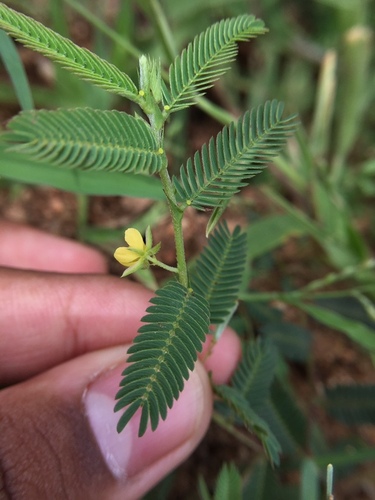
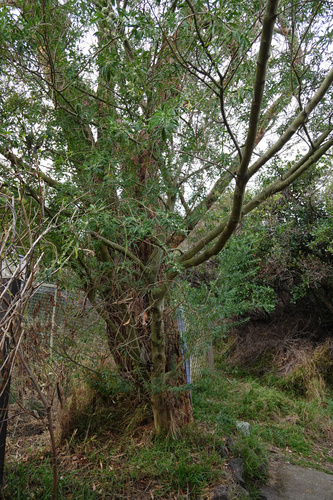
Vicia americana
Muhl. ex Willd.
American vetch
iNaturalist· cc-by
(c) Andrea Romero, some rights reserved (CC BY), uploaded by Andrea Romero
iNaturalist· cc-by-nc-sa
(c) Fred Losi, some rights reserved (CC BY-NC-SA)
iNaturalist· cc-by-nc-sa
(c) Fred Losi, some rights reserved (CC BY-NC-SA)
Summary
Source: WikipediaVicia americana is a species of legume in the vetch genus known by the common names American vetch and purple vetch. It includes a subspecies known as mat vetch.
Description
A twining plant. It grows 25-75 cm high. The leaves are alternate and compound. There are 8-14 leaflets. The stipule is small and arrow-shaped. There is a branched tendril. The flowers are bluish-purple and 25 mm long. The fruit is a smooth, flat pod. It is 30 mm long.
Edible Uses
Young shoots can be cooked and eaten. North American Indians eat the tender seeds, using both the mature seeds and the immature seedpods. The pods are about 3 cm long and contain 4–7 seeds.
Traditional Uses
The seeds are used as food The pods are used as food. The stems are baked or boiled and eaten as greens.
This uses section is brief — help expand it
Medicinal Uses
The leaves have been rubbed in the hands and applied to spider bites. An infusion of the crushed leaves has been used as a bath for treating soreness. An infusion of the plant has been used as an eyewash. An infusion of the leaves has been used by women as a love medicine.
Known Hazards
None known
Distribution
It is a temperate plant. It grows in open woods and grassland. It suits hardiness zones 3-7.
Where It Grows
Canada, North America, USA,
Cultivation
We have very little information on this species and do not know if it will be hardy in Britain, though judging by its native range it should succeed outdoors in many parts of the country. The following notes are based on the general needs of the genus. Succeeds in any well-drained soil in a sunny position if the soil is reliably moist throughout the growing season, otherwise it is best grown in semi-shade. A climbing plant, attaching itself to supports by means of tendrils. This species has a symbiotic relationship with certain soil bacteria, these bacteria form nodules on the roots and fix atmospheric nitrogen. Some of this nitrogen is utilized by the growing plant but some can also be used by other plants growing nearby. Growth habit is a single or multiple shooting vine from a crown. Herbaceous.
Propagation
Pre-soak seed for 24 hours in warm water, then sow in situ in spring or autumn.
Other Uses
The stout roots have been used for tying. The plant is a dynamic accumulator, gathering minerals and nutrients from the soil and storing them in a more bioavailable form for use as fertilizer or to improve mulch. It is also a nitrogen fixer.
Notes
There are about 140 Vicia species. They are mostly temperate.
Synonyms
References (8)
- Beckstrom-Sternberg, Stephen M., and James A. Duke. "The Foodplant Database." http://probe.nalusda.gov:8300/cgi-bin/browse/foodplantdb.(ACEDB version 4.0 - data version July 1994)
- Cormack, R. G. H., 1967, Wild Flowers of Alberta. Commercial Printers Edmonton, Canada. p 186
- http://www.stoller-eser.com/Flora/ethnobotany_table.htm
- Jackes, D. A., 2007, Edible Forest Gardens
- Kiple, K.F. & Ornelas, K.C., (eds), 2000, The Cambridge World History of Food. CUP p 1875
Show all 8 references Hide references
- Moerman, D. F., 2010, Native American Ethnobotany. Timber Press. p 595
- Plants for a Future database, The Field, Penpol, Lostwithiel, Cornwall, PL22 0NG, UK. http://www.scs.leeds.ac.uk/pfaf/
- Sp. pl. 3(2):1096. 1802