Caesalpinia pulcherrima
(L.) Swartz.
Barbados pride
iNaturalist· cc-by-nc
(c) Jonathan Ortiz Torres, some rights reserved (CC BY-NC), uploaded by Jonathan Ortiz Torres
iNaturalist· cc-by-nc
(c) Hans Ohrt, some rights reserved (CC BY-NC), uploaded by Hans Ohrt
iNaturalist· cc-by-nc
(c) David Monroy R, some rights reserved (CC BY-NC), uploaded by David Monroy R
Summary
Source: WikipediaCaesalpinia pulcherrima is a species of flowering plant in the pea family Fabaceae, native to the tropics and subtropics of the Americas. It could be native to the West Indies, but its exact origin is unknown due to widespread cultivation. Common names for this species include poinciana, peacock flower, red bird of paradise, Mexican bird of paradise, dwarf poinciana, pride of Barbados, flos pavonis, and flamboyant-de-jardin. The Hawaiian name for this plant is ʻohai aliʻi.
Description
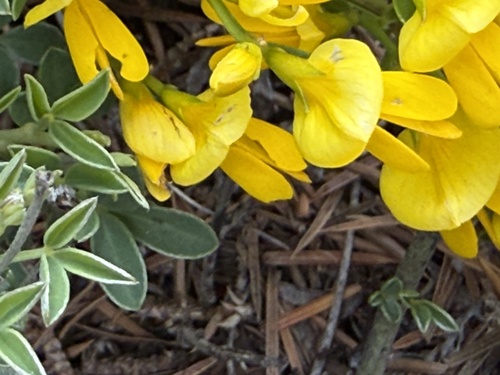
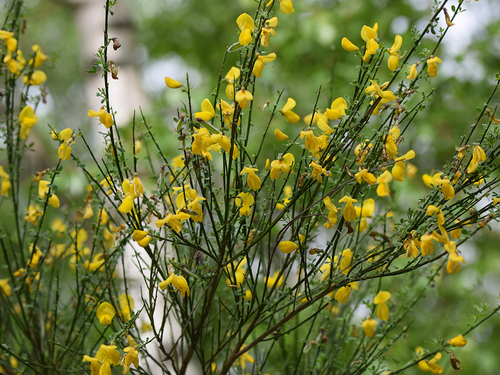
A bush or shrub. It grows 3 m tall. It has a single stem at the base. It branches widely. The leaves are compound and are divided twice. There can be 12 pairs of leaflets. These are 2 cm long. There are long flower spikes on the ends of most branches. The flowers have long stalks. The flowers can be red, pink, gold or yellow. The petals have wavy edges. The stamens are long. The fruit are flat, hanging pods. They are 12 cm long. They are green and turn dark brown. The pods twist open on the tree.
Edible Uses
The mature seeds are eaten raw, young seeds are eaten fresh or cooked, and flowers are lightly cooked and eaten.
Traditional Uses
The mature seeds are eaten raw. The young seeds are eaten fresh or cooked. The flowers are lightly cooked and eaten. Caution: The plant can contain hydrocyanide so needs to be cooked before using.
Medicinal Uses
Maria Sibylla Merian, a 17th-century artist, encountered this plant in the Dutch colony of Surinam. In her work, Metamorphosis insectorum Surinamensium, Merian recorded that African slaves and native Indian populations used the flos pavonis or peacock flower as an abortifacient in their practice of traditional medicine. She wrote: The Indians, who are not treated well by their Dutch masters, use the seeds [of this plant] to abort their children, so that their children will not become slaves like they are. The black slaves from Guinea and Angola have demanded to be well treated, threatening to refuse to have children. They told me this themselves. The leaves, flower, bark, and seeds of C. pulcherrima were also used by American Indians in traditional medicine as abortifacients and for suicide by enslaved peoples.
Known Hazards
The plant can contain hydrocyanide and must be cooked before use.
Distribution
A tropical plant. It grows throughout the tropics. It East Africa it grows best near the coast. It does best with moderate rainfall and a seasonally dry climate. It suits sandy, well-drained soil. It needs full sun. It is salt tolerant. It is damaged by drought or frost. It grows below 2,000 m above sea level. It can grow in arid places. In XTBG Yunnan. It suits hardiness zones 11-12.
Where It Grows
Africa, Asia, Australia, Barbados*, Bolivia, Brazil, Burkina Faso, Caroline Islands, Central America, China, Colombia, Costa Rica, Cuba, Dominican Republic, East Africa, East Timor, Ecuador, Egypt, El Salvador, Ethiopia, Fiji, Guatemala, Guiana, Guianas, Guyana, Haiti, Hawaii, India, Indochina, Indonesia, Jamaica, Laos, Malawi, Malaysia, Maldives, Marquesas, Mediterranean, Mexico, Mozambique, Myanmar, New Caledonia, Niue, North Africa, North America, Pacific, Pakistan, Papua New Guinea, PNG, Paraguay, Peru, Philippines, Puerto Rico, Rotuma, Samoa, Sao Tome and Principe, SE Asia, Slovenia, South America, Southern Africa, Sri Lanka, Suriname, Taiwan, Thailand, Timor-Leste, Tonga, Trinidad-Tobago, Tuvalu, USA, Vanuatu, Venezuela, Vietnam, West Africa, West Indies, Zambia,
Cultivation
It can be grown from seed. Seed need treatment before sowing. They can also be grown from cuttings.
Propagation
Seed - pre-soak for 12 - 24 hours in warm water prior to sowing. When large enough to handle, prick the seedlings out into individual pots and grow them on until large enough to plant out. Softwood cuttings in sand in a frame.
Other Uses
An ink is made from the charred wood. The seeds (seedpods?) are a source of tannins. A yellow dye (when combined with alum) or black dye (when combined with iron) can be obtained. The heartwood is pale pink or lustrous golden brown to dull brown; it is clearly demarcated from the thin band of yellowish-white sapwood. The wood has no distinctive taste, but has a faint rancid odour; it is straight-grained; fine-textured; heavy, strong, compact, but susceptible to insect attack. The wood makes an excellent charcoal. The plant is very tolerant of pruning, regrowing even if cut right back to ground level. It is often grown as a hedge.
Production
It is fast growing.
Notes
There are about 150 Caesalpinia species. They grow in the tropics and subtropics. Also as Caesalpinaceae.
Nutrition
| Part | Moisture | kJ | kcal | Protein | Vit A | Vit C | Iron | Zinc |
|---|---|---|---|---|---|---|---|---|
| Seeds | — | — | 6.5 | — | — | — | — | — |
| Flowers | — | — | — | — | — | — | — | — |
Synonyms
Also Known As
Alai-apaw, Bunga merak, Butsu krismas, Caballero, Cana, Chana, Chinna turai, Daung-sok, Diep cung, Diep ta, Fathangumaa, Fitihetau, Guacamayo, Gulu-tora, Gulutura, Haang-nok-yung-thai, Hang nok yung tai, Jambul merak, Kemerakan barbados, Kenjige, Kim phuong, Krasna cezalpinija, Krishnachura, Laupa, Malinche, Mayikonnai, Mnyonyore, Monara mal, Nok yung tai, Pamiditangedu, Peacock flower, Pride of Barbados, Ratanagandhi, Ratnagandhi, Sandhesharo, Seinban-gale, Settimandaram, Suma, Tabachin, Viranga, Zaung-gale
References (36)
- Ambasta S.P. (Ed.), 2000, The Useful Plants of India. CSIR India. p 94
- Bircher, A. G. & Bircher, W. H., 2000, Encyclopedia of Fruit Trees and Edible Flowering Plants in Egypt and the Subtropics. AUC Press. p 72
- Blamey, M and Grey-Wilson, C., 2005, Wild flowers of the Mediterranean. A & C Black London. p 111
- Bodkin, F., 1991, Encyclopedia Botanica. Cornstalk publishing, p 181
- Burkill, H. M., 1985, The useful plants of west tropical Africa, Vol. 2. Kew.
Show all 36 references Hide references
- Burkill, I.H., 1966, A Dictionary of the Economic Products of the Malay Peninsula. Ministry of Agriculture and Cooperatives, Kuala Lumpur, Malaysia. Vol 1 (A-H) p 393
- Cabalion, P. and Morat, P., 1983, Introduction le vegetation, la flore et aux noms vernaculaires de l'ile de Pentcoste (Vanuatu), In: Journal d'agriculture traditionnelle et de botanique appliquee JATBA Vol. 30, 3-4
- Cundall, P., (ed.), 2004, Gardening Australia: flora: the gardener's bible. ABC Books. p 276
- Dharani, N., 2002, Field Guide to common Trees & Shrubs of East Africa. Struik. p 205
- Engel, D.H., & Phummai, S., 2000, A Field Guide to Tropical Plants of Asia. Timber Press. p 123
- Etherington, K., & Imwold, D., (Eds), 2001, Botanica's Trees & Shrubs. The illustrated A-Z of over 8500 trees and shrubs. Random House, Australia. p 154
- Facciola, S., 1998, Cornucopia 2: a Source Book of Edible Plants. Kampong Publications, p 66
- Fowler, D. G., 2007, Zambian Plants: Their Vernacular Names and Uses. Kew. p 80
- Hedrick, U.P., 1919, (Ed.), Sturtevant's edible plants of the world. p 141
- Hibbert, M., 2002, The Aussie Plant Finder 2002, Florilegium. p 48
- Kermath, B. M., et al, 2014, Food Plants in the Americas: A survey of the domesticated, cultivated and wild plants used for Human food in North, Central and South America and the Caribbean. On line draft. p 157
- Llamas, K.A., 2003, Tropical Flowering Plants. Timber Press. p 201
- Observ. bot. 166. 1791
- Parham, B. E. V., 1972, Plants of Samoa. New Zealand Department of Scientific and Industrial Research. Information Series. No. 85 p 60
- Piedra-Malagón, E. M., et al, 2022, Edible native plants of the Gulf of Mexico Province. Biodiversity Data Journal 10: e80565 p 21
- Plants of Haiti Smithsonian Institute http://botany.si.edu/antilles/West Indies
- Rajasab, A. H. et al, 2004, Documentation of folk knowledge on edible wild plants of North Karnataka. Indian Journal of Traditional Knowledge. Vol 3(4) pp 419-429
- Reddy, K.R., 1989, Additional Notes on the Wild Edible Plants of India. J. Econ. Tax. Bot. Vol. 13 No. 1 pp 125-127
- Reis, S. V. and Lipp, F. L., 1982, New Plant Sources for Drugs and Foods from the New York Botanical Garden herbarium. Harvard. p 121
- Royal Botanic Gardens, Kew (1999). Survey of Economic Plants for Arid and Semi-Arid Lands (SEPASAL) database. Published on the Internet; http://www.rbgkew.org.uk/ceb/sepasal/internet [Accessed 21st April 2011]
- Ruiters-Welcome, A. K., 2019, Food plants of southern Africa. Ph.D. thesis. Univ. of Johannesburg p 56
- Selvam, V., 2007, Trees and shrubs of the Maldives. RAP Publication No. 2007/12 p 44
- Slik, F., www.asianplant.net
- Smith, A.C., 1985, Flora Vitiensis Nova, Lawaii, Kuai, Hawaii, Volume 3 p 92
- Sujanapal, P., & Sankaran, K. V., 2016, Common Plants of Maldives. FAO & Kerala FRI, p 64
- Sukarya, D. G., (Ed.) 2013, 3,500 Plant Species of the Botanic Gardens of Indonesia. LIPI p 597
- Thaman, R. R, 2016, The flora of Tuvalu. Atoll Research Bulletin No. 611. Smithsonian Institute p 88
- van Wyk, Ben-Erik, 2019, The diversity and multiple uses of southern African legumes. Australian Systematic Botany, 2019, 32, 519–546
- Welcome, A. K. & Van Wyk, B.-E., 2019, An inventory and analysis of the food plants of southern Africa. South African Journal of Botany 122 (2019) 136–179
- World Checklist of Useful Plant Species 2020. Royal Botanic Gardens, Kew
- Yetman, D., 2002, The Guarijios of the Sierra Madre: Hidden People of Northwestern Mexico. University of New Mexico Press. p 197