Viburnum dilatatum
Thunberg
Japanese Cranberry, Linden Arrow-wood, Linden viburnum
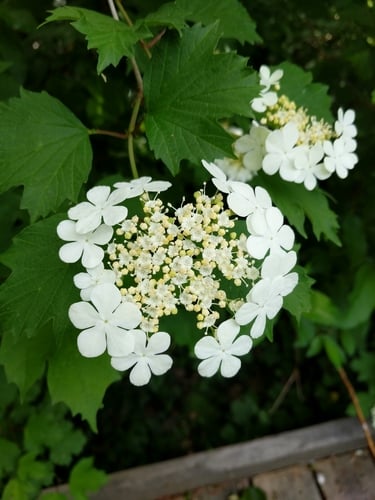
iNaturalist· cc-by-nc
(c) inatdorbal, some rights reserved (CC BY-NC)
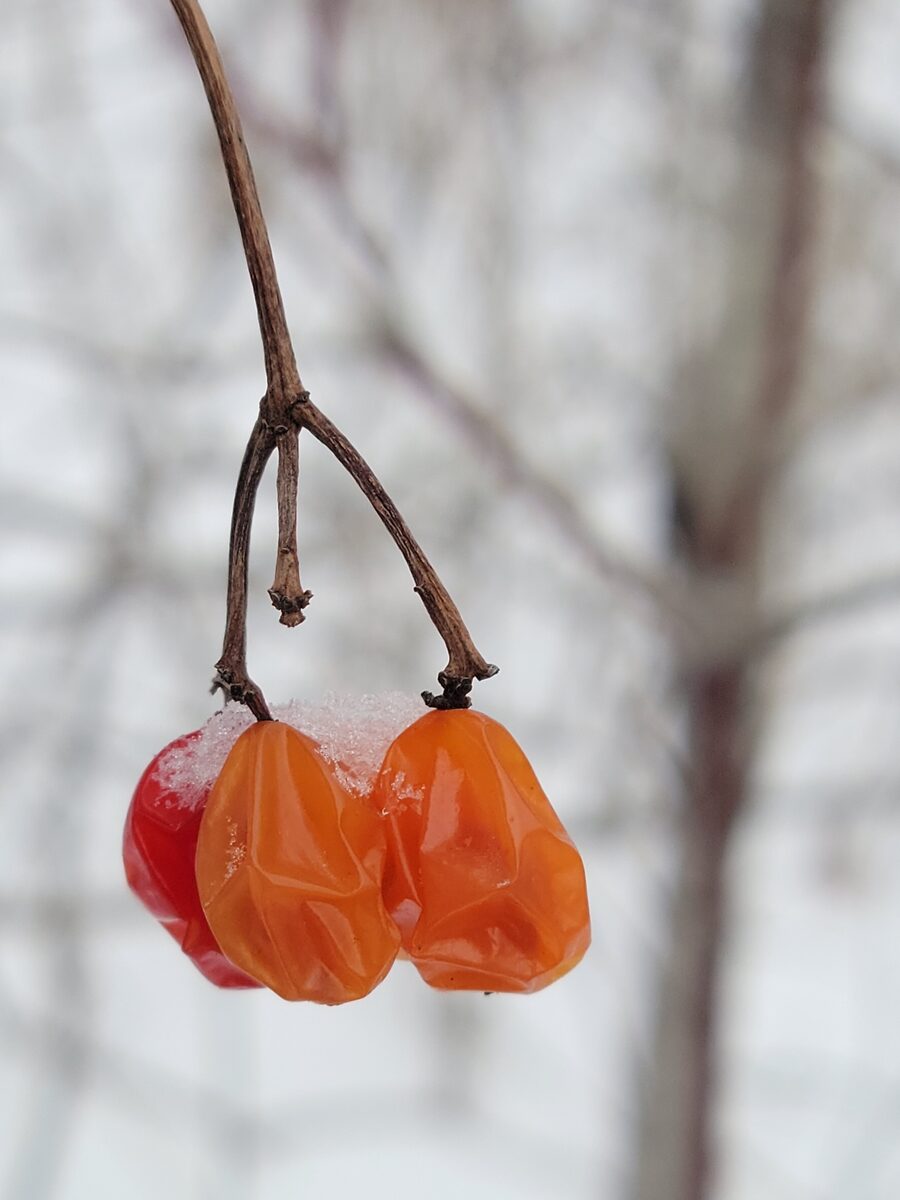
iNaturalist· cc-by-nc
(c) jumpinjude, some rights reserved (CC BY-NC)
Summary
Source: WikipediaViburnum dilatatum, commonly known as linden arrowwood or linden viburnum, is a deciduous shrub in the moschatel family (Adoxaceae). It is native to eastern Asia, and can be found as an introduced plant in the mid-Atlantic regions in the U.S from New York to Virginia. Linden arrowwood is known for the clusters of red drupes it produces when it is mature.
Description
A bushy shrub. It loses its leaves during the year. It grows 3 m tall and spreads 2.4 m wide. The leaves are large and rounded or oval. They have teeth along the edge. They turn red in autumn. The flowers are creamy white and star shaped. They occur in clusters. The fruit are oval and bright red.
Edible Uses
The fruit can be eaten raw or cooked and has a sweet flavour. Each ovoid fruit is about 8mm long and contains a single large seed. Leaves can also be eaten cooked.
Traditional Uses
The fruit can be eaten fresh when ripe. The fruit can be boiled into a porridge with juice from the stems.
This uses section is brief — help expand it
Medicinal Uses
A decoction of the leaves is astringent and vermifuge, and is used for washing and healing maggoty sores. The twigs are also vermifuge, and the fruits are used as a vermifuge specifically for children.
Distribution
It is a temperate plant. In southern China it grows on the edges of forests between 100-1,000 m above sea level. It suits hardiness zones 5-8. In Sichuan and Yunnan.
Where It Grows
Asia, Australia, China*, Japan*, Korea, Taiwan,
Cultivation
An easily grown plant, it succeeds in most soils but is ill-adapted for poor soils and for dry situations. It prefers a deep rich loamy soil in sun or semi-shade. Best if given shade from the early morning sun in spring. Plants are self-incompatible and need to grow close to a genetically distinct plant in the same species in order to produce fruit and fertile seed. A very ornamental and polymorphic species, there are some named varieties developed for the ornamental value of the fruit.
Propagation
Sow seed in a cold frame as soon as it is ripe. Germination can be slow, sometimes exceeding 18 months. Seed harvested green — fully developed but not yet fully ripe — and sown immediately in a cold frame should germinate the following spring. Stored seed needs 2 months of warm stratification followed by 3 months cold, and may still take 18 months to germinate. Prick seedlings into individual pots when large enough and grow on in a cold frame or greenhouse, planting out in late spring or early summer of the following year. Take softwood cuttings in early summer in a frame; pot individually once rooting begins and plant out the following late spring or early summer. Take half-ripe cuttings 5–8 cm long with a heel if possible in July or August in a frame; pot individually as soon as rooting starts — these can be difficult to overwinter and are best kept under glass until the following spring before planting out. Take mature wood cuttings in winter in a frame; they should root in early spring — pot when large enough and plant out in summer if sufficient new growth has been made, otherwise overwinter in a cold frame and plant out the following spring. Layer current season's growth in July or August; takes 15 months.
Other Uses
A fibre obtained from the inner bark is used for making ropes.
Other Information
The fruit are eaten especially by children.
Notes
There are about 150 Viburnum species. Also put in the family Caprifoliaceae.
Synonyms
Also Known As
Gamazumi, Pu tong a bo, Yosozome, Yotsuzumi
References (14)
- Altschul, S.V.R., 1973, Drugs and Foods from Little-known Plants. Notes in Harvard University Herbaria. Harvard Univ. Press. Massachusetts. no. 4347
- Bodkin, F., 1991, Encyclopedia Botanica. Cornstalk publishing, p 1015
- Brickell, C. (Ed.), 1999, The Royal Horticultural Society A-Z Encyclopedia of Garden Plants. Convent Garden Books. p 1048
- Cundall, P., (ed.), 2004, Gardening Australia: flora: the gardener's bible. ABC Books. p 1466
- Hibbert, M., 2002, The Aussie Plant Finder 2002, Florilegium. p 306
Show all 14 references Hide references
- Hu, Shiu-ying, 2005, Food Plants of China. The Chinese University Press. p 688
- Hwang, HS, et al, 2014, Distribution characteristics of plant in the Ungseokbong Mountain, Gyeongsangnam-do, Korea. Journal of Asia-Pacific Biodiversity. 7(2014) e164-e178
- Levy-Yamamori, R., & Taaffe, G., 2004, Garden Plants of Japan. Timber Press. p 254
- Lord, E.E., & Willis, J.H., 1999, Shrubs and Trees for Australian gardens. Lothian. p 268
- Luo, B., et al, 2019, Wild edible plants collected by Hani from terraced rice paddy agroecosystem in Honghe Prefecture, Yunnan, China. Journal of Ethnobiology and Ethnomedicine 15:56
- J. A. Murray, Syst. veg. ed. 14:295. 1784 May-Jun (Fl. jap. 124. 1784 Aug)
- Plants for a Future database, The Field, Penpol, Lostwithiel, Cornwall, PL22 0NG, UK. http://www.scs.leeds.ac.uk/pfaf/
- READ,
- Woo, Y., et al, 2017, Antioxidant Potential of Selected Korean Edible Plant Extracts. Hindawi BioMed Research International Volume 2017, Article ID 7695606
More from Adoxaceae
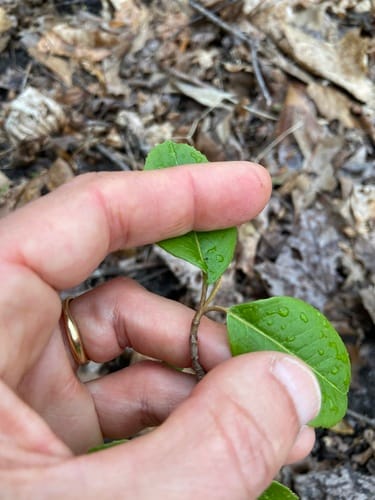
Viburnum nudum
Smooth withe rod, Naked Viburnum, Possum-haw
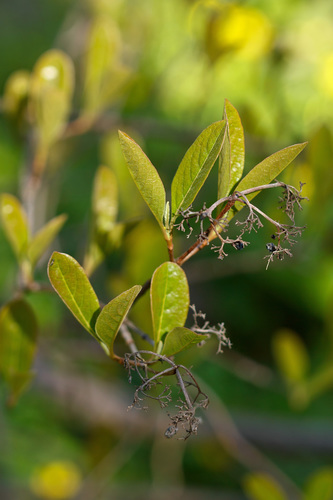
Viburnum nudum var. cassinoides
Possum-haw
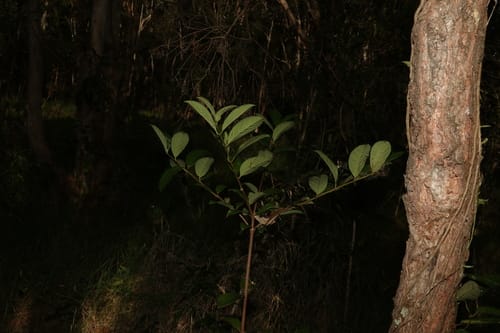
Viburnum odoratissimum
Sweet Arrowwood, Sweet Viburnum, Coral tree
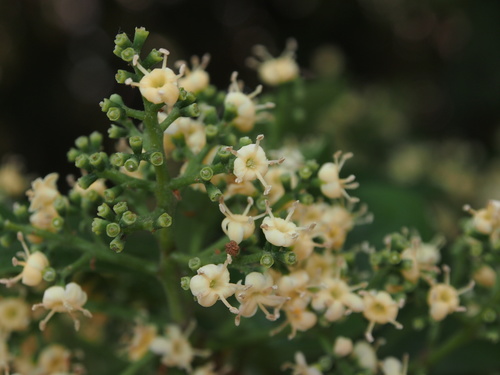
Viburnum odoratissimum var. awabuki
Awabuki sweet viburnum
Viburnum opulus
Guelder Rose, Cranberry Bush
Viburnum opulus var. americanum
American cranberry-bush, Highbush cranberry