Viburnum dentatum
L.
Arrow wood, Southern arrowwood
iNaturalist· cc-by
(c) Ashwin Srinivasan, some rights reserved (CC BY), uploaded by Ashwin Srinivasan
iNaturalist· cc-by-nc
(c) Sean Blaney, some rights reserved (CC BY-NC)
iNaturalist· cc-by-nc
(c) Sean Blaney, some rights reserved (CC BY-NC)
Summary
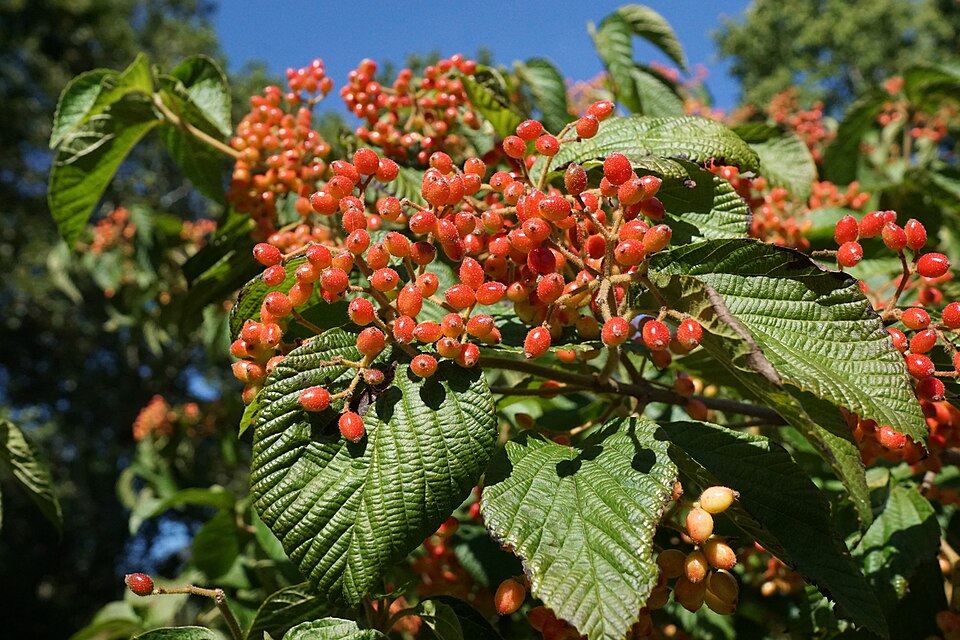
Source: WikipediaViburnum dentatum, southern arrowwood or arrowwood viburnum or roughish arrowwood, is a small shrub, native to the eastern United States and Canada from Maine south to northern Florida and eastern Texas. Like most Viburnum, it has opposite, simple leaves and fruit in berry-like drupes. Foliage turns yellow to red in late fall. Localized variations of the species are common over its entire geographic range. Common differences include leaf size and shape and placement of pubescence on leaf undersides and petioles. V. dentatum occurs in habitat types such as upland mixed woodlands, mesic pine-oak woods, hardwood hammocks, and floodplains. Some moth larvae feed on V. dentatum. Known such species include the unsated sallow (or arrowwood sallow; Metaxaglaea inulta) and Phyllonorycter viburnella. It is also consumed by the viburnum leaf beetle (Pyrrhalta viburni), an invasive species from Eurasia. The fruits are a food source for songbirds. Berries contain 41.3% fat. The fruits appear blue. The major pigments are cyanidin 3-glucoside, cyanidin 3-sambubioside, and cyanidin 3-vicianoside, but the total mixture is very complex. Native Americans used the young stems to make arrow shafts.
Description
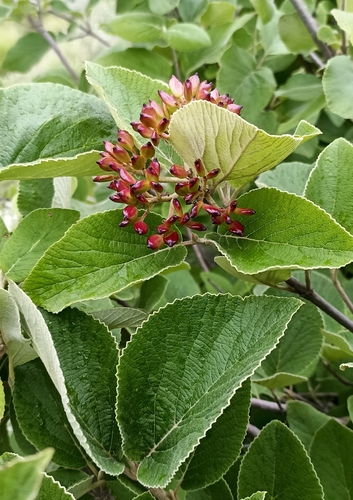
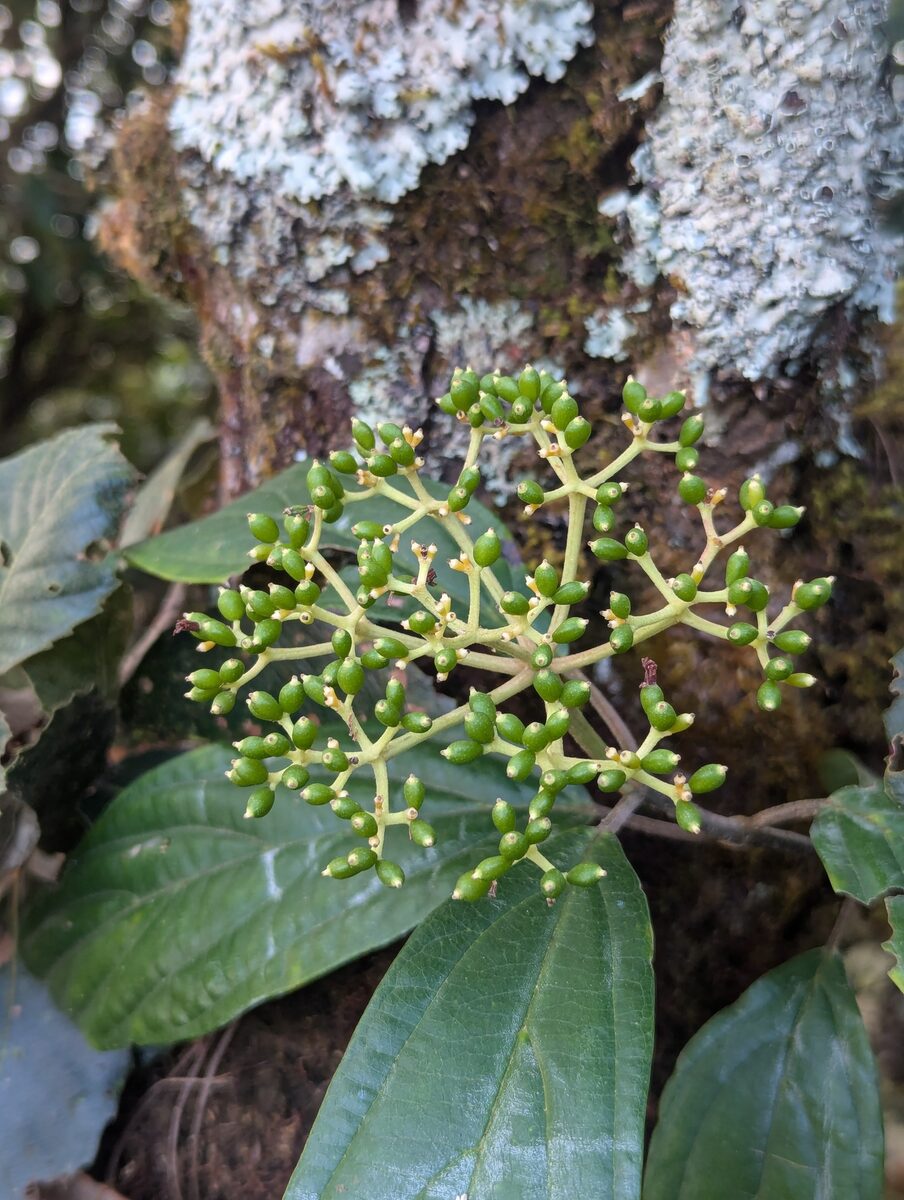
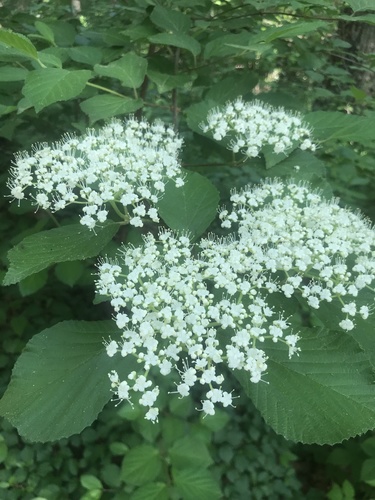
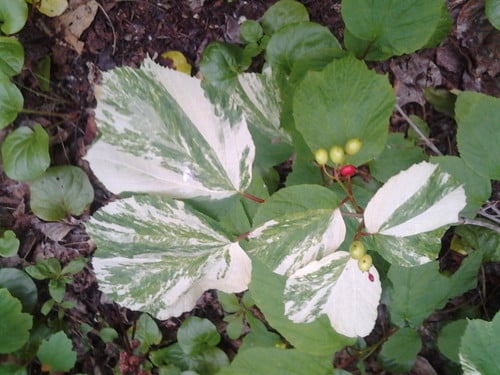
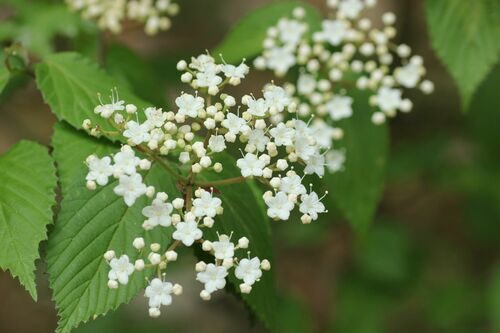
A shrub. It grows 3 m high and spreads 3 m wide. It loses its leaves during the year. The stems are erect and branching. They are 7.5 cm across. The leaves are 4-10 cm long by 2.5-9 cm wide. The leaves are broadly oval and have coarse teeth along the edge. The leaves are dull green above and paler underneath. The leaves turn red in autumn. The flowers are small and white and are in flat clusters. The fruit are dark blue and oblong. They are juicy and have a flat stone.
Edible Uses
The fruit can be eaten raw or cooked and has a pleasantly sweet flavour, though there is very little edible flesh surrounding a relatively large seed. Fruits measure up to 9.5mm in diameter.
Medicinal Uses
A decoction of the twigs has been taken by women to prevent conception. A poultice of the plant has been applied to the swollen legs of a woman after childbirth. Both uses apply to the sub-species V. dentatum lucidum Ait.
Distribution
It is a temperate plant. It grows in moist to dry soils, especially sandy soils. It can form thickets in open forest. It grows to 1370 m altitude in the southern USA. It suits hardiness zones 2-6. Arboretum Tasmania. In Melbourne Botanical Gardens.
Where It Grows
Asia, Australia, Canada, Japan, North America*, Tasmania, USA,
Cultivation
An easily grown plant, it succeeds in most soils but is ill-adapted for poor soils and for dry situations. It prefers a deep rich loamy soil in sun or semi-shade. Best if given shade from the early morning sun in spring. Plants are self-incompatible and need to grow close to a genetically distinct plant in the same species in order to produce fruit and fertile seed.
Propagation
Sow seed in a cold frame as soon as it is ripe. Germination can be slow, sometimes exceeding 18 months. Seed harvested green — fully developed but not yet fully ripe — and sown immediately in a cold frame should germinate the following spring. Stored seed needs 2 months of warm stratification followed by 3 months cold, and may still take 18 months to germinate. Prick seedlings into individual pots when large enough and grow on in a cold frame or greenhouse, planting out in late spring or early summer of the following year. Take softwood cuttings in early summer in a frame; pot individually once rooting begins and plant out the following late spring or early summer. Take half-ripe cuttings 5–8 cm long with a heel if possible in July or August in a frame; pot individually as soon as rooting starts — these can be difficult to overwinter and are best kept under glass until the following spring before planting out. Take mature wood cuttings in winter in a frame; they should root in early spring — pot when large enough and plant out in summer if sufficient new growth has been made, otherwise overwinter in a cold frame and plant out the following spring. Layer current season's growth in July or August; takes 15 months.
Other Uses
None known
Notes
There are about 150 Viburnum species. Also put in the family Caprifoliaceae.
Synonyms
References (7)
- Chen, B. & Qiu, Z., Consumer's Attitudes towards Edible Wild Plants, Ishikawa Prefecture, Japan. p 26 www.hindawi.com/journals/ijfr/aip/872413.pdf
- Cundall, P., (ed.), 2004, Gardening Australia: flora: the gardener's bible. ABC Books. p 1466
- Hibbert, M., 2002, The Aussie Plant Finder 2002, Florilegium. p 306
- Little, E.L., 1980, National Audubon Society Field Guide to North American Trees. Alfred A. Knopf. p 670
- Lord, E.E., & Willis, J.H., 1999, Shrubs and Trees for Australian gardens. Lothian. p 268
Show all 7 references Hide references
- Plants for a Future database, The Field, Penpol, Lostwithiel, Cornwall, PL22 0NG, UK. http://www.scs.leeds.ac.uk/pfaf/
- Sp. pl. 1:268. 1753