Viburnum cotinifolium
D. Don
iNaturalist· cc-by-nc
(c) Rajendra Koranga, some rights reserved (CC BY-NC), uploaded by Rajendra Koranga
iNaturalist· cc-by
(c) Sagnik Dutta Roy, some rights reserved (CC BY)
iNaturalist· cc-by
(c) Sagnik Dutta Roy, some rights reserved (CC BY)
Summary
Source: WikipediaViburnum cotinifolium, the Indian wayfaring tree, is a species of flowering plant in the family Viburnaceae. It is a deciduous shrub native to the Himalayan region. Its fruit is regularly consumed by Asiatic black bears (Ursus thibetanus).
Description
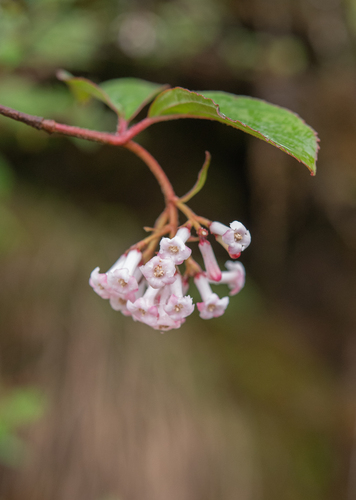
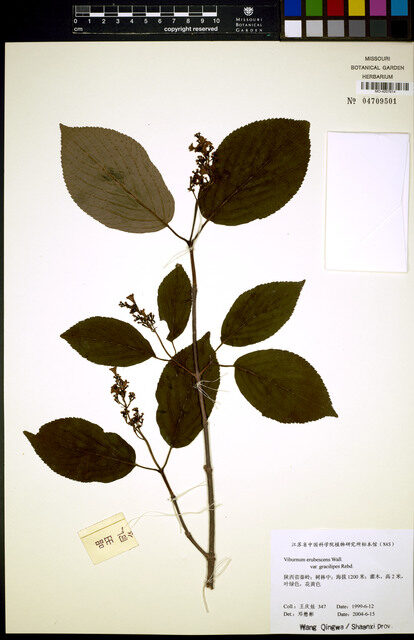
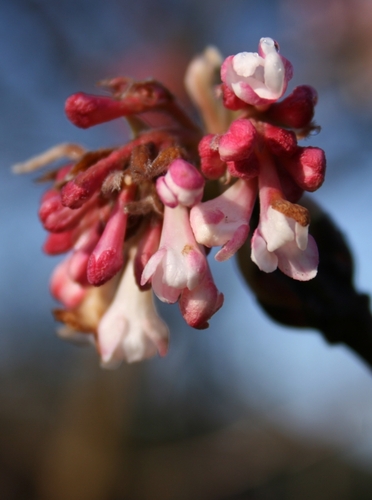
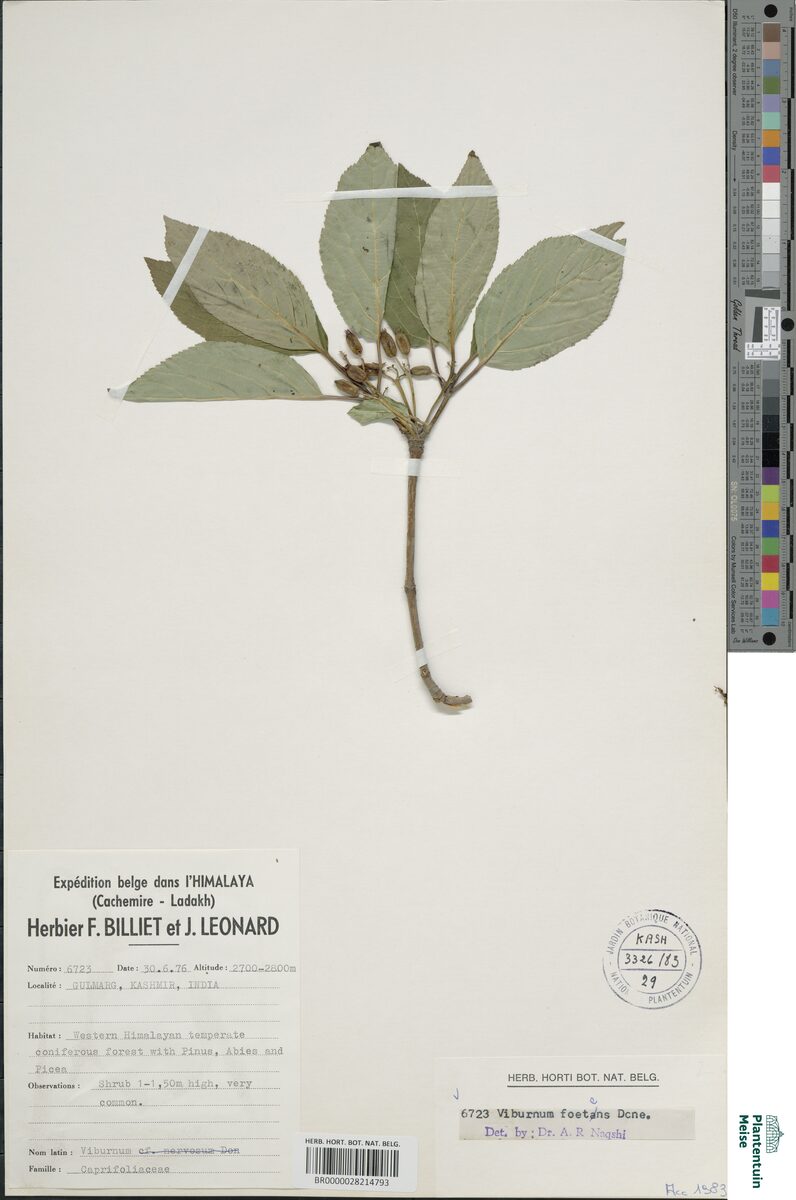
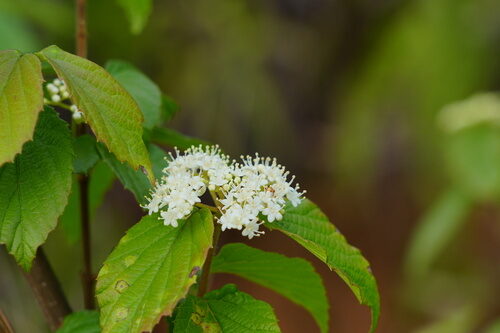
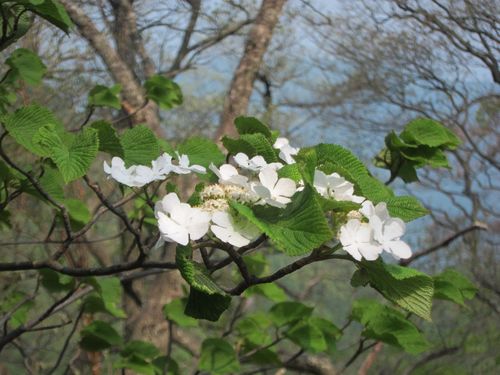
A large deciduous shrub. The stems are 2-3 m long. The young shoots and underneath the leaves are covered with white, woolly, star-shaped hairs. The leaves are 5-12 cm long and rounded. They can have blunt teeth. The flowers are in domed clusters at the top of the plant. They are white with a tinge of pink. The flower clusters can be 5-10 cm across. The flowers are 8 mm across. The fruit are red and turn black when ripe. They are 8-13 mm across. They are edible. They have one seed.
Edible Uses
The fruit can be eaten raw or cooked and has a sweetish flavour. Each ovoid fruit is about 12mm long and contains a single large seed.
Traditional Uses
The ripe fruit are eaten raw. They are sweet.
This uses section is brief — help expand it
Medicinal Uses
None known
Distribution
It is a temperate plant. Garhwal Himalayas. In the Himalayas it grows between 1,800-3,600 m altitude. It grows in forest and shrub. It grows in open sunny places. Arboretum Tasmania.
Where It Grows
Afghanistan, Asia, Australia, Bhutan, China, Himalayas, India, Nepal, Pakistan, Tasmania, Tibet,
Cultivation
An easily grown plant, it succeeds in most soils but is ill-adapted for poor soils and for dry situations. It prefers a deep rich loamy soil in sun or semi-shade. Best if given shade from the early morning sun in spring. Hardy to about -15°c. Plants are self-incompatible and need to grow close to a genetically distinct plant in the same species in order to produce fruit and fertile seed. Closely allied to V. lantana, but not as hardy as that species.
Propagation
Sow seed in a cold frame as soon as it is ripe. Germination can be slow, sometimes exceeding 18 months. Seed harvested green — fully developed but not yet fully ripe — and sown immediately in a cold frame should germinate the following spring. Stored seed needs 2 months of warm stratification followed by 3 months cold, and may still take 18 months to germinate. Prick seedlings into individual pots when large enough and grow on in a cold frame or greenhouse, planting out in late spring or early summer of the following year. Take softwood cuttings in early summer in a frame; pot individually once rooting begins and plant out the following late spring or early summer. Take half-ripe cuttings 5–8 cm long with a heel if possible in July or August in a frame; pot individually as soon as rooting starts — these can be difficult to overwinter and are best kept under glass until the following spring before planting out. Take mature wood cuttings in winter in a frame; they should root in early spring — pot when large enough and plant out in summer if sufficient new growth has been made, otherwise overwinter in a cold frame and plant out the following spring. Layer current season's growth in July or August; takes 15 months.
Other Uses
The wood is hard and close grained.
Other Information
They are only eaten in small amounts except during times of famine.
Notes
There are about 150 Viburnum species. Also put in the family Caprifoliaceae.
Synonyms
Also Known As
Aoon, Aoza, Baklo pate, Bankunch, Banr guch, Bansura, Bathor, Bhutool, Chamayarddi, Gabian, Ghatmila, Ghenu, Ghinwa, Guch, Guya, Gwia, Jiawa, Ka-kaboot, Katonde, Khimor, Khom pang, Kilmich, Marghwalawa, Nakar, Papat kalam, Rajab, Richh uklu, Richhabi, Sussu, Taliana, Thorayi, Tilhanj, Tit mulya, Tumma, Tustus
References (31)
- Agarwal, R. & Chandra, V., 2019, Diversity of wild edible plants in the Mandal-Chopta forest, Uttarakhand. Journal of Medicinal Plants Studies 2019; 7(1): 89-92
- Ahmad, K. & Pieroni, A., 2016, Folk knowledge of wild food plants among the tribal communities of Thakht-e-Sulaiman Hills, North-West Pakistan. Journal of Ethnobiology and Ethnomedicine, 12:17
- Ambasta, S.P. (Ed.), 2000, The Useful Plants of India. CSIR India. p 673
- Amin, M., et al, 2023, Edible wild plant species used by different linguistic groups of Kohistan Upper Khyber Pakhtunkhwa (KP), Pakistan. Journal of Ethnobiology and Ethnomedicine 19:6 p 14
- Awan, M. R., et al, 2011, Studies on traditional knowledge of economically important plants of Kaghan Valley, Mansehra District, Pakistan. Journal of Medicinal Plants Research Vol. 5(16), pp. 3958-3967
Show all 31 references Hide references
- Bhattarai, S and Chaudary, R. P., 2009, Wild Edible Plants Used by the People of Manang District, Central Nepal. Ecology of Food and Nutrition, 48:1-20
- Bodkin, F., 1991, Encyclopedia Botanica. Cornstalk publishing, p 1015
- Davis, S.D., Heywood, V.H., & Hamilton, A.C. (eds), 1994, Centres of plant Diversity. WWF. Vol 1 or 2. p 99
- Dobriyal, M. J. R. & Dobriyal, R., 2014, Non Wood Forest Produce an Option for Ethnic Food and Nutritional Security in India. Int. J. of Usuf. Mngt. 15(1):17-37
- Flora of Pakistan. www.eFlora.org
- Gautam, R. S., et al, 2020, Wild Edible Fruits of Nepal. Int. J. Appl. Sci. Biotechnol. Vol 8(3): 289-304
- Gautam, R. S., et al, 2022, Ethnobotanical Review of Wild Edible Plants of Nepal. Journal of Natural History Museum Volume 32, 2021-22 p 100
- GUPTA,
- Haj, F., et al, 2012, Species Diversity and Ethno Botanical Classes of the Flora of Allai Valley District Battagram Pakistan. International Journal of Plant Research 2012, 2(4): 111-123
- Hamayun, M., Ethnobotanical Studies of some Useful Shrubs and Trees of District Buner, NWFP, Pakistan
- Hedrick, U.P., 1919, (Ed.), Sturtevant's edible plants of the world. p 673
- Khalid, N., et al, 2023, Wild food plants gathered by four cultural groups in North Waziristan, Pakistan. Genet Resour Crop Evol. 70:1243–1276
- Khan, D. & Shaukat, S.S., 2006, The Fruits of Pakistan: Diversity, Distribution, Trends of Production and Use. Int. J. Biol. Biotech., 3(3):463-499
- Khan, W., et al, 2013, Ethnomedicinal plants of Kakul Hills, District Abbottabad, KPK, Pakistan.
- Lord, E.E., & Willis, J.H., 1999, Shrubs and Trees for Australian gardens. Lothian. p 268
- Mehta, P. S. et al, 2010, Native plant genetic resources and traditional foods of Uttarakhand Himalaya for sustainable food security and livelihood. Indian Journal or Natural products and Resources. Vol 1(1), March 2010 pp 89-96
- Negi, P. S. & Subramani, S. P., 2015, Wild Edible Plant Genetic Resources for Sustainable Food Security and Livelihood of Kinnaur District, Himachal Pradesh, India, International Journal of Conservation Science. 6 (4): 657-668
- Plants for a Future database, The Field, Penpol, Lostwithiel, Cornwall, PL22 0NG, UK. http://www.scs.leeds.ac.uk/pfaf/
- Polunin, O., & Stainton, A., 2006, Flowers of the Himalaya, Oxford India Paperbacks. p 171
- Prodr. fl. nepal. 1411825
- Radha, B., et al, 2013, Wild Edible Plant Resources of the Lohba Range of Kedarnath Forest Division (KFD), Garhwal Himalaya, India. Int. Res J. Biological Sci. Vol. 2 (11), 65-73
- Rana, J.C. et al, 2011, Genetic resources of wild edible plants and their uses among tribal communities of cold arid regions of India. Genetic Resources and Crop Evolution. 59:135-149
- Rana, P. K., et al, 2014, Uses of Local Plant Biodiversity among the Tribal Communities of Pangi Valley of District Chamba in Cold Desert Himalaya, India. The Scientific World Journal. Volume 2014, Article ID 753289, 15 pages
- Rawat, G.S., & Pangtey, Y.P.S., 1987, A Contribution to the Ethnobotany of Alpine Regions of Kumaon. J. Econ. Tax. Bot. Vol. 11 No. 1 pp 139-147
- Singh, H.B., Arora R.K.,1978, Wild edible Plants of India. Indian Council of Agricultural Research, New Delhi. p 73
- Upreti, K., et al, 2010, Diversity and Distribution of Wild Edible Fruit Plants of Uttarakhand. Bioversity Potentials of the Himalaya. p 192