Viburnum cordifolium
Wallich ex DC.
Chinese hobble-bush
iNaturalist· cc-by-nc
(c) wheelbug, some rights reserved (CC BY-NC)
iNaturalist· cc-by-nc
(c) lollypooh, some rights reserved (CC BY-NC)
iNaturalist· cc-by-nc
(c) daygan, some rights reserved (CC BY-NC)
Summary
A deciduous tree reaching 6 meters at a medium rate, hardy to UK zone 9 and frost tender. Hermaphroditic flowers are insect-pollinated; the plant is not self-fertile. Grows in light sandy, medium loamy, or heavy clay soils across mildly acidic, neutral, and mildly alkaline pH. Tolerates semi-shade or full sun and prefers moist soil.
Description
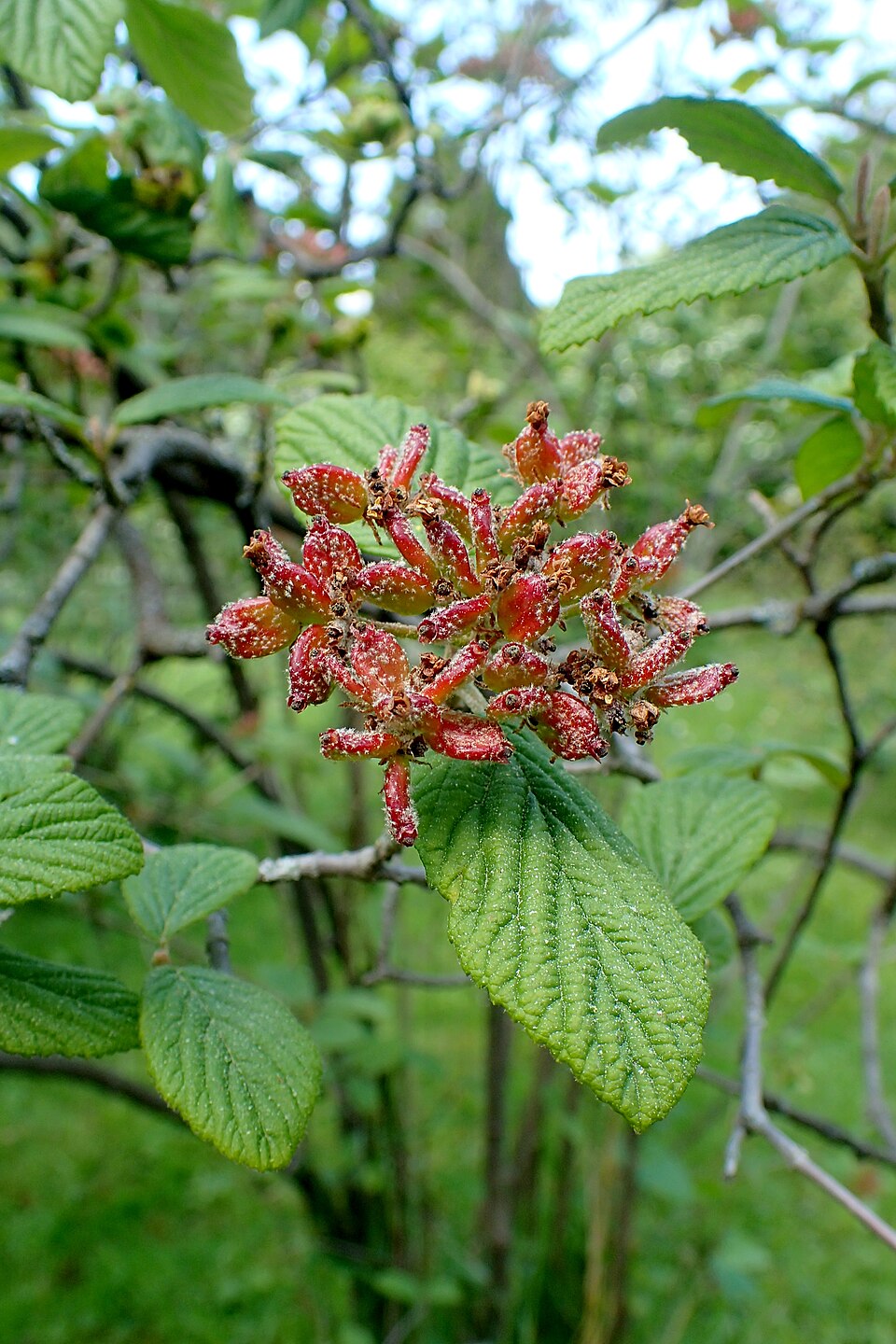
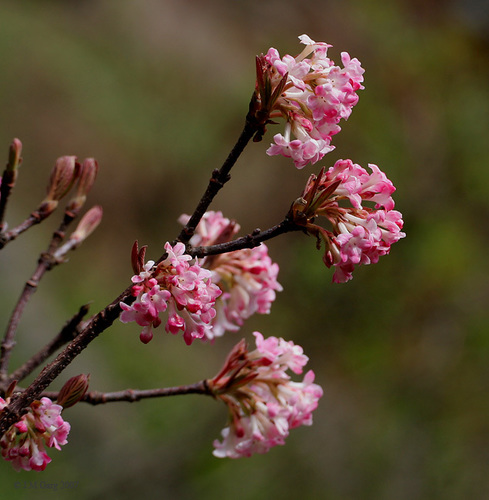
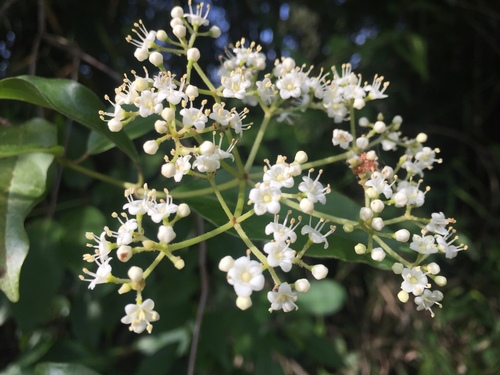
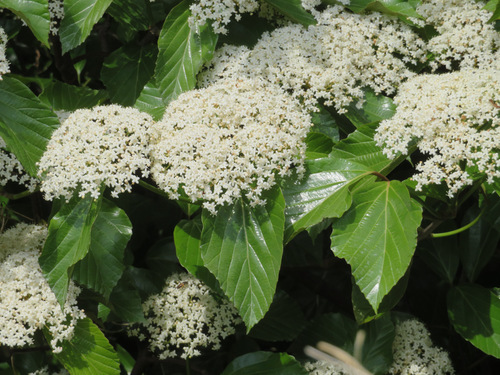
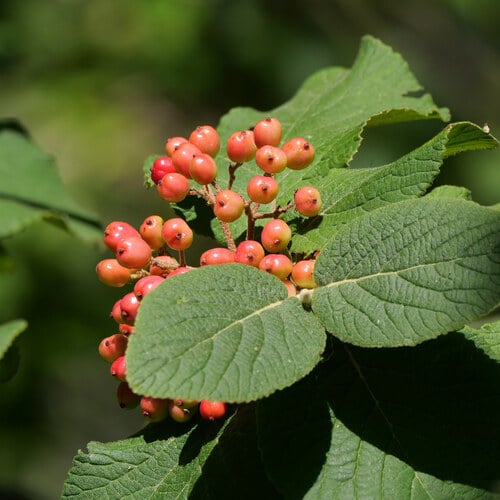
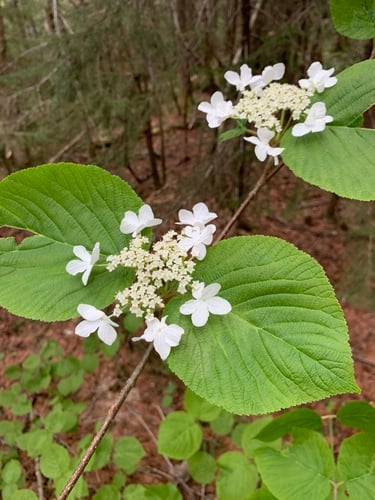
A shrub or small tree. It loses its leaves during the year. It grows 2-5 m high. The young branches are stout. They have a dense rough covering when young. The leaves are opposite and heart shaped. they are 7-12 cm long by 5-9 cm wide. They taper to the tip. There are rounded teeth along the edge. There are hairs on the main veins. The flowers are small and white. They are in flat groups at the ends of branches. The fruit are bright red and oval. They are 6-8 mm long and 5-6 mm wide. Now Viburnum nervosum
Edible Uses
The fruit can be eaten raw or cooked.
Traditional Uses
The fruit are edible. The young shoots are eaten as a vegetable.
This uses section is brief — help expand it
Medicinal Uses
None known
Distribution
It is a subtropical plant. It is native to the eastern Himalayas region. It grows in broad-leaved evergreen and mixed deciduous forests.
Where It Grows
Asia, Bhutan, China, Himalayas, India, Indochina, Myanmar, Nepal, Northeastern India, SE Asia, Sikkim,
Cultivation
An easily grown plant, it succeeds in most soils but is ill-adapted for poor soils and for dry situations. It prefers a deep rich loamy soil in sun or semi-shade. Best if given shade from the early morning sun in spring. According to, this species is only hardy to zone 9 (tolerating light frosts only), this is rather surprising when it can grow at elevations of up to 3300 metres in the Himalayas. This species is closely related to V. lantanoides and to V. sympodiale. Plants are self-incompatible and need to grow close to a genetically distinct plant in the same species in order to produce fruit and fertile seed.
Propagation
Sow seed in a cold frame as soon as it is ripe. Germination can be slow, sometimes exceeding 18 months. Seed harvested green — fully developed but not yet fully ripe — and sown immediately in a cold frame should germinate the following spring. Stored seed needs 2 months of warm stratification followed by 3 months cold, and may still take 18 months to germinate. Prick seedlings into individual pots when large enough and grow on in a cold frame or greenhouse, planting out in late spring or early summer of the following year. Take softwood cuttings in early summer in a frame; pot individually once rooting begins and plant out the following late spring or early summer. Take half-ripe cuttings 5–8 cm long with a heel if possible in July or August in a frame; pot individually as soon as rooting starts — these can be difficult to overwinter and are best kept under glass until the following spring before planting out. Take mature wood cuttings in winter in a frame; they should root in early spring — pot when large enough and plant out in summer if sufficient new growth has been made, otherwise overwinter in a cold frame and plant out the following spring. Layer current season's growth in July or August; takes 15 months.
Other Uses
The wood is hard and close grained.
Notes
There are about 150 Viburnum species. Also put in the family Caprifoliaceae.
Synonyms
Also Known As
Asarem, Bara-asare
References (6)
- Ambasta, S.P. (Ed.), 2000, The Useful Plants of India. CSIR India. p 673
- Hu, Shiu-ying, 2005, Food Plants of China. The Chinese University Press. p 688
- Plants for a Future database, The Field, Penpol, Lostwithiel, Cornwall, PL22 0NG, UK. http://www.scs.leeds.ac.uk/pfaf/
- Prodr. 4:327. 1830
- Savita, et al, 2006, Studies on wild edible plants of ethnic people in east Sikkim. Asian J. of Bio Sci. (2006) Vol. 1 No. 2 : 117-125
Show all 6 references Hide references
- Wild edible plants of Himachal Pradesh