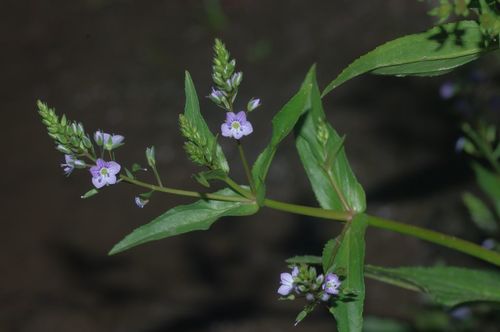
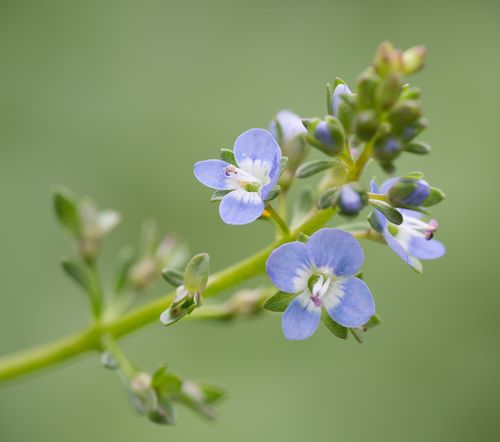
Veronica catenata
Pennell
Pink water speedwell
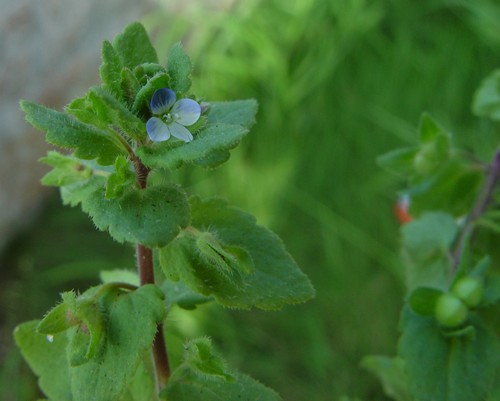
iNaturalist· cc-by-nc
(c) adippe, some rights reserved (CC BY-NC)
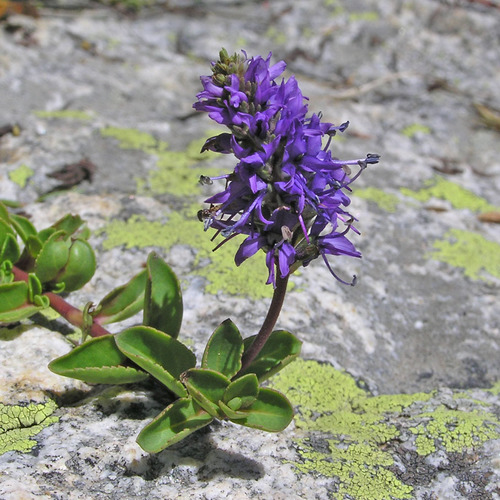
iNaturalist· cc-by-sa
(c) Björn Sothmann, some rights reserved (CC BY-SA), uploaded by Björn Sothmann
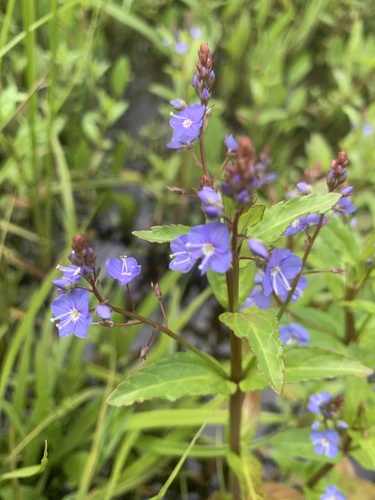
iNaturalist· cc-by-nc-nd
(c) Grahame, some rights reserved (CC BY-NC-ND), uploaded by Grahame
Summary
Source: WikipediaVeronica catenata, the pink water speedwell, is a species of flowering plant in the family Plantaginaceae. It is native to Canada, the United States, Europe, the Azores, and northern Africa. As its common name implies, it prefers growing in or near marshes, rivers, lakes and ponds.
Description
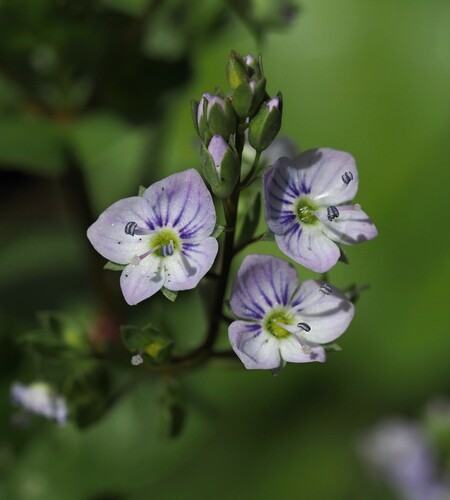
A herb. It can grow up to 1 m tall. The stems sprawl in loose mats. The leaves are 2-10 cm long and 1-5 cm wide. They are opposite and clasp the stem. The flowers are at the top of the plant and in the axils of leaves. The flowers are 4-6 mm across and white, pink or pale blue.
Edible Uses
Leaves can be eaten raw or cooked.
Medicinal Uses
None known.
Distribution
It is a temperate plant. It is often along stream banks.
Where It Grows
Asia, Australia, Britain, Canada, Europe, Indochina, New Zealand, North America, USA,
Cultivation
Easily grown in a moderately fertile wet soil or in shallow water. Prefers cool summers. This species is closely related to V. anagallis-aquatica.
Propagation
Sow seed in autumn in a cold frame, or directly in situ in spring or autumn if seed is plentiful. Prick seedlings into individual pots once large enough and plant out in summer. Division can be done at almost any point during the growing season — even a small piece of the plant will root if placed in water.
Other Uses
None known.
Notes
There are about 250 Veronica species. Also put in the family Scrophulariaceae.
Synonyms
References (2)
- Plants for a Future database, The Field, Penpol, Lostwithiel, Cornwall, PL22 0NG, UK. http://www.scs.leeds.ac.uk/pfaf/
- Rhodora 23:37. 1921