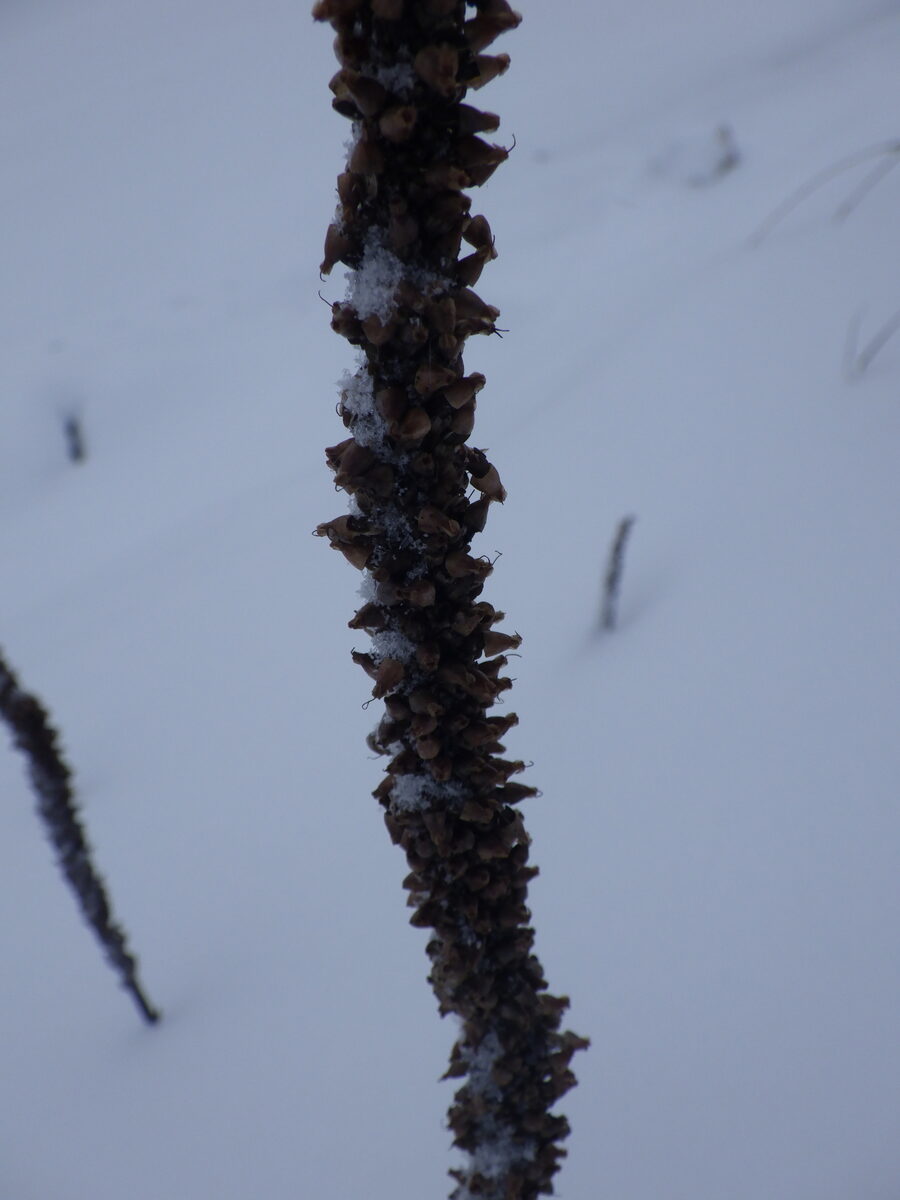
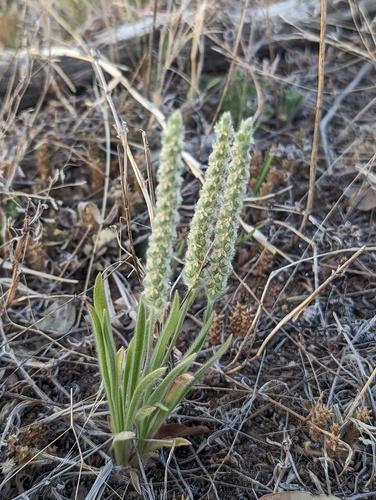
Veronica beccabunga
L.
European brooklime, Water pimpernel
iNaturalist· cc-by-nc
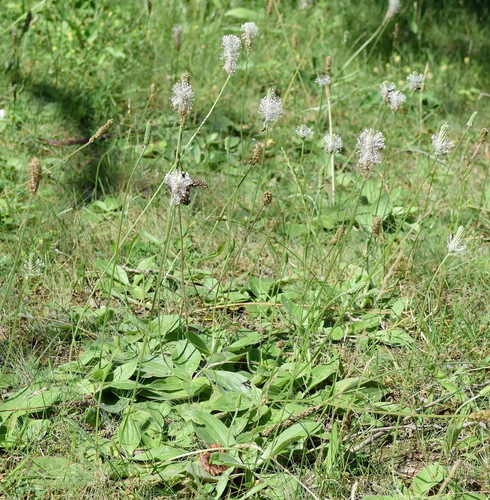
(c) Vladimir Bryukhov, some rights reserved (CC BY-NC), uploaded by Vladimir Bryukhov
iNaturalist· cc-by-nc
(c) faluke, some rights reserved (CC BY-NC), uploaded by faluke
iNaturalist· cc-by-nc-nd
(c) Bastiaan, some rights reserved (CC BY-NC-ND)
Summary
Source: WikipediaVeronica beccabunga, the European speedwell or brooklime, is a succulent herbaceous perennial plant belonging to the flowering plant family Plantaginaceae. It grows on the margins of brooks and ditches in Europe, North Africa, and north and western Asia. It can be found on other continents as an introduced species. It has smooth spreading succulent branches that are often reddish, blunt oblong finely serrate leaves in opposite pairs close to the stem, and small bright blue or pink flowers with four petals. The specific name beccabunga has a common origin with bäckebunga, an archaic Swedish name for the plant used at the time when it was described by Carl Linnaeus. Names with the same origin are still in use in other European languages, including beekpunge In Dutch, and bachbunge in German (meaning 'brook bunch', or 'brook pouch').
Description
A herb. It has creeping hollow stems. It often grows half under water. It can be 30 cm high. The leaves have stalks. The leaves are 3-5 cm long and oval. They are glossy. The flowers are blue. A few flowers occur together in clusters in the axils of leaves.
Edible Uses
Leaves can be eaten raw or cooked. They have a pungent flavour and, while wholesome, are not especially palatable. They can be added to salads, mixed with watercress, or cooked alongside other strongly flavoured greens.
Traditional Uses
The tender leaves and shoots are cooked as a vegetable. The young leaves are also used in salads. They are finely chopped and mixed with chives in bread and butter sandwiches. They are used in soup. The leaves are used in tea mixtures.
Medicinal Uses
The whole plant is alterative, antiscorbutic, very mildly diuretic, emmenagogue, and febrifuge. It offers little as a medicinal herb but has a beneficial laxative effect when included in the diet. Leaves are used to treat scurvy and impurity of the blood. The bruised plant can be applied externally as a poultice to burns, ulcers, and whitlows.
Distribution
It is a temperate plant. In Nepal plants grow between 2200-3100 m altitude. They grow in damp places. It suits hardiness zones 5-9.
Where It Grows
Africa, Asia, Australia, Balkans, Bhutan, Bosnia, Britain, Canada, China, Czech Republic, Eurasia, Europe, Himalayas, India, Iraq, Ireland, Italy, Luxembourg, Mali, Mediterranean, Middle East, Mongolia, Morocco, Nepal, North Africa, Romania, Scandinavia, Slovakia, Spain, Turkey, Türkiye, West Africa,
Cultivation
Plants are grown from cuttings which include nodes. They can also be grown from seed.
Propagation
Sow seed in autumn in a cold frame, or directly in situ in spring or autumn if seed is plentiful. Prick seedlings into individual pots once large enough and plant out in summer. Division can be done at almost any point during the growing season — even a small piece of the plant will root if placed in water.
Other Uses
None known.
Notes
There are about 250 Veronica species. Also put in the family Scrophulariaceae.
Also Known As
Astillejos, Berro macho, Bobovnik, Cestoslavica, Crescione, Frailes, Khole sag, Ualubu
References (31)
- Ambasta, S.P. (Ed.), 2000, The Useful Plants of India. CSIR India. p 673
- Aryal, K. P. et al, 2009, Uncultivated Plants and Livehood Support - A case study from the Chepang people of Nepal. Ethnobotany Research and Applications. 7:409-422
- Brickell, C. (Ed.), 1999, The Royal Horticultural Society A-Z Encyclopedia of Garden Plants. Convent Garden Books. p 1046
- Burkill, H. M., 1985, The useful plants of west tropical Africa, Vol. 5. Kew.
- Cundall, P., (ed.), 2004, Gardening Australia: flora: the gardener's bible. ABC Books. p 1462
Show all 31 references Hide references
- Facciola, S., 1998, Cornucopia 2: a Source Book of Edible Plants. Kampong Publications, p 230
- Hedrick, U.P., 1919, (Ed.), Sturtevant's edible plants of the world. p 672
- Hibbert, M., 2002, The Aussie Plant Finder 2002, Florilegium. p 305
- Irving, M., 2009, The Forager Handbook, A Guide to the Edible Plants of Britain. Ebury Press p 183
- Kermath, B. M., et al, 2014, Food Plants in the Americas: A survey of the domesticated, cultivated and wild plants used for Human food in North, Central and South America and the Caribbean. On line draft. p 905
- Kiple, K.F. & Ornelas, K.C., (eds), 2000, The Cambridge World History of Food. CUP p 1738
- Luczaj, L., 2012, Ethnobotanical review of wild edible plants of Slovakia. Acta Societatis Botanicorum Poloniae 81(4):245-255
- Mabey, R., 1973, Food for Free. A Guide to the edible wild plants of Britain, Collins. p 81
- Manandhar, N.P., 2002, Plants and People of Nepal. Timber Press. Portland, Oregon. p 474
- Menendez-Baceta, G., et al, 2012, Wild edible plants traditionally gathered in Gorbeialdea (Biscay, Basque Country) Genetic Resources and Crop Evolution 59:1329-1347
- Michael, P., 2007, Edible Wild Plants and Herbs. Grub Street. London. p 43
- Nassif, F., & Tanji, A., 2013, Gathered food plants in Morocco: The long forgotten species in Ethnobotanical Research. Life Science Leaflets 3:17-54
- Paoletti, M.G., Dreon, A.L., and Lorenzoni, G.G., 1995, Pistic, Traditional Food from Western Friuli, NE Italy. Economic Botany 49(1) pp 26-30
- Pieroni, A., 1999, Gathered wild food plants in the Upper Valley of the Serchio River (Garfagnana), Central Italy. Economic Botany 53(3) pp 327-341
- Pieroni, A., et al, 2005, Food for two seasons: Culinary uses of non-cultivated local vegetables and mushrooms in a south Italian village. International Journal of Food Sciences and Nutrition, 56(4): 245-272
- Pieroni, A.,& Giusti, M. E., 2009, Alpine Ethnobotany in Italy: Journal of Ethnobiology and Ethnomedicine. 5:32
- Pieroni, A., et al, 2012, "We are Italians!": The Hybrid Ethnobotany of a Venetian Diaspora in Eastern Romania. Human Ecology 40:435-451
- Plants for a Future database, The Field, Penpol, Lostwithiel, Cornwall, PL22 0NG, UK. http://www.scs.leeds.ac.uk/pfaf/
- Redzic, S. J., 2006, Wild Edible Plants and their Traditional Use in the Human Nutrition in Bosnia-Herzegovina. Ecology of Food and Nutrition, 45:189-232
- Rivera, C., et al, 2005, The Ethnobotanical Study of Local Mediterranean Food Plants as Medicinal Resources in Southern Spain. Journal of Physiologyand Pharmacology. 56, Suppl. 1, 97-114
- Romanowski, N., 2007, Edible Water Gardens. Hyland House. p 116
- Slocum, P.D. & Robinson, P., 1999, Water Gardening. Water Lilies and Lotuses. Timber Press. p 103
- Simkova, K. et al, 2014, Ethnobotanical review of wild edible plants used in the Czech Republic. Journal of Applied Botany and Food Quality 88, 49-67
- Sp. pl. 1:12. 1753
- Urgamal, M., Oyuntsetseg, B., Nyambayar, D. & Dulamsuren, Ch. 2014. Conspectus of the vascular plants of Mongolia. (Editors: Sanchir, Ch. & Jamsran, Ts.). Ulaanbaatar, Mongolia. “Admon“ Press. 334pp. (p. 79-90).
- World Checklist of Useful Plant Species 2020. Royal Botanic Gardens, Kew