Plantago ovata
Forsskal
Blond psyllium, Psyllium, Indian plantago seed
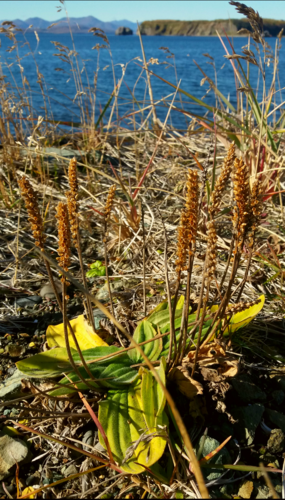
iNaturalist· cc-by-nc
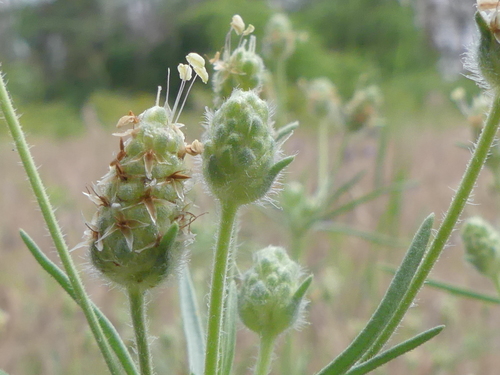
(c) Neil O. Frakes, some rights reserved (CC BY-NC), uploaded by Neil O. Frakes
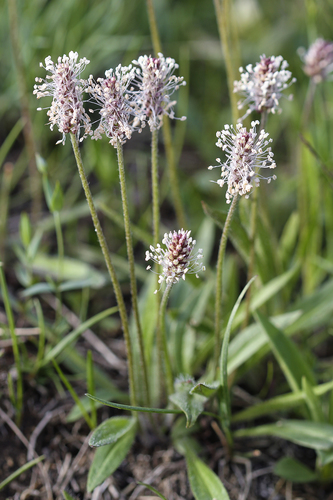
iNaturalist· cc-by-nc
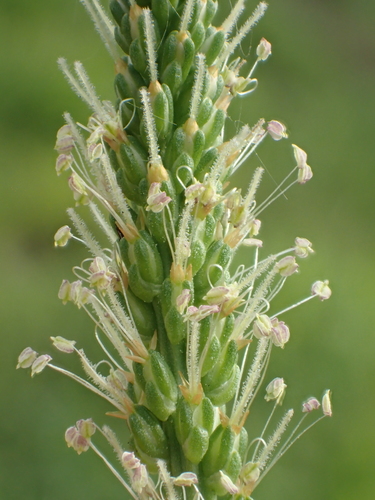
(c) Thomas Friedrich, some rights reserved (CC BY-NC)
iNaturalist· cc-by-nc
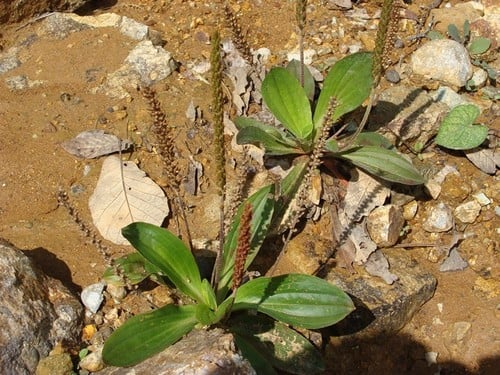
(c) Thomas Friedrich, some rights reserved (CC BY-NC)
Summary
Source: WikipediaPlantago ovata, known by many common names including blond plantain, desert Indianwheat, blond psyllium, and isabghol, is native to the Mediterranean region and naturalized in central, eastern, and south Asia and North America. It is a common source of psyllium, a type of dietary fiber. Psyllium seed husks are indigestible and are a source of soluble fiber which may be fermented into butyric acid – a short-chain fatty acid – by butyrate-producing bacteria. Plantago ovata is the most popular source for commercial products containing psyllium.
Description
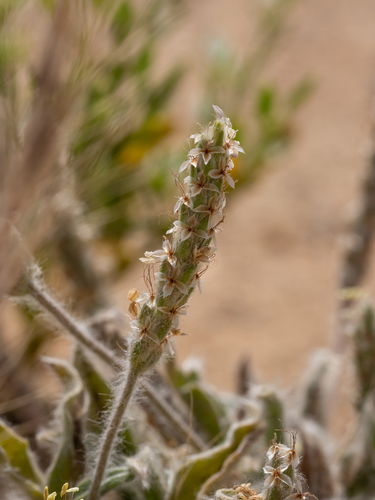
An annual herb. It grows 5 m high. It has soft hairs. The leaves are in rings. They are narrow and 2-10 cm long by 1-2 mm wide. The fruit capsule is 8 mm long. It contains 2 seeds. These are yellowish brown.
Edible Uses
Young leaves can be eaten raw or cooked. The mucilage found in the seed coat is used as a stabilizer in products like ice cream and chocolate. Seeds can also be sprouted and added to salads.
Traditional Uses
The husks are used in drinks. The mucilage in the seed coat is used as a stabiliser in ice cream and chocolate manufacture. Sprouted seeds can be eaten in salads, soups and stews. The seeds are mixed with barley grains and processed into flour for flat bread or porridge.
Medicinal Uses
Psyllium has been used as a safe and effective laxative for thousands of years in Western herbal medicine. Both the dried seeds and seed husks are demulcent, emollient, and laxative. The seeds have a mucilaginous coat that swells to several times their volume when soaked in water. This high fibre content creates a gelatinous bulk that maintains water content in the large bowel, easing passage of stools. They are used in treating constipation, dysentery, catarrhal conditions of the genito-urinary tract, and inflammation of the intestinal canal. Their regulatory effect on digestion also makes them useful for treating diarrhoea, and by softening the stool they help reduce irritation of haemorrhoids. The jelly-like mucilage absorbs toxins in the large bowel, helping to reduce auto-toxicity. The oil in the seed embryo contains 50% linoleic acid and has been used as a preventative of atherosclerosis, and is also effective in reducing blood cholesterol levels.
Distribution
It is a warm temperate and Mediterranean climate plant. It cannot tolerate frost. It grows in areas with an annual rainfall between 80-500 mm. It grows below 1,800 m above sea level. It can grow in arid places.
Where It Grows
Afghanistan, Africa, Algeria, Armenia, Asia, Azerbaijan, Bahrain, Bangladesh, Caucasus, Central Asia, China, Cyprus, Egypt, Europe, Georgia, India, Iran, Iraq, Israel, Jordan, Kazakhstan, Kuwait, Libya, Mediterranean*, Mexico, Middle East, Morocco, Myanmar, North Africa, North America, Oman, Pakistan, Qatar, Saudi Arabia, SE Asia, Somalia, Spain, Syria, Turkey, Türkiye, Turkmenistan, USA,
Cultivation
We have very little information on this species and do not know if it will be hardy in Britain, though judging by its native habitat it should succeed outdoors in most parts of the country. This plant is cultivated for its seed in India. The following notes are based on the general needs of the genus. Succeeds in any moderately fertile soil in a sunny position.
Propagation
Sow seed in spring in a cold frame. Prick seedlings out into individual pots once large enough to handle, then plant out in early summer. If you have sufficient seed, a direct outdoor sowing can be made in situ from mid to late spring.
Other Uses
The mucilage found in the seed coat is sometimes used as a starch to stiffen linen.
Other Information
It is cultivated.
Notes
It is used as a natural dietary fibre supplement. The plantains or Plantaginaceae are mostly in temperate regions. There are about 165 Plantago species.
Synonyms
Also Known As
Blond plantain, Desert indianwheat, Eikta-pha-gula, Eshopgol, Falooda seed, Flea seed, Ghoda jeeru, Isabgola, Isafgolu, Isapghol, Isapgola vitulu, Ishad gola, Iskolvirai, Ispaghol, Ispaghula, Isphagula, Isubgol, Karkatasringi, Lepa-du, Sath, Sat isabgol, Spogel seeds, Umto jeeru, Visamagolu
References (16)
- Ambasta, S.P. (Ed.), 2000, The Useful Plants of India. CSIR India. p 467
- Bremness, L., 1994, Herbs. Collins Eyewitness Handbooks. Harper Collins. p 203
- Facciola, S., 1998, Cornucopia 2: a Source Book of Edible Plants. Kampong Publications, p 173
- Fl. aegypt.-arab. 31. 1775
- Flora of Pakistan. www.eFloras.org
Show all 16 references Hide references
- https://www.fireflyforest.com/flowers/category/edible-plants/ Edible Plants – Southeastern Arizona Wildflowers and Plants
- Khalid, N., et al, 2023, Wild food plants gathered by four cultural groups in North Waziristan, Pakistan. Genet Resour Crop Evol. 70:1243–1276
- Nassif, F., & Tanji, A., 2013, Gathered food plants in Morocco: The long forgotten species in Ethnobotanical Research. Life Science Leaflets 3:17-54
- Plants for a Future, The Field, Penpol, Lostwithiel, Cornwall, PL22 0NG, UK. http://www.scs.leeds.ac.uk/pfaf/
- Royal Botanic Gardens, Kew (1999). Survey of Economic Plants for Arid and Semi-Arid Lands (SEPASAL) database. Published on the Internet; http://www.rbgkew.org.uk/ceb/sepasal/internet [Accessed 6th May 2011]
- Smith, N., Mori, S.A., et al, 2004, Flowering Plants of the Neotropics. Princeton. p 298
- Solomon, C., 2001, Encyclopedia of Asian Food. New Holland. p 283, 300
- Tanaka,
- Wiersema, J. H. & Leon, B., 2013, World Economic Plants. A Standard Reference CRC Press. 2nd Ed. p 539
- World Checklist of Useful Plant Species 2020. Royal Botanic Gardens, Kew
- Zeven, A. C. & de West, J. M. J., 1982, Dictionary of cultivated plants and their regions of diversity. Wageningen. p 78