Plantago media
L.
Hoary plantain
iNaturalist· cc-by-nc
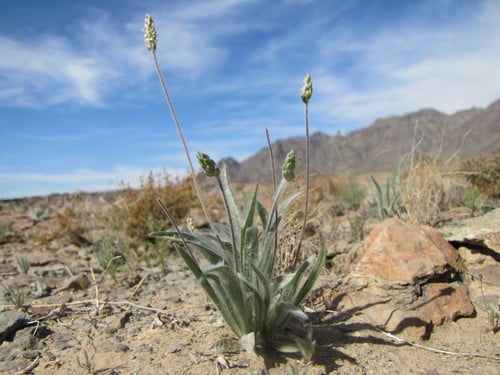
(c) Вадим, some rights reserved (CC BY-NC), uploaded by Вадим
iNaturalist· cc-by-nc
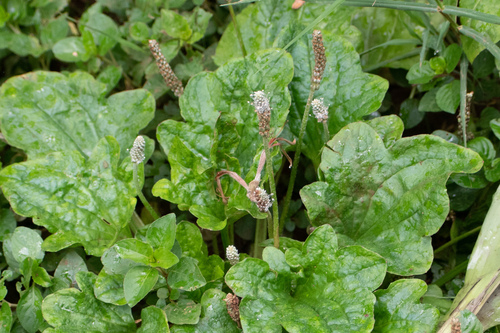
(c) mallaliev, some rights reserved (CC BY-NC), uploaded by mallaliev
iNaturalist· cc-by-nc
(c) Diana V. Tretyakova, some rights reserved (CC BY-NC), uploaded by Diana V. Tretyakova
Summary
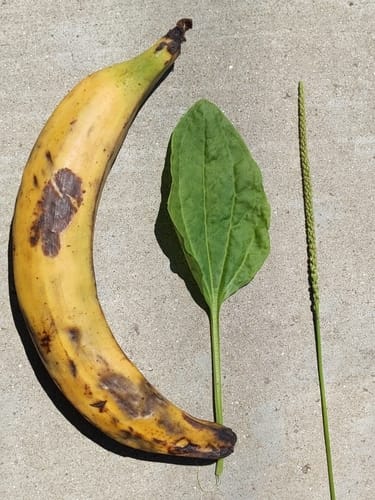
Source: WikipediaPlantago media, known as the hoary plantain, is a species of flowering plant in the plantain family Plantaginaceae. It is native to central and western Europe, including Great Britain and introduced to parts of the north-east United States. Its generic name is derived from the Latin for sole; like other members of the genus Plantago, it should not be confused with the unrelated plantain, a starchy banana.
Description
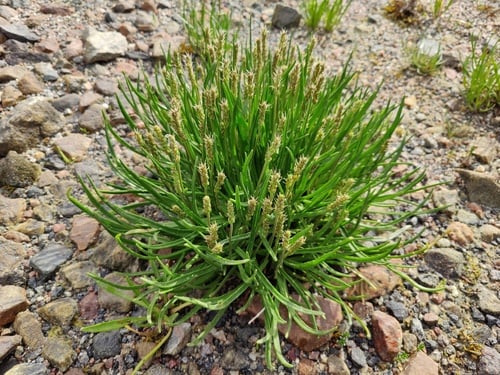
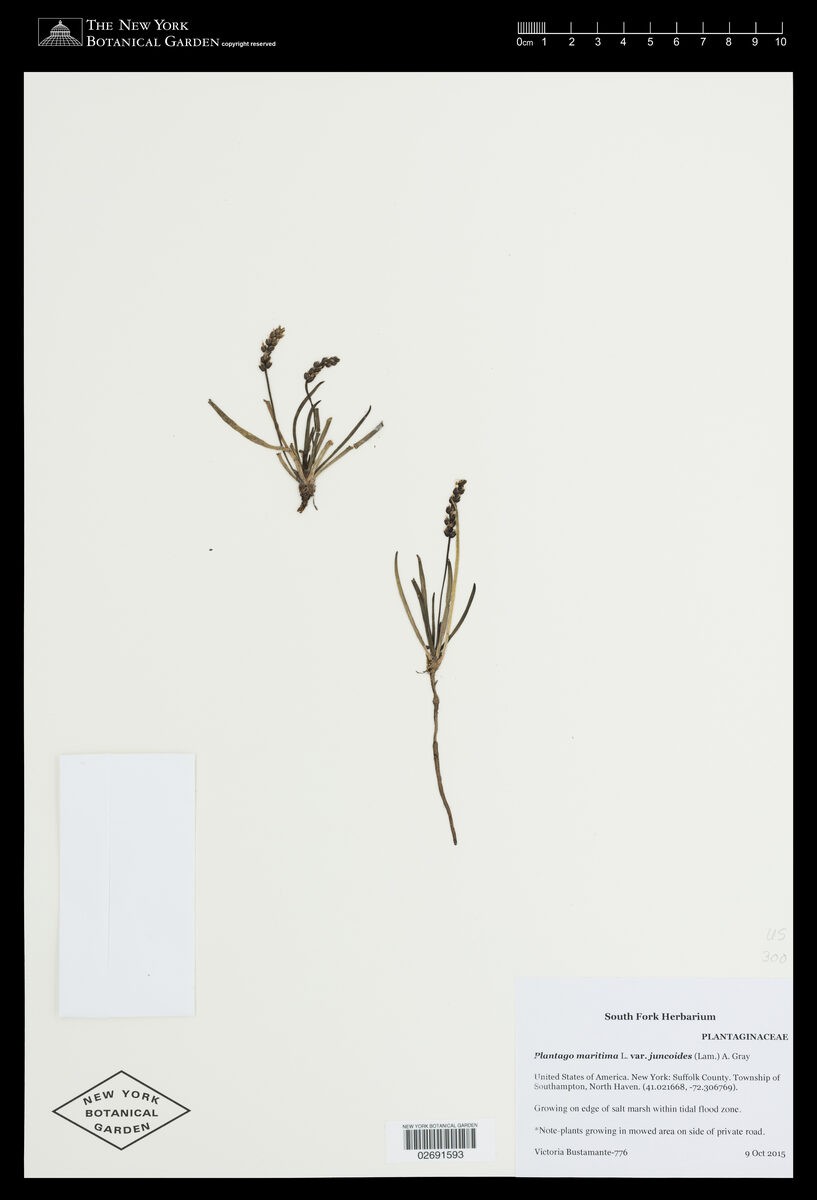
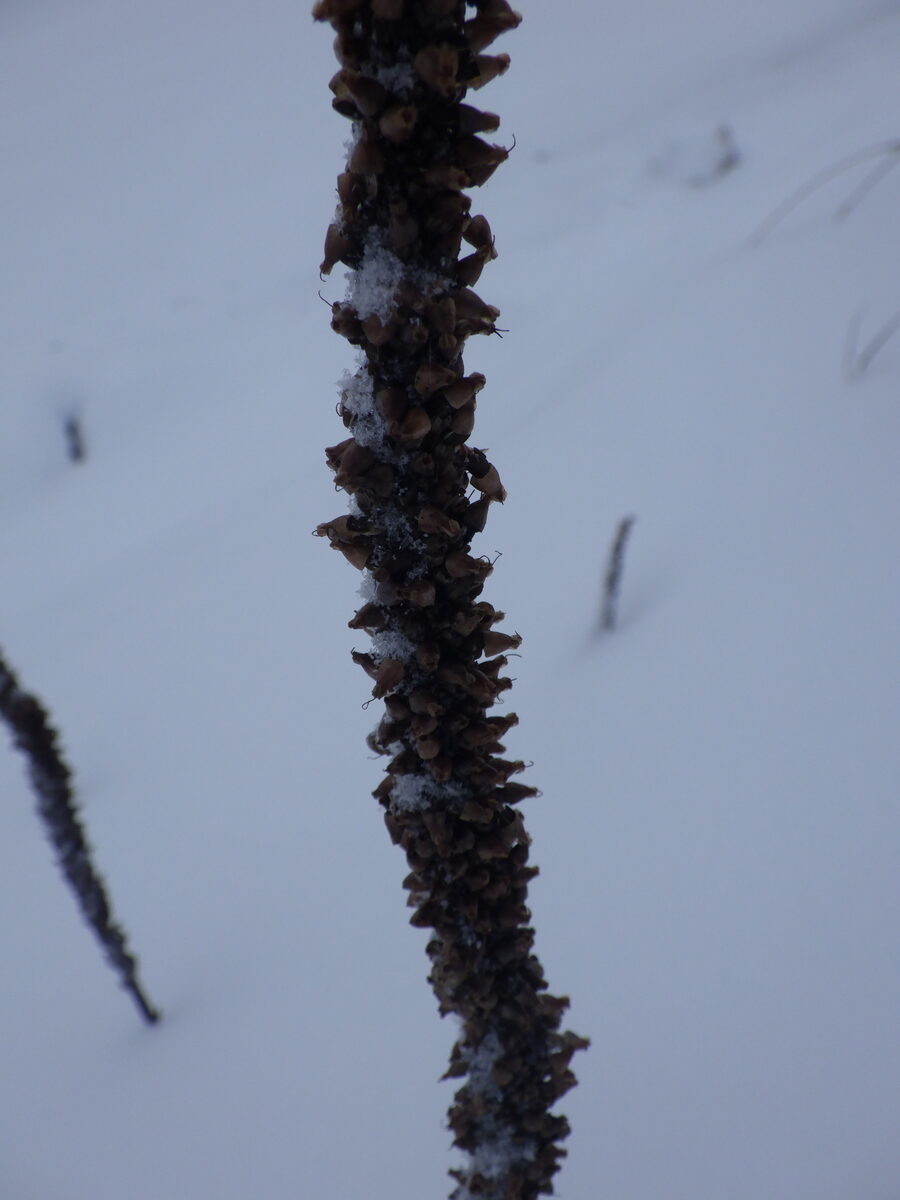
A low herb. It keeps growing from year to year. It has leaves in a ring. The leaves are narrowly oval and have 7-9 veins. They are covered with dense crisped hairs. The flower spikes are much longer than the leaves. The flowers have pink stamens. They have a scent.
Edible Uses
Very young leaves can be eaten raw or cooked, offering a fairly mild flavour with slight bitterness. They are best used in salads before they become tough. The inflorescence is sweet and is traditionally sucked by children.
Traditional Uses
The leaves and stems are eaten fresh and raw or cooked. They are used as a potherb.
This uses section is brief — help expand it
Medicinal Uses
The leaves, flowering stems, and roots are astringent, deobstruent, depurative, diuretic, expectorant, haemostatic, refrigerant, and vulnerary. They are applied externally to skin inflammations, malignant ulcers, and cuts. A mouthwash made from the leaves helps relieve toothache, and a distilled water from the plant makes a good eyewash. The seeds are demulcent and laxative, containing up to 30% mucilage, which swells in the gut to act as a bulk laxative and soothe irritated membranes. The seed husks alone are sometimes used without the seeds.
Distribution
It is a temperate plant. It grows in dry grassy places. In north China it grows on wet banks and mountain slopes between 1,400-2,000 m above sea level.
Where It Grows
Andorra, Asia, Australia, Balkans, Bosnia, Britain, Central Asia, China, Europe, Falklands, Hungary, Iran, Italy, Kazakhstan, Kyrgyzstan, Luxembourg, Macedonia, Mediterranean, Middle East, Russia, Siberia, Slovakia, Slovenia, Spain, Switzerland, Turkey, Türkiye,
Cultivation
Succeeds in any moderately fertile soil in a sunny position. Grows well in the spring meadow.
Propagation
Sow seed in spring in a cold frame. Once seedlings are large enough to handle, prick them out into individual pots and plant out in early summer. If seed is plentiful, a direct outdoor sowing can be made in situ from mid to late spring.
Other Uses
The leaves are used as a fungicide and are a traditional remedy for blight on fruit trees. The plant is an important food source for the caterpillars of many butterfly species and is a dynamic accumulator. The flowers are sweetly scented.
Notes
The plantains or Plantaginaceae are mostly in temperate regions. There are about 165 Plantago species.
Also Known As
Plangtarl platt, Podorozhnik, Srednja bokvica, Srednji trpotec, Volovo ucho
References (17)
- Abbet, C., et al, 2014, Ethnobotanical survey on wild alpine food plants in Lower and Central Valais (Switzerland). Journal of Ethnopharmacology 151 (2014) 624–634
- Blamey, M and Grey-Wilson, C., 2005, Wild flowers of the Mediterranean. A & C Black London. p 421
- Cerne, M., 1992, Wild Plants from Slovenia used as Vegetables. Acta Horticulturae 318
- Crate, S. A., 2008, "Eating Hay": The Ecology, Economy and Culture of Viliui Sakha Smallholders of Northeastern Siberia. Human Ecology 36:161-174
- Denes, A., et al, 2012, Wild plants used for food by Hungarian ethnic groups living in the Carpathian Basin. Acta Societatis Botanicorum Poloniae 81 (4): 381-396
Show all 17 references Hide references
- Hibbert, M., 2002, The Aussie Plant Finder 2002, Florilegium. p 236
- http://www.botanic-gardens-ljubljana.com/en/plants
- Kolosova, V., et al, 2020, Foraging in Boreal Forest: Wild Food Plants of the Republic of Karelia, NW Russia. Foods 2020, 9, 1015; p 19
- Luczaj, L., 2012, Ethnobotanical review of wild edible plants of Slovakia. Acta Societatis Botanicorum Poloniae 81(4):245-255
- Morley, B. & Everard, B., 1970, Wild Flowers of the World. Ebury press. Plate 15
- Ozbucak, T. B., et al, 2007, Nutrition Content of Some Wild Edible Plants in the Central Black Sea Region of Turkey. International Journal of Natural and Engineering Sciences 1:11-13
- Paoletti, M.G., Dreon, A.L., and Lorenzoni, G.G., 1995, Pistic, Traditional Food from Western Friuli, NE Italy. Economic Botany 49(1) pp 26-30
- Plants for a Future database, The Field, Penpol, Lostwithiel, Cornwall, PL22 0NG, UK. http://www.scs.leeds.ac.uk/pfaf/
- Redzic, S. J., 2006, Wild Edible Plants and their Traditional Use in the Human Nutrition in Bosnia-Herzegovina. Ecology of Food and Nutrition, 45:189-232
- Redzic, S., 2010, Use of Wild and Semi-Wild Edible Plants in Nutrition and Survival of People in 1430 Days of Siege of Sarajevo during the War in Bosnia and Herzegovina (1992–1995). Coll. Antropol 34 (2010) 2:551-570
- Sp. pl. 1:113. 1753
- Upson, R., & Lewis R., 2014, Updated Vascular Plant Checklist and Atlas for the Falkland Islands. Falklands Conservation and Kew.