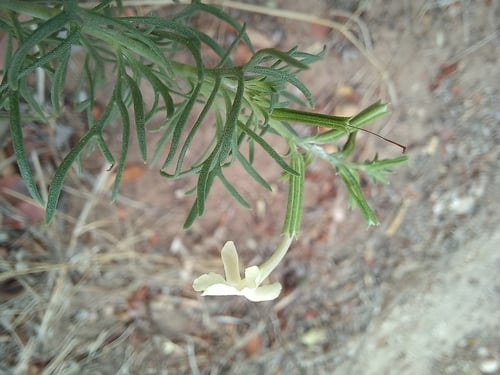
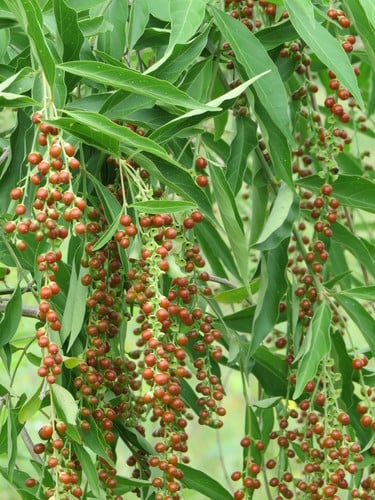
Verbena hastata
L.
Swamp verbena
iNaturalist· cc-by-nc
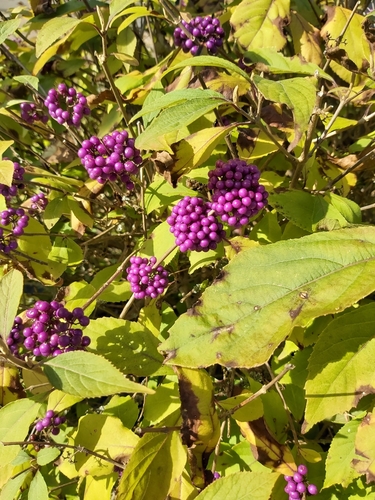
(c) keisterdan, some rights reserved (CC BY-NC)
iNaturalist· cc-by-nc
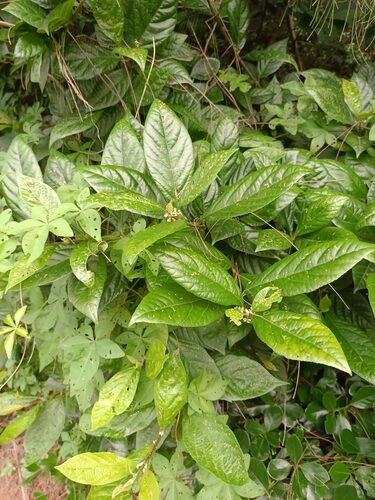
(c) Kirsten Van Goethem, some rights reserved (CC BY-NC)
iNaturalist· cc-by-nc
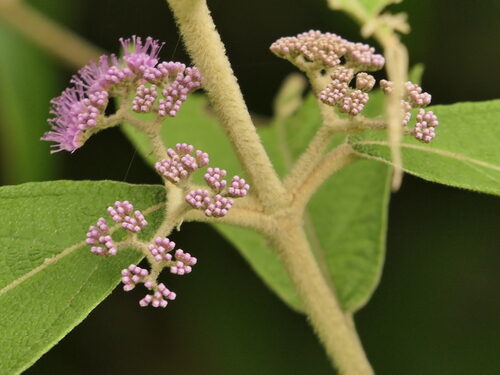
(c) stishovite, some rights reserved (CC BY-NC)
Summary
Source: WikipediaVerbena hastata, commonly known as American vervain, blue vervain, simpler's joy, or swamp verbena, is a perennial flowering plant in the vervain family Verbenaceae. It grows throughout the continental United States and in much of southern Canada.
Description
A small shrub. It grows 0.9-1.5 m high and spreads 30-60 cm wide. It keeps growing from year to year. The stems are stiff and upright. The leaves are lance shaped and have teeth along the edge. The leaves are rough. The flowers are small and violet-blue. They are in spiky clusters.
Edible Uses
The seed can be roasted and ground into a powder or used whole as a piñole. It has a pleasantly bitter flavour, and some of the bitterness can be removed by leaching the flour. The leaves can be used as a tea substitute.
Traditional Uses
The small seeds are roasted and ground into flour. Changing the water can reduce the bitter taste. It is used for fried cakes and pinole. The leaves are used for tea. Caution: It can interfere with blood pressure medication and hormone therapy.
Medicinal Uses
The leaves and roots are antiperiodic, diaphoretic, emetic, expectorant, tonic, vermifuge, and vulnerary, with the roots being more active than the leaves. The plant is used to treat stomach aches, gravel, worms, and scrofula. An infusion of the roots, leaves, or seeds has been used in the early stages of fevers. A snuff made from the dried flowers has been used to treat nosebleeds.
Distribution
It is a temperate plant. It grows in damp locations and along roadsides and in wet fields. It suits hardiness zones 3-9.
Where It Grows
Australia, Canada, Europe*, North America, Tasmania, USA,
Cultivation
Succeeds in any moderately fertile well-drained but moisture retentive soil in a sunny position. Plants are hardy to about -20°c.
Propagation
Seed — sow in early spring in a greenhouse or cold frame, barely covering the seed. Prick seedlings out into individual pots when large enough to handle and plant out in summer. Divide in spring; larger divisions can go directly into permanent positions, while smaller divisions are best potted up and grown on in light shade in a greenhouse or cold frame until established, then planted out in summer or the following spring. Basal cuttings can be taken in early summer — harvest shoots with plenty of underground stem when about 8–10cm above ground, pot individually, and keep in light shade in a cold frame or greenhouse until rooting well before planting out in summer.
Other Uses
None known.
Notes
There are about 250 Verbena species. It is used in medicine.
Also Known As
American blue vervain, Blue Vervain, Simpler's joy, Wild hyssop
References (12)
- Beckstrom-Sternberg, Stephen M., and James A. Duke. "The Foodplant Database." http://probe.nalusda.gov:8300/cgi-bin/browse/foodplantdb.(ACEDB version 4.0 - data version July 1994)
- Brickell, C. (Ed.), 1999, The Royal Horticultural Society A-Z Encyclopedia of Garden Plants. Convent Garden Books. p 1044
- Cundall, P., (ed.), 2004, Gardening Australia: flora: the gardener's bible. ABC Books. p 1460
- Facciola, S., 1998, Cornucopia 2: a Source Book of Edible Plants. Kampong Publications, p 244
- Hibbert, M., 2002, The Aussie Plant Finder 2002, Florilegium. p 305
Show all 12 references Hide references
- Kermath, B. M., et al, 2014, Food Plants in the Americas: A survey of the domesticated, cultivated and wild plants used for Human food in North, Central and South America and the Caribbean. On line draft. p 904
- Kiple, K.F. & Ornelas, K.C., (eds), 2000, The Cambridge World History of Food. CUP p 1735
- MacKinnon, A., et al, 2009, Edible & Medicinal Plants of Canada. Lone Pine. p 290
- Moerman, D. F., 2010, Native American Ethnobotany. Timber Press. p 591
- Plants for a Future database, The Field, Penpol, Lostwithiel, Cornwall, PL22 0NG, UK. http://www.scs.leeds.ac.uk/pfaf/
- Sp. pl. 1:20. 1753
- www.ediblewildfood.com