Citharexylum montevidense
(Spreng.) Moldenke
iNaturalist· cc-by
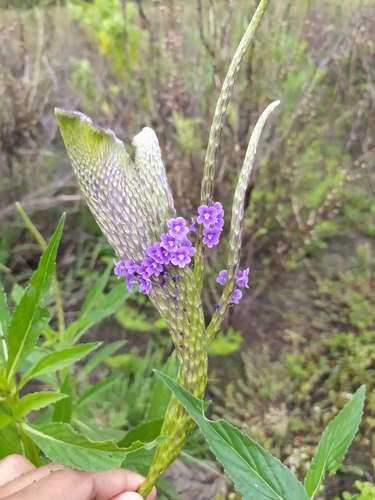
(c) E. Goossen, some rights reserved (CC BY)
iNaturalist· cc-by
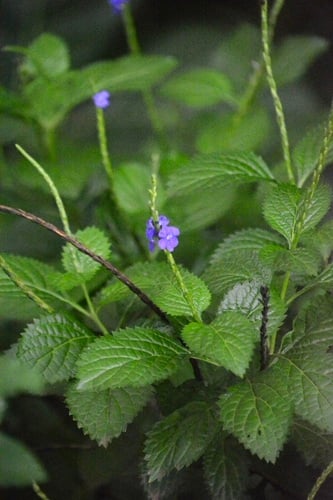
(c) E. Goossen, some rights reserved (CC BY)
iNaturalist· cc-by
(c) E. Goossen, some rights reserved (CC BY)
Description
A spiny tree. It grows 5-10 m tall. It loses its leaves during the year. The crown is large and open. The trunk is short and 15-25 cm across. The fruit is round and red and 12 mm across. There are 1-3 seeds.
Edible Uses
The fruit has a sweet, succulent pulp. This report does not say that the fruit is edible. The fruit is a red, globose drupe about 12mm in diameter, containing 1 - 3 seeds.
Traditional Uses
The fruit are sweet.
This uses section is brief — help expand it
Distribution
It is a tropical plant. It grows in open places in deciduous forests. It suits a sunny position.
Where It Grows
Argentina, Brazil*, Paraguay, Slovenia, South America, Uruguay,
Cultivation
Plants can be grown from fresh seeds. They germinate in 15-30 days.
Propagation
Seed - best sown as soon as it is ripe in a partially shaded position in a nursery seedbed. A germination rate of around 50% can be expected, with the seed sprouting within 15 - 30 days.
Other Uses
The wood is coarse-textured, straight-grained, moderately heavy, easy to cut, not durable. Because of its small size it is generally only used as fuel and to make charcoal. A fast-growing tree that succeeds in full sun, is easy to propagate and provides food for the native fauna; it can be used as a pioneer species when restoring native woodland.
Production
Young plants grow quickly.
Synonyms
Also Known As
Taruma-de-espino
References (2)
- Brack, P., et al, 2020, Frutas nativas do Rio Grande do Sul, Brasil: riqueza e potencial alimentício. Native fruits of Rio Grande do Sul, Brazil: richness and potential as food. Rodriguésia 71: e0310201
- Fern, K., 2012, Tropical Species Database http://theferns.info/tropical/