Artocarpus nitidus
Trecul.
Shining tampang
iNaturalist· cc-by-nc
(c) angelcheung, some rights reserved (CC BY-NC)
iNaturalist· cc-by-nc
(c) angelcheung, some rights reserved (CC BY-NC)
iNaturalist· cc-by-nc
(c) ndionson, some rights reserved (CC BY-NC), uploaded by ndionson
Description
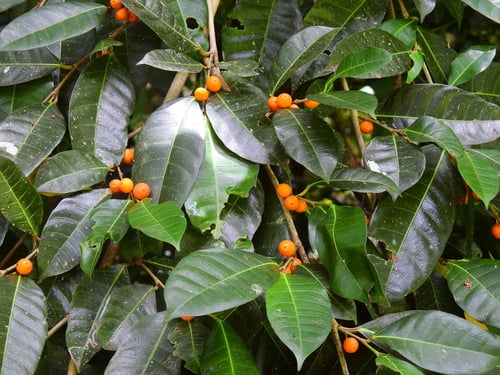
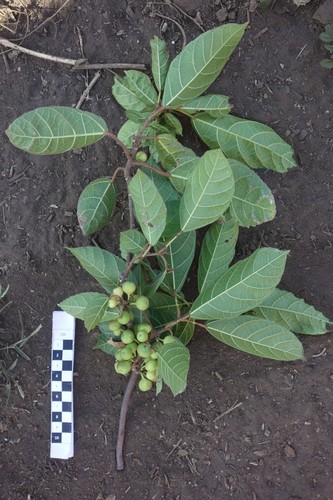
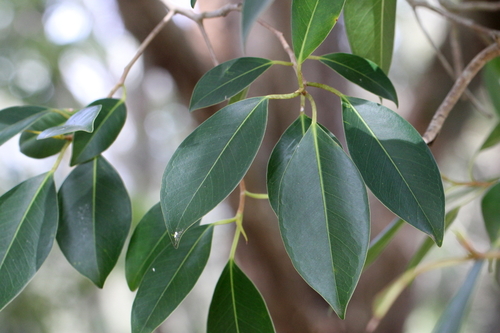
A large tree up to 17-30 m high. The trunk is 70 cm across. The bark is dark brown. There are cracks along it. The twigs are 1-5 mm thick. They are hairy at the beginning. They do not have ring like scars. The leaves are alternate. The leaf stalk is 0.5-2 cm long. The leaf blade in oval or oblong and 7-15 cm long by 3-7 cm wide. They are leathery. They are dark green on top and paler underneath. The male flower heads are flat and finger like and 2.5-12 mm long by 2.7-7 mm wide. The fruit are roundish. The fruit are 4-8 cm across. They are smooth with a light orange skin. They have a sweet orange pulp. There are at least 3 varieties and one at least has edible fruit. The seeds are round or oval and 8-10 mm long by 7-8 mm wide. They are covered in a bright orange coat. There may be some subspecies or one variable species. The amount of hairiness and colour of the fruit varies.
Edible Uses
Several species in the genus bear edible fruit and are commonly cultivated: Breadfruit (Artocarpus altilis), Cempedak (Artocarpus integer), Jackfruit (Artocarpus heterophyllus), Kwai Muk (Artocarpus parvus), Lakoocha (Artocarpus lakoocha), Pudau (Artocarpus kemando), Anjily (a.k.a. Jungle Jack) (Artocarpus hirsutus), Chaplaish (Artocarpus chama), and Marang (Artocarpus odoratissimus). Breadfruit and jackfruit are cultivated widely in the tropical Southeast Asia. Other species are cultivated locally for their timber, fruit or edible seeds. Anjily, A. hirsutus, is grown for fruit and timber in the Western Ghats.
Traditional Uses
The fruit are eaten fresh.
This uses section is brief — help expand it
Medicinal Uses
The fruits are used medicinally.
Distribution
A tropical plant. It grows in mixed forest. In Indonesia it grows up to 1600 m altitude. In XTBG Yunnan.
Where It Grows
Asia, Australia, Cambodia, China, Hawaii, India, Indochina, Indonesia, Laos, Malaysia, Pacific, Papua New Guinea, PNG, Philippines, Sarawak, SE Asia, Singapore, Solomon Islands, Taiwan, Thailand, USA, Vietnam,
Cultivation
In general, species in this genus prefer a deep, well-drained soil; young plants need some shade, but need increasing light levels as they mature.
Other Uses
The wood is used for house construction and for making blow pipes and gun / parang handles. We have no more specific information for this species, but it belongs to a group of species whose timber is known as 'terap'. The general description of terap timber is as follows:- The heartwood is yellow to pale brown; it is usually not differentiated from the sapwood. The texture is moderately coarse to coarse and even; the grain is interlocked. The wood is non-durable under tropical conditions. It seasons fairly slowly, with high shrinkage and slight bowing, cupping and checking. It is generally easy to work; saws well; planes easily but leaves a rough finish on radial surfaces; bores and turns easily, but leaves a rough finish;nailing property is good; can be peeled satisfactorily and is suitable for plywood production. Locally, the wood is used for light construction, for making boxes, crates, wooden pallets and veneer. The wood is sometimes nicely figured and therefore is suitable for decorative purposes like furniture, joinery and panelling.
Other Information
It is a cultivated fruit tree.
Notes
There are about 50 Artocarpus species. They are in the tropics and subtropics of Asia and the Pacific.
Synonyms
Also Known As
Betoh, Butong, Cay chay, Chay rung, Guang ye gui mu, Gui mu, Hung kwai muk, Ma hat, Sampor, Selanking, Shiny tampang, Tampang, Troi
References (18)
- Altschul, S.V.R., 1973, Drugs and Foods from Little-known Plants. Notes in Harvard University Herbaria. Harvard Univ. Press. Massachusetts. no. 689
- Argent, G et al, nd, Manual of the Larger and More important non Dipterocarp Trees of Central Kalimantan Indonesia. Volume 2 Forest Research Institute, Samarinda, Indonesia. p 436
- Chai, P. P. K. (Ed), et al, 2000, A checklist of Flora, Fauna, Food and Medicinal Plants. Lanjak Entimau Wildlife Sanctuary, Sarawak. Forestry Malaysia & ITTO. p 159, 168
- Dobriyal, M. J. R. & Dobriyal, R., 2014, Non Wood Forest Produce an Option for Ethnic Food and Nutritional Security in India. Int. J. of Usuf. Mngt. 15(1):17-37
- Flora of China Vol. 5, p 33 and Flora of China. www.eFloras.org (subsp. lingnanensis)
Show all 18 references Hide references
- Hanum, F. I., 1999, Plant Diversity and Conservation Value of Ayer Hitam Forest, Selangor, Peninsula Malaysia. Pertanika J. Trop. Agric. Sci. 22(2):73-83
- Hoe, V. B. & Siong, K. H., 1999, The nutritional value of indigenous fruit and vegetables in Sarawak. Asia Pacific J. Clin. Nutr. 8(1):24-31
- J. Arnold Arbor. 41:124, 1960, (subsp. lingnanensis)
- Kuo, W. H. J., (Ed.) Taiwan's Ethnobotanical Database (1900-2000), http://tk.agron.ntu.edu.tw/ethnobot/DB1.htm (As Artocarpus xanthocarpus)
- Martin, M.A., 1971, Introduction L'Ethnobotanique du Cambodge. Centre National de la Recherche Scientifique. Paris. (As Artocarpus nitida subsp. lingnanensis)
- Ogle, B. M., et al, 2003, Food, Feed or Medicine: The Multiple Functions of Edible Wild Plants in Vietnam. Economic Botany 57(1): 103-117 (As Artocarpus lanceolata)
- PROSEA (Plant Resources of South East Asia) handbook, Volume 2, 1991, Edible fruits and nut. p 80
- Saw, L.G., LaFrankie, J. V. Kochummen, K. M., Yap S. K., 1991, Fruit Trees in a Malaysian Rain Forest. Economic Botany, Vol. 45, No. 1, pp. 120-136
- Slik, F., www.asianplant.net
- Staples, G.W. and Herbst, D.R., 2005, A tropical Garden Flora. Bishop Museum Press, Honolulu, Hawaii. p 404 (subsp. lingnanensis)
- Soepadmo, E. and Saw, L. G., 2000, Tree Flora of Sabah and Sarawak. Forestry Malaysia. Volume Three. p 203
- Tankard, G., 1990, Tropical fruit. An Australian Guide to Growing and using exotic fruit. Viking p 121
- www.eFloras.org Flora of China (Also as Artocarpus xanthocarpus)