Ficus sansibarica
Warb.
Large-fruited fig, Knobbly fig
iNaturalist· cc-by
(c) i_c_riddell, some rights reserved (CC BY), uploaded by i_c_riddell
iNaturalist· cc-by
(c) Karen Eichholz, some rights reserved (CC BY), uploaded by Karen Eichholz
iNaturalist· cc-by
(c) i_c_riddell, some rights reserved (CC BY), uploaded by i_c_riddell
Summary
Source: WikipediaThe Ficus sansibarica, known as knobbly fig, is an African species of cauliflorous fig. It is named after Zanzibar, where Franz Stuhlmann discovered it in 1889. They often begin life as epiphytes, which assume a strangling habit as they develop. They regularly reach 10 m, but may grow up to 40 m tall as forest stranglers.
Description
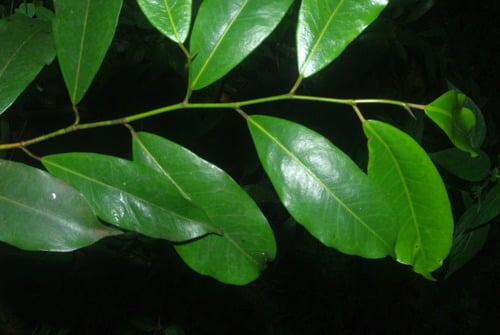
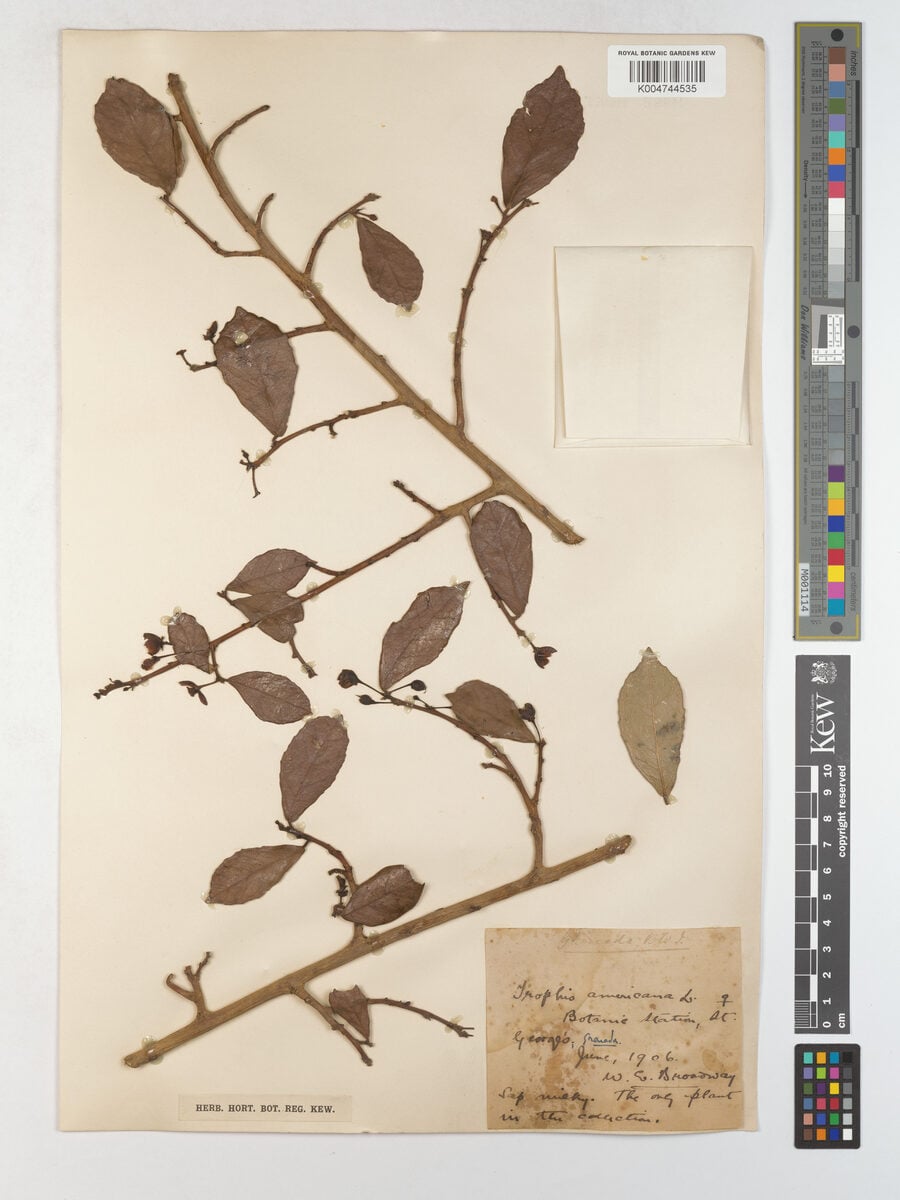
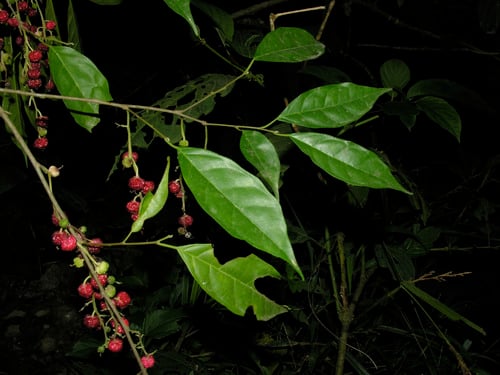
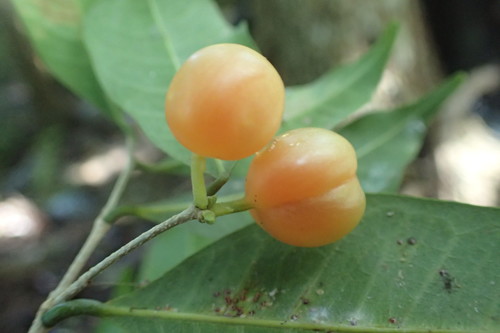
A fig. It is a large tree. It grows to 24 m tall. The trunk is light grey and up to 3 m across. It can grow as a strangler from a tree branch and send down aerial roots. The leaves are smooth. They are 3-13 cm long and 3-8 cm wide. They are oblong or slightly narrow with a rounded base. There are 7-8 pairs of veins branching outwards and looping along the leaf edge. The leaves are on long leaf stalks. The fruit occur as one or two fruit high up on the spreading main branches. The fruit are 5 cm across. They have a two lobed opening at the end. They are green when young and turn red when ripe. The fruit are edible.
Edible Uses
The raw figs are used for food, and are locally believed to promote fertility. Stems are torn apart to obtain fibers for basket weaving. Locally it is also deemed sacred.
Traditional Uses
The fruit are eaten as a snack.
This uses section is brief — help expand it
Medicinal Uses
The figs are sometimes eaten by women as a tonic to promote fertility.
Distribution
A tropical plant. It grows in low altitude forest.
Where It Grows
Africa, Angola, Central Africa, Congo, East Africa, Eswatini, Kenya, Malawi, Mozambique, South Africa, Southern Africa, South Sudan, Swaziland, Tanzania, Zambia, Zimbabwe,
Cultivation
The tree can be grown from seed. The seeds are very fine and are best sown with fine sand. Seeds germinate after 15-30 days. Seedlings and young plants transplant easily. The wasp pollinator is Courtella armata (Wiebes).
Other Uses
The split stems are used for making baskets.
Production
It is fast growing. It grows about 1 m per year.
Other Information
The figs are occasionally eaten.
Notes
There are about 800-1000 Ficus species. They are mostly in the tropics. There are 120 Ficus species in tropical America.
Synonyms
Also Known As
Angola fig, Engaboli, Knobbly fig, Knoppiesvy, Mahalavu, Mkuu, Mkuyu, Mpoloto, Mpondopondo, Mtulutulu, Mutambvu, Undola, Zanzibar fig
References (18)
- Fowler, D. G., 2007, Zambian Plants: Their Vernacular Names and Uses. Kew. p 49
- Fox, F. W. & Young, M. E. N., 1982, Food from the Veld. Delta Books. p 270
- Long, C., 2005, Swaziland's Flora - siSwati names and Uses http://www.sntc.org.sz/flora/
- Lovett, J. C. et al, Field Guide to the Moist Forest Trees of Tanzania. p 101
- Magwede, K., van Wyk, B.-E., & van Wyk, A. E., 2019, An inventory of Vhavenḓa useful plants. South African Journal of Botany 122 (2019) 57–89
Show all 18 references Hide references
- Ogle & Grivetti, 1985,
- Palgrave, K.C., 1996, Trees of Southern Africa. Struik Publishers. p 114
- Palmer, E and Pitman, N., 1972, Trees of Southern Africa. Vol. 1. A.A. Balkema, Cape Town p 451
- Peters, C. R., O'Brien, E. M., and Drummond, R.B., 1992, Edible Wild plants of Sub-saharan Africa. Kew. p 150
- Ruffo, C. K., Birnie, A. & Tengnas, B., 2002, Edible Wild Plants of Tanzania. RELMA p 330
- Ruiters-Welcome, A. K., 2019, Food plants of southern Africa. Ph.D. thesis. Univ. of Johannesburg p 79
- Schmidt, E., Lotter, M., & McCleland, W., 2007, Trees and shrubs of Mpumalanga and Kruger National Park. Jacana Media p 82
- Swaziland's Flora Database http://www.sntc.org.sz/flora
- van Wyk, B, van Wyk, P, and van Wyk B., 2000, Photographic guide to Trees of Southern Africa. Briza. p 156
- Venter, F & J., 2009, Making the most of Indigenous Trees. Briza. p 168
- Welcome, A. K. & Van Wyk, B.-E., 2019, An inventory and analysis of the food plants of southern Africa. South African Journal of Botany 122 (2019) 136–179
- White, F., Dowsett-Lemaire, F. and Chapman, J. D., 2001, Evergreen Forest Flora of Malawi. Kew. p 387
- www.figweb.org