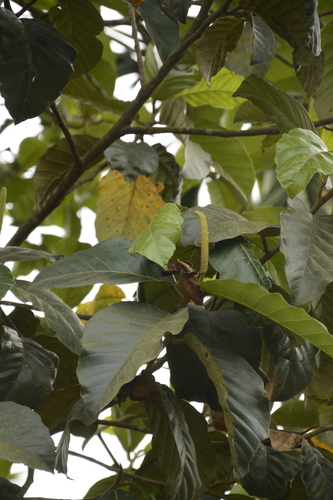
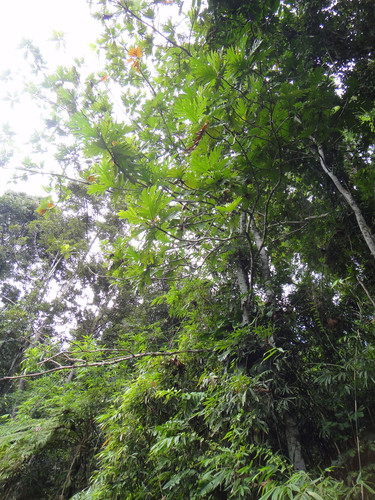
Ficus sakalavarum
Baker
wikimedia· cc-by-sa
Wikimedia Commons - Photograph by Mike Peel (www.mikepeel.net).
Description
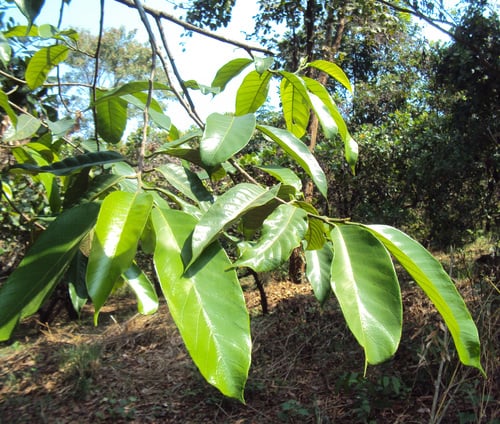
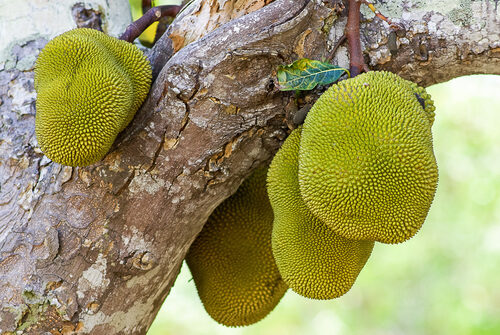
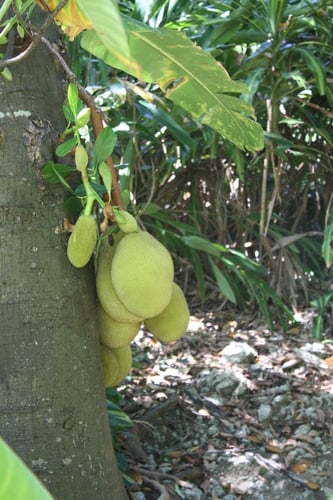
A fig. It is a tree. It grows 15 m tall. The fruit can be pear shaped or round and 8 cm long. They can be yellow or red.
This description is brief — help expand it
Edible Uses
Fruit - raw. A sweetish flavour, resembling the common fig (Ficus carica). The pear-shaped or roundish fruit is yellow to red when fully ripe and about 8cm long. The following uses have been recorded for the closely related F. Sycomorus. They are almost certainly applicable for this species. The leaves are used in soups and groundnut dishes. The bark is chewed together with kola nut. The wood ash is commonly used as a salt substitute. The latex in the sap is used to coagulate milk.
Traditional Uses
The fruit is eaten raw.
This uses section is brief — help expand it
Medicinal Uses
The following uses have been recorded for the closely related F. Sycomorus. They are almost certainly applicable for this species. The bark is used for the treatment of scrofula, coughs, and throat and chest diseases. The milky latex is used for treatment of dysentery and chest diseases, or is applied to inflamed areas. Ringworm is treated with the bark and milky latex. The leaves are said to be effective against jaundice and as an antidote for snakebite. The roots have laxative and anthelmintic properties.
Distribution
A tropical plant. It grows in alluvial valleys near water. It grows from sea level to 1,000 m above sea level.
Where It Grows
Africa, East Africa, Madagascar,
Cultivation
The pollinator wasp is Ceratosolen namorakensis (Risbec.)
Propagation
Seed - viable seed is difficult to obtain. It germinates best at a temperature around 20°c. Branches with a diameter of 50-150 mm can be used as large cuttings planted direct into the soil. To avoid rotting of the tips, they must be left in the shade for a few days to dry before planting. Most of the leaves should be removed before planting in 1 metre deep holes with some sand at the bottom. This prevents rotting of the cuttings and stimulates root formation. Smaller cuttings can also be made from either the mature wood or from wood of the current season's growth. They are first planted in the nursery to induce rooting and then planted out in the field.
Other Uses
The following uses have been recorded for the closely related F. Sycomorus. They are almost certainly applicable for this species. The inner part of the root is used as weaving fibre, and a strong rope can be made from the inner bark. The wood is creamy brown, has a fairly uniform structure, is very light (air-dry 510 kg/m³), soft to moderately hard, tough, strong, easy to work, finishes smoothly and holds nails firmly. It is not very durable and is easily attacked by termites. Mainly used for making mortars and pestles, drums, stools, doors, beehives, dugout canoes, carvings and for house building. The wood can be used as firewood and for making charcoal. Various peoples throughout Africa use a piece of dry wood from this tree as the base block when starting a fire by the friction method. The following uses have been recorded for the closely related F. Sycomorus. They are almost certainly applicable for this species. Grown as a shade tree in coffee plantations. Wild fig can be used for sand-dune fixation and riverbank stabilization. Shed leaves form a valuable litter improving the nutrient status, infiltration rate and water-holding capacity of the soil. Usually intercropped with bananas as an understorey.
Notes
There are about 800-1000 Ficus species. They are mostly in the tropics. There are 120 Ficus species in tropical America.
References (3)
- Fern, K., 2012, Tropical Species Database http://theferns.info/tropical/
- Jardin, C., 1970, List of Foods Used In Africa, FAO Nutrition Information Document Series No 2.p 137
- www.figweb.org