Vaccinium myrtoides
(Blume) Miq.
Gatmo
wikimedia· cc-by
Wikimedia Commons - Alex Lomas
wikimedia· cc-by-sa
Wikimedia Commons - Unknown authorUnknown author
gbif· cc0
President and Fellows of Harvard College
Description
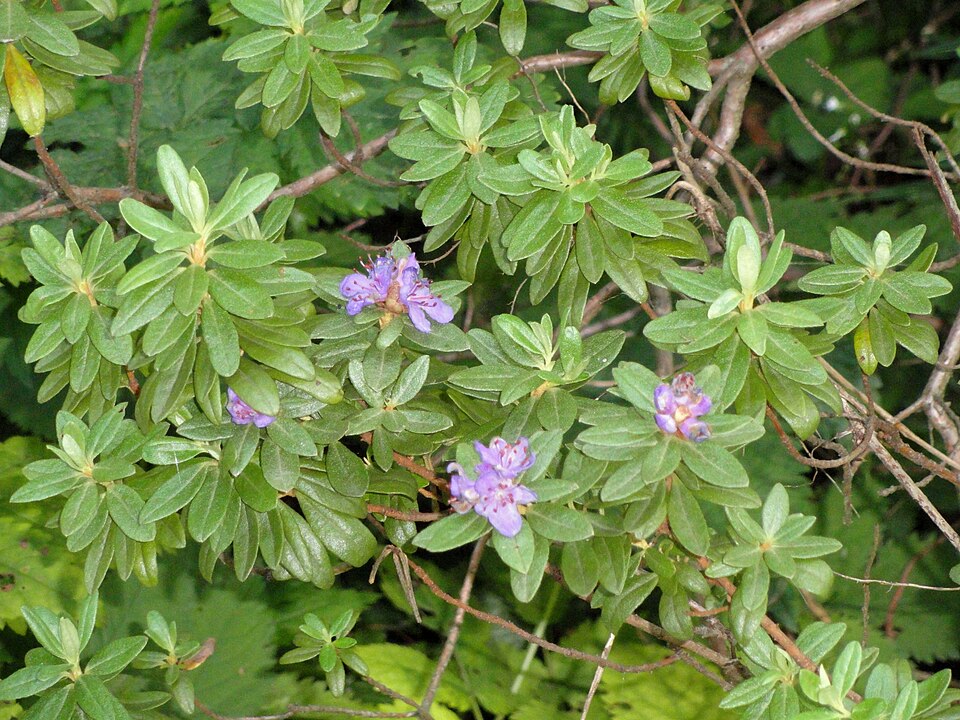
A small shrub or tree. The leaves are alternate and leathery, pointed at the tip and rounded at the base. Flowers are small and whitish or purple. The fruit are small black berries produced in several clusters. They are juicy and sweet.
Edible Uses
Fruit - an excellent flavour they can be used to make fine preserve and pies. The globose fruit, which turns bluish-blackish when ripe, is 4 - 5mm in diameter
Traditional Uses
The berries are eaten raw. They can be used in jams and pies.
This uses section is brief — help expand it
Distribution
A tropical plant. They are common in Benguet and occur from northern Luzon to Mindanao in the Philippines.
Where It Grows
Asia, Indonesia, Pacific, Philippines*, SE Asia,
Other Uses
The wood is used to make utensils. The wood is used for fuel.
Dangerous Lookalikes
This plant can be confused with the following toxic species. Always verify identification carefully before consuming any wild plant.
Deadly Nightshade
Atropa belladonna
Joan Simon from Barcelona, España
Gatmo
Vaccinium myrtoides
Wikimedia Commons - Alex Lomas
Deadly Nightshade: Tall herbaceous plant (1-2m), single shiny black cherry-sized berries, star-shaped calyx, large oval leaves, sweet but dangerous taste.
Gatmo: Low woody shrub, berries in clusters with crown/remnant calyx ring, sweet taste.
Also Known As
Alimani, Alumani, Ayosep, Ayusip, Gotmo
References (7)
- Barcelo, R., 2015, Phytochemical Screening and Antioxidant Activity of Edible Wild Fruits in Benguet, Cordillera Administrative Region, Philippines. Electronic Journal of Biology, 2015, Vol.11(3): 80-89
- Brown, W.H., 1920, Wild Food Plants of the Philippines. Bureau of Forestry Bulletin No. 21 Manila. p 140
- Chua-Barcelo, R. T., 2014, Ethnobotanical survey of edible wild fruits in Benguet, Cordillera administrative region, the Philippines. Asian Pac. J. Trop. Biomed. 4(Suppl. 1):S525-S538
- Fl. Ned. Ind. 2:1062. 1859
- Monsalud, M.R., Tongacan, A.L., Lopez, F.R., & Lagrimas, M.Q., 1966, Edible Wild Plants in Philippine Forests. Philippine Journal of Science. p 464
Show all 7 references Hide references
- Sleumer, 1967, Ericaceae, Flora Malesiana, Ser. 1 Vol. 6 (5) p 812
- World Checklist of Useful Plant Species 2020. Royal Botanic Gardens, Kew