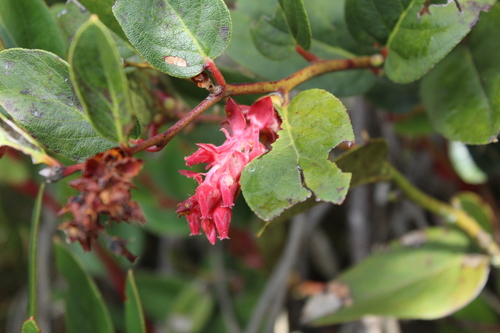
Vaccinium moupinense
Franchet
iNaturalist· cc-by
(c) Daniel Cahen, some rights reserved (CC BY), uploaded by Daniel Cahen
wikimedia· cc-by-sa
Wikimedia Commons - Muséum national d’Histoire naturelle, Paris (France) Collection : Plantes vasculaires (P) Spécimen P00647851 père David
Summary
Source: WikipediaVaccinium moupinense, also known as the Himalayan blueberry, is a species of perennial shrub in the genus Vaccinium. The shrub is native to the Chinese Himalayas, particularly to Western Sichuan Province. It flowers in late spring and early summer.
Description
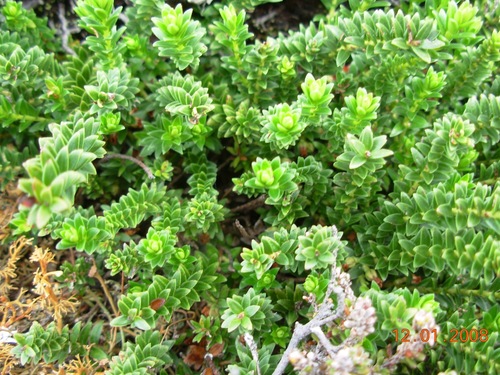
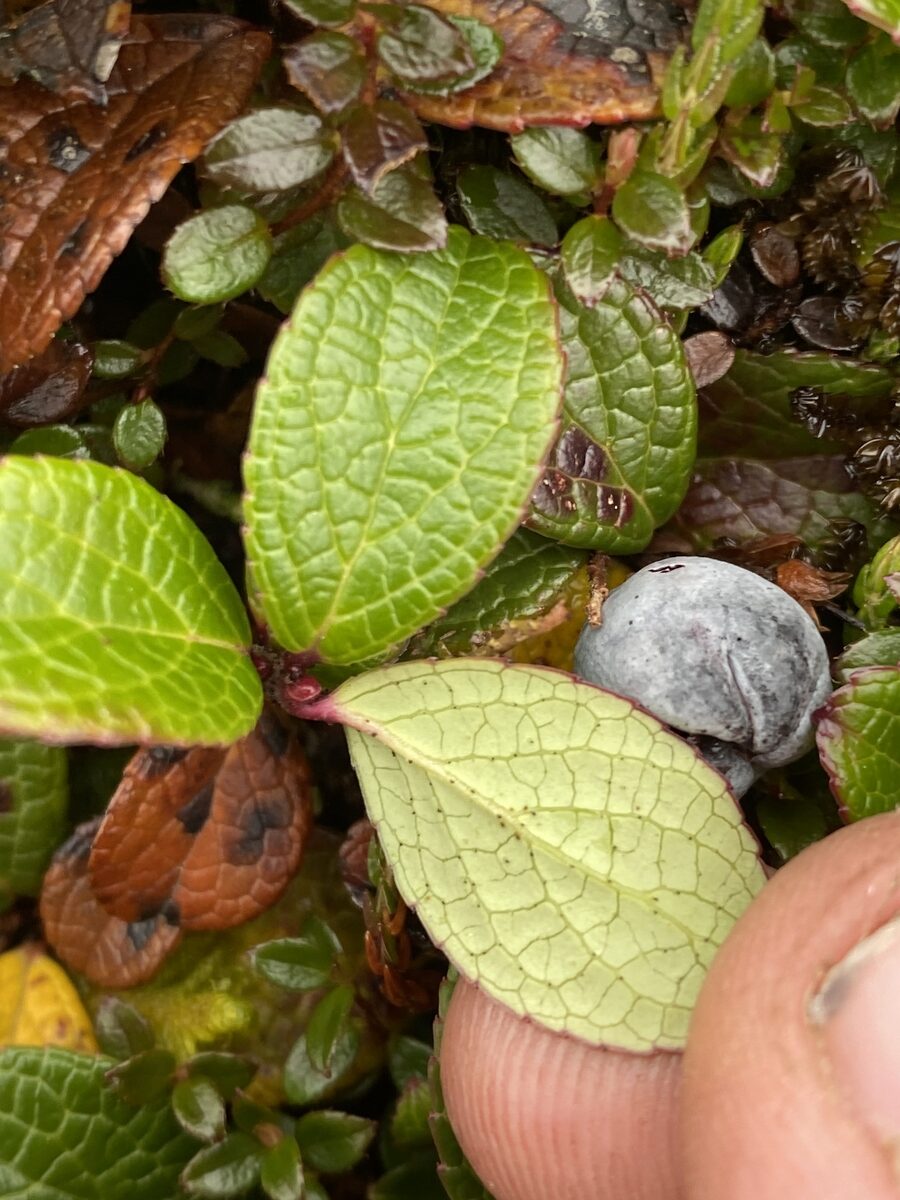
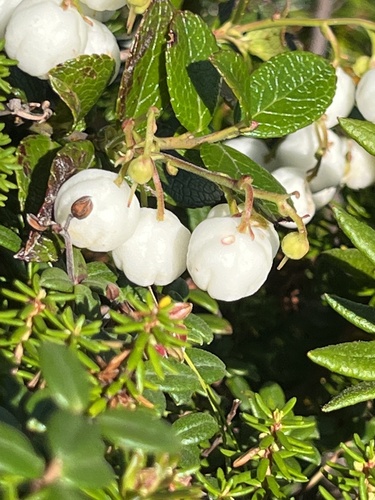
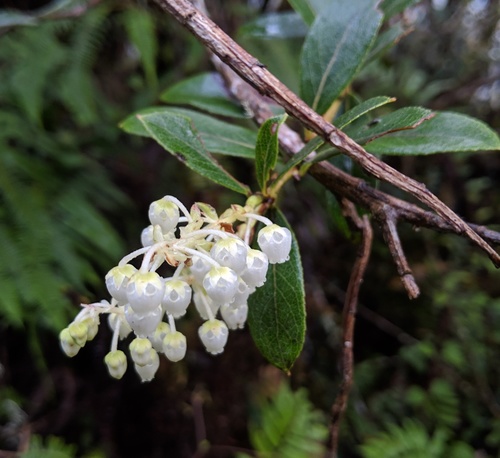
A small compact shrub. It grows as a neat round bush 60-90 cm high. The leaves are leathery and oval. They are 2 cm long by 5 mm wide. The leaves are crowded on the branches. They are glossy green. The young growth has red tips. The flowers are nodding and in groups of 9-15. They are waxy and urn shaped. They are a deep red colour. The fruit are round purple-black berries. They are 5 mm across.
Edible Uses
The fruit are edible.
Distribution
It is a temperate plant. It is very hardy. It does best if there is a lot of rotting plant materials. It can grow as an epiphyte on old trees. It grows between 1,800-2,400 m above sea level. In Sichuan and Yunnan.
Where It Grows
Asia, China,
Cultivation
It can be grown from seed or cuttings.
Dangerous Lookalikes
This plant can be confused with the following toxic species. Always verify identification carefully before consuming any wild plant.
Deadly Nightshade
Atropa belladonna
Joan Simon from Barcelona, España
Vaccinium moupinense
Vaccinium moupinense
(c) Daniel Cahen, some rights reserved (CC BY), uploaded by Daniel Cahen
Deadly Nightshade: Tall herbaceous plant (1-2m), single shiny black cherry-sized berries, star-shaped calyx, large oval leaves, sweet but dangerous taste.
Vaccinium moupinense: Low woody shrub, berries in clusters with crown/remnant calyx ring, sweet taste.
References (3)
- Brickell, C. (Ed.), 1999, The Royal Horticultural Society A-Z Encyclopedia of Garden Plants. Convent Garden Books. p 1040
- Nouv. Arch. Mus. Hist. Nat. ser. 2, 10:43. 1888
- Trehane, J., 2004, Blueberries, Cranberries and Other Vacciniums. Timber Press. p 232