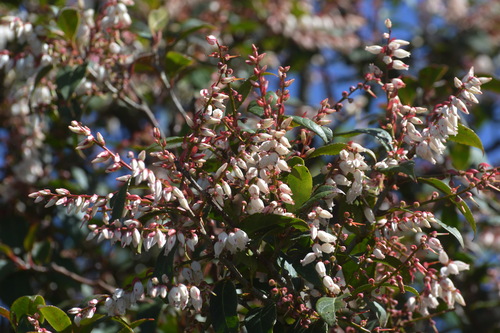
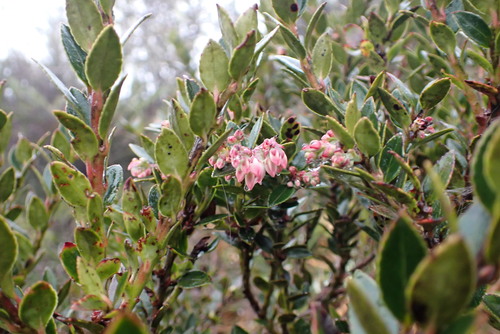
Vaccinium myrtilloides
Michaux
Velvetleaf Blueberry
iNaturalist· cc-by-nc
(c) Michelle Holland, some rights reserved (CC BY-NC), uploaded by Michelle Holland
iNaturalist· cc-by-nc-nd
(c) Janet Nelson, some rights reserved (CC BY-NC-ND), uploaded by Janet Nelson
iNaturalist· cc-by-nc-nd
(c) JD James, some rights reserved (CC BY-NC-ND), uploaded by JD James
Summary
Source: WikipediaVaccinium myrtilloides is a North American species of blueberry with common names including common blueberry, velvetleaf huckleberry, velvetleaf blueberry, Canadian blueberry, and sourtop blueberry.
Description
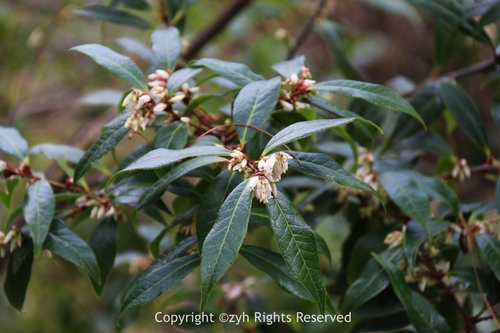
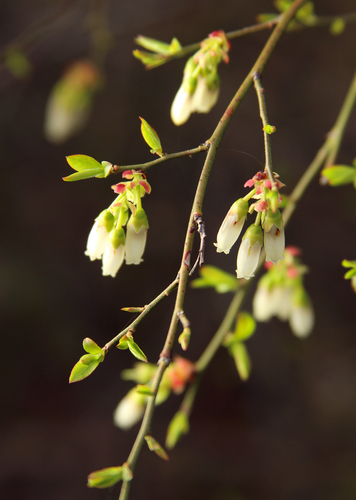
A low bush. The upright shoots can be 10-110 cm high. The plant is hairy. There is a soft downy covering on the twigs and leaves. The leaves are long and narrowly oval. They are 2-4 cm long and 1-1.5 cm wide. They are green and downy on both sides and do not have teeth along the edge. The plant loses its leaves during the year. The flowers are white or pale pink. The fruit is blue and 5-8 mm across. The fruit have hairy stems. They occur in clusters.
Edible Uses
The fruit, about 8mm in diameter, can be eaten raw or cooked in pies, preserves, and similar preparations, and can also be dried for later use. It is more acid than most blueberries with an agreeably piquant flavour. The flowers can be eaten raw or used to make preserves. The leaves are used as a tea substitute.
Traditional Uses
The fruit are eaten fresh. They are also used in pies, cakes and preserves. They can be dried.
This uses section is brief — help expand it
Medicinal Uses
The leaves and stems are contraceptive, diaphoretic, and emmenagogue. A decoction has been used to treat various complaints of the female reproductive system, including bringing on a delayed period, preventing pregnancy, preventing miscarriage, and reducing excessive menstrual bleeding.
Distribution
It is a cold temperate plant. It grows in dry shaded woods and on rocky outcrops. It also grows in bogs.
Where It Grows
Canada, North America, USA,
Cultivation
Requires a moist but freely-draining lime free soil, preferring one that is rich in peat or a light loamy soil with added leaf-mould. Prefers a very acid soil with a pH in the range of 4.5 to 6, plants soon become chlorotic when lime is present. Succeeds in full sun or light shade though it fruits better in a sunny position. Requires shelter from strong winds. There has been a lot of confusion over the correct name for this species, it is often called V. canadense. Dislikes root disturbance, plants are best grown in pots until being planted out in their permanent positions. Plants in this genus are notably resistant to honey fungus.
Propagation
Sow seed in late winter in a greenhouse using a lime-free potting mix, barely covering the seed. Stored seed may need up to 3 months of cold stratification. Alternatively, sow fresh seed in a greenhouse as soon as it is ripe. Prick seedlings out into individual pots once they reach about 5cm tall and grow on in a lightly shaded position in the greenhouse for at least their first winter. Plant out in late spring or early summer after the last expected frosts. Half-ripe cuttings, 5–8cm with a heel, can be taken in August and rooted in a frame, though this is slow and difficult. Layering can be done in late summer or early autumn, or in spring according to some sources, and takes 18 months. Suckers can be divided in spring or early autumn.
Other Uses
None known
Dangerous Lookalikes
This plant can be confused with the following toxic species. Always verify identification carefully before consuming any wild plant.
Deadly Nightshade
Atropa belladonna
Joan Simon from Barcelona, España
Velvetleaf Blueberry
Vaccinium myrtilloides
(c) Michelle Holland, some rights reserved (CC BY-NC), uploaded by Michelle Holland
Deadly Nightshade: Tall herbaceous plant (1-2m), single shiny black cherry-sized berries, star-shaped calyx, large oval leaves, sweet but dangerous taste.
Velvetleaf Blueberry: Low woody shrub, berries in clusters with crown/remnant calyx ring, sweet taste.
Synonyms
Also Known As
Canadian blueberry, Sourtop Blueberry
References (16)
- Facciola, S., 1998, Cornucopia 2: a Source Book of Edible Plants. Kampong Publications, p 98
- Fisk, J. R. & Hoover, E., 2015, Wild Fruits of Minnesota. A Field Guide. University of Minnesota p 31
- Fl. bor.-amer. 1:234. 1803
- Glowinski, L., 1999, The Complete Book of Fruit Growing in Australia. Lothian. p 158
- John, L., & Stevenson, V., 1979, The Complete Book of Fruit. Angus & Robertson p 84
Show all 16 references Hide references
- Kermath, B. M., et al, 2014, Food Plants in the Americas: A survey of the domesticated, cultivated and wild plants used for Human food in North, Central and South America and the Caribbean. On line draft. p 891 (As Vaccinium angustifolium var. myrtilloides)
- MacKinnon, A., et al, 2009, Edible & Medicinal Plants of Canada. Lone Pine. p 114
- Moerman, D. F., 2010, Native American Ethnobotany. Timber Press. p 584
- Plants for a Future database, The Field, Penpol, Lostwithiel, Cornwall, PL22 0NG, UK. http://www.scs.leeds.ac.uk/pfaf/
- Reis, S. V. and Lipp, F. L., 1982, New Plant Sources for Drugs and Foods from the New York Botanical Garden herbarium. Harvard. p 229
- Trehane, J., 2004, Blueberries, Cranberries and Other Vacciniums. Timber Press. p 88, 183, 233
- Turner, N., 1995, Food Plants of Coastal First Peoples. Royal BC Museum Handbook p 83
- Turner, N., 1997, Food Plants of Interior First Peoples. Royal BC Museum Handbook p 118
- USDA, ARS, National Genetic Resources Program. Germplasm Resources Information Network - (GRIN). [Online Database] National Germplasm Resources Laboratory, Beltsville, Maryland. Available: www.ars-grin.gov/cgi-bin/npgs/html/econ.pl (10 April 2000)
- Wiersema, J. H. & Leon, B., 2013, World Economic Plants. A Standard Reference CRC Press. 2nd Ed. p 709
- World Checklist of Useful Plant Species 2020. Royal Botanic Gardens, Kew