Uvaria grandiflora
(Lesch. ex DC.) Roxb.
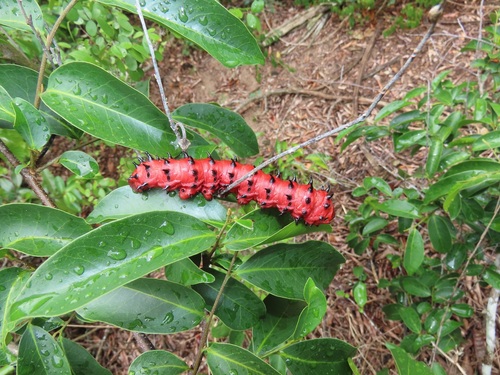
iNaturalist· cc-by-nc
(c) Grigory Evtukh, some rights reserved (CC BY-NC), uploaded by Grigory Evtukh
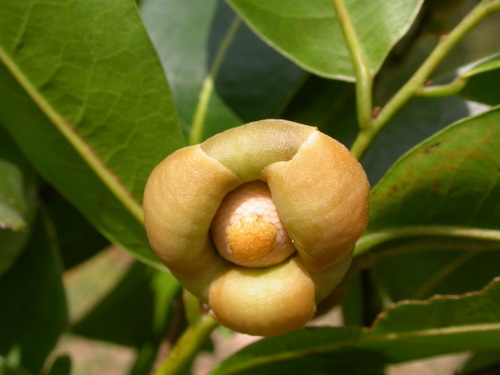
iNaturalist· cc-by-nc
(c) Mak Happy, some rights reserved (CC BY-NC)
iNaturalist· cc-by-nc
(c) Mak Happy, some rights reserved (CC BY-NC)
Summary
Source: WikipediaUvaria grandiflora is a species of plant in the family Annonaceae. Its native range includes: China, Indochina, Malesia and New Guinea.
Description
A climber. The branches have brown hairs. The leaves are large. They are 15-20 cm long. The flowers are red and occur singly or in groups of 2-3. The petals are internal and 3.5 cm long. The fruit are 4-6 cm long. They are orange and fleshy.
Edible Uses
The leaves are cooked with rice and eaten, particularly for their property of reducing flatulence. The fruit are eaten raw or made into preserves.
Traditional Uses
The leaves are cooked with rice and eaten. (They reduce flattulence) The fruit are eaten raw or in preserves.
This uses section is brief — help expand it
Medicinal Uses
Leaves and roots are applied in traditional medicine against stomach-ache, abdominal pains, skin diseases.
Distribution
A tropical plant. It grows in sparse forests in Southern China between 400-1000 m altitude.
Where It Grows
Asia, Australia, China, India, Indochina, Indonesia, Laos, Malaysia, Myanmar, Pacific, Philippines, SE Asia, Sri Lanka, Thailand, Vietnam,
Other Uses
Climbing stems said to be good substitute for rattans.
Synonyms
Also Known As
Akar larak, Akar pisang-pisang tandok, Chuoi-con-chong, Kalak, Thabut
References (10)
- Altschul, S.V.R., 1973, Drugs and Foods from Little-known Plants. Notes in Harvard University Herbaria. Harvard Univ. Press. Massachusetts. no. 1033 (As Uvaria rubra)
- Ambasta, S.P. (Ed.), 2000, The Useful Plants of India. CSIR India. p 665
- Burkill, I. H., 1966,
- Ferns, Useful Tropical Plants
- Fl. ind. ed. 1832, 2:665. 1832
Show all 10 references Hide references
- Li Ping-Tao, Annonaceae, Flora of China.
- Milow, P., et al, 2013, Malaysian species of plants with edible fruits or seeds and their evaluation. International Journal of Fruit Science. 14:1, 1-2
- Pham-Hoang Ho, 1999, An Illustrated Flora of Vietnam. Nha Xuat Ban Tre. p 248
- PROSEA No. 2
- World Checklist of Useful Plant Species 2020. Royal Botanic Gardens, Kew