Uvaria lucida
Benth.
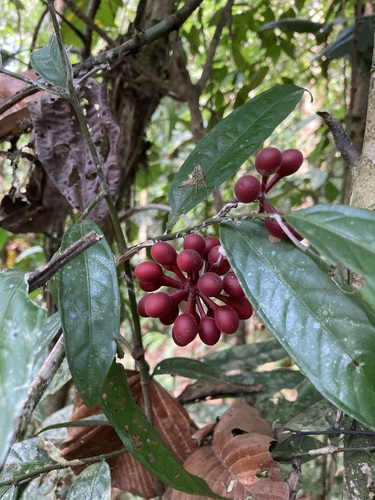
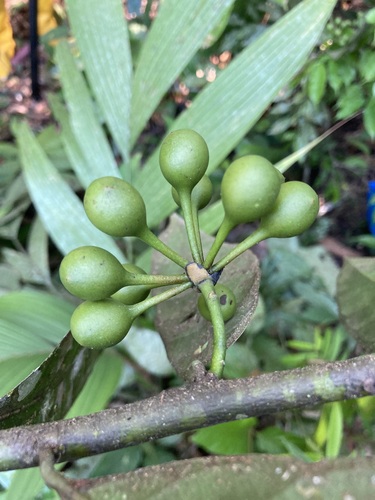
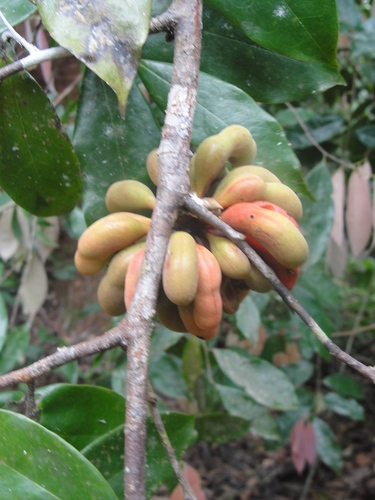
Large cluster pear
iNaturalist· cc-by-nc
(c) magdastlucia, some rights reserved (CC BY-NC), uploaded by magdastlucia
iNaturalist· cc-by-nc
(c) magdastlucia, some rights reserved (CC BY-NC), uploaded by magdastlucia
iNaturalist· cc-by-nc
(c) Troos van der Merwe, some rights reserved (CC BY-NC), uploaded by Troos van der Merwe
Description
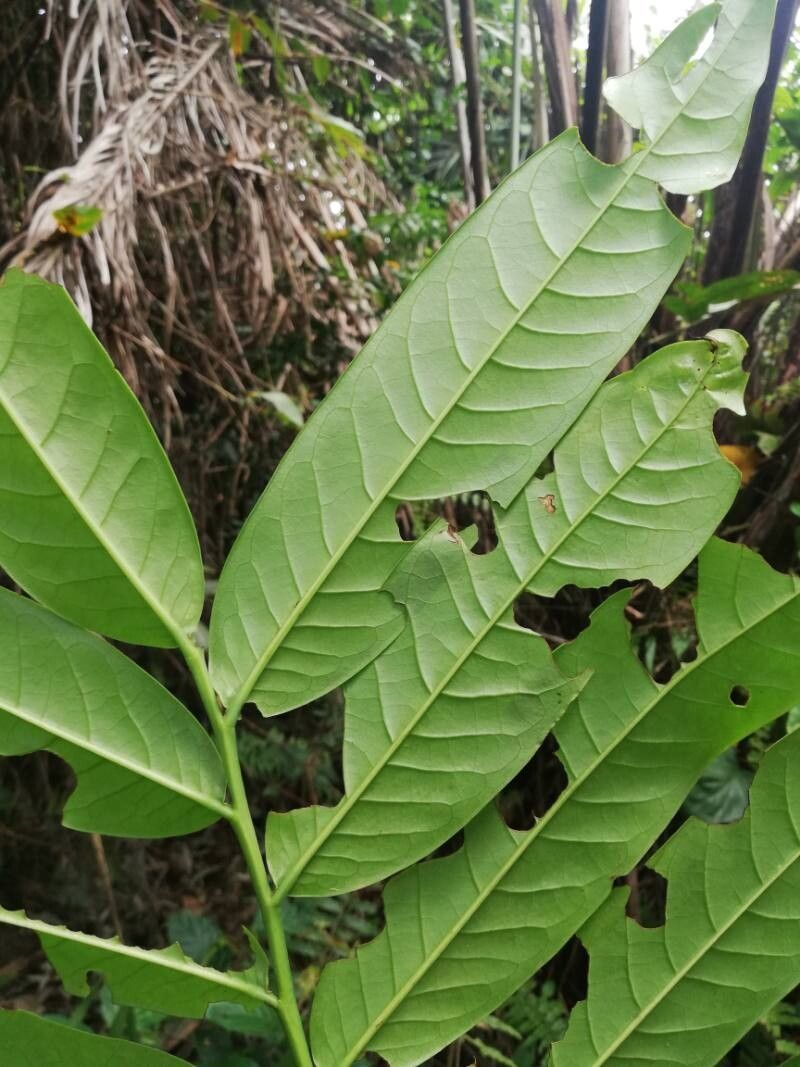
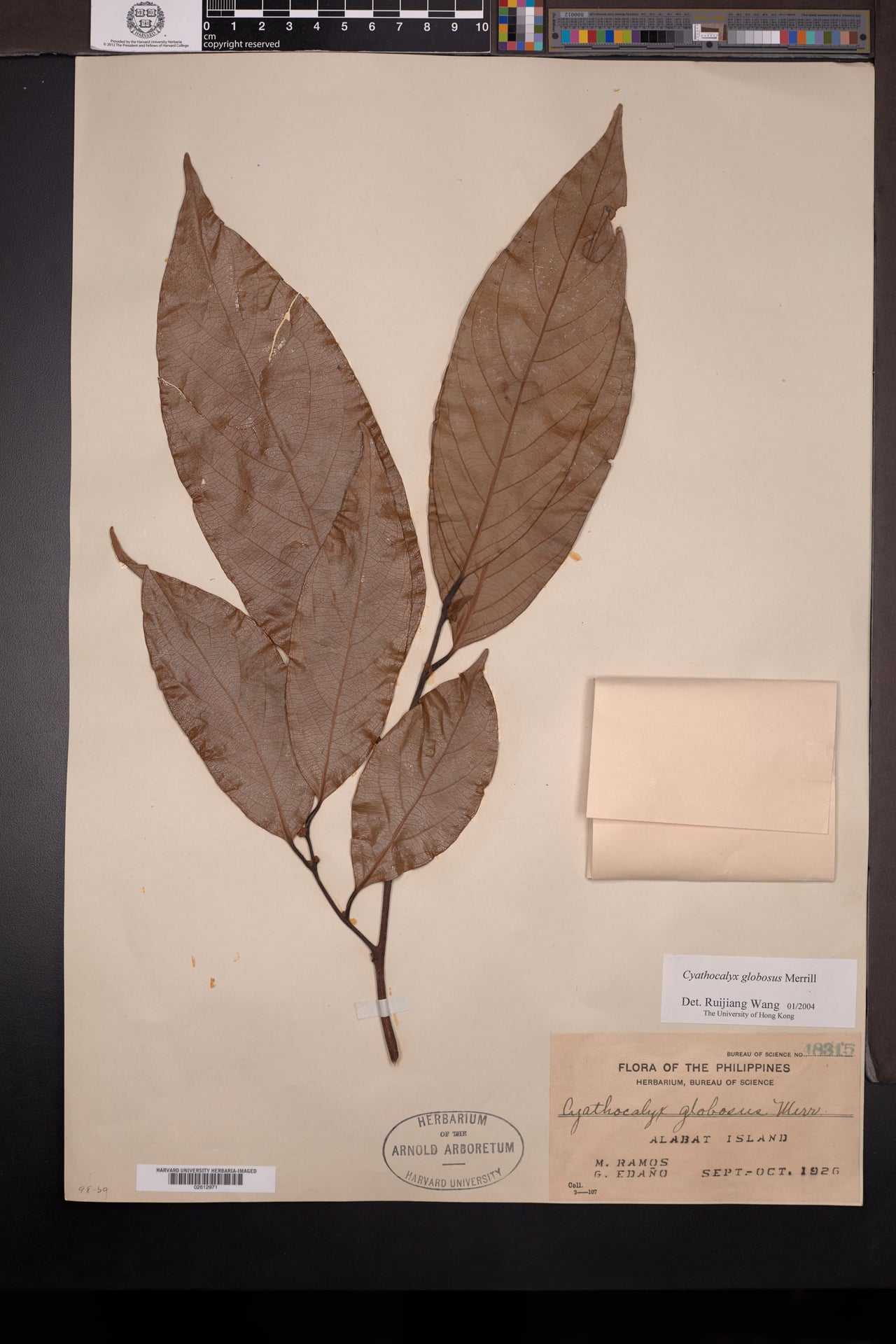
A climber. It grows 9 m high. The stems can be 8 cm across. The leaves are oval and wider at the tip. The leaves are 1-10 cm long. The hairs are star shaped. There are scales on the lower surface. The flowers are yellow green. There are 1-3 together. They are at the ends of the stems. The fruit have rusty hairs. They are 1-3 cm long. There are 3-12 seeds.
Edible Uses
Fruit - raw. Fleshy and sweet. The ripe fruits can also be used for making juices. The globose to cylindrical fruits are 9 - 30mm long. They are borne in clusters of 10 - 20 on the plant[610.
Traditional Uses
The ripe fruit are eaten raw. The fruit are used to make juice. They can also be dried or made into jam.
This uses section is brief — help expand it
Known Hazards
The roots are said to be poisonous.
Distribution
A tropical and subtropical plant. It grows in the understorey in rainforest. It suits humid locations. In Malawi it grows between 600-1,800 m altitude.
Where It Grows
Africa, East Africa, Eswatini, Kenya, Malawi, South Africa, Southern Africa, Swaziland, Tanzania, Zimbabwe,
Cultivation
Plants can be grown from seeds.
Other Uses
The stems are used for withies and as fuel.
Production
In Tanzania fruit are available from April to June.
Notes
Variety virens in Zimbabwe.
Synonyms
Also Known As
Dzala-bomu, Mchofu, Mganda simba, Mngweni-mulume, Mshofu, Msofu, Mudzala
References (16)
- Cunningham, 1985,
- Herb., E. A., 1981,
- Long, C., 2005, Swaziland's Flora - siSwati names and Uses http://www.sntc.org.sz/flora/
- Maundu, P. et al, 1999, Traditional Food Plants of Kenya. National Museum of Kenya. 288p
- Msuya, T. S., et al, 2010, Availability, Preference and Consumption of Indigenous Foods in the Eastern Arc Mountains, Tanzania, Ecology of Food and Nutrition, 49:3, 208-227 (subsp. virens)
Show all 16 references Hide references
- Mutie, F. G., 2020, Conservation of Wild Food Plants and Their Potential for Combatting Food Insecurity in Kenya as Exemplified by the Drylands of Kitui County. Plants 2020, 9, 1017
- Mutie, F. M., et al, 2023, Important Medicinal and Food Taxa (Orders and Families) in Kenya, Based on Three Quantitative Approaches. Plants 2023, 12, 1145
- Pakia, M., 2000, Plant Ecology and Ethnobotany of two sacred forests (Kayas) at the Kenya Coast. M. Sc. Thesis.
- Peters, C. R., O'Brien, E. M., and Drummond, R.B., 1992, Edible Wild plants of Sub-saharan Africa. Kew. p 56
- Reis, S. V. and Lipp, F. L., 1982, New Plant Sources for Drugs and Foods from the New York Botanical Garden herbarium. Harvard. p 72
- Ruffo, C. K., Birnie, A. & Tengnas, B., 2002, Edible Wild Plants of Tanzania. RELMA p 700
- Ruiters-Welcome, A. K., 2019, Food plants of southern Africa. Ph.D. thesis. Univ. of Johannesburg p 18
- Swaziland's Flora Database http://www.sntc.org.sz/flora (Subsp. virens)
- van Wyk, B-E., 2011, The potential of South African plants in the development of new food and beverage products. South African Journal of Botany 77 (2011) 857–868
- Welcome, A. K. & Van Wyk, B.-E., 2019, An inventory and analysis of the food plants of southern Africa. South African Journal of Botany 122 (2019) 136–179
- White, F., Dowsett-Lemaire, F. and Chapman, J. D., 2001, Evergreen Forest Flora of Malawi. Kew. p 130