Uvaria leichhardtii
(F. Muell.) L. Zhou et al
Acid drop vine, Zig-zag vine
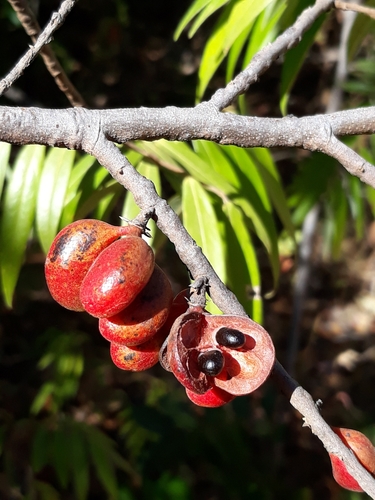
iNaturalist· cc-by-nc
(c) Scott W. Gavins, some rights reserved (CC BY-NC), uploaded by Scott W. Gavins
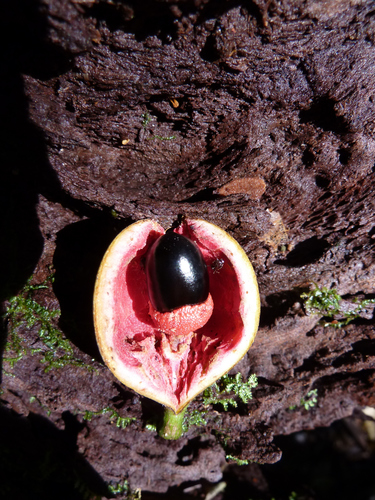
iNaturalist· cc-by-nc
(c) Martin Bennett, some rights reserved (CC BY-NC), uploaded by Martin Bennett
iNaturalist· cc-by-sa
(c) Greg Tasney, some rights reserved (CC BY-SA), uploaded by Greg Tasney
Description
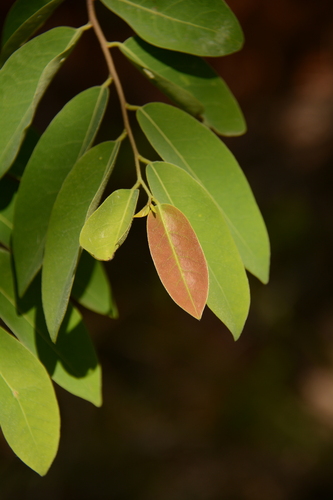
A twining vine. It is a woody climber. The woody branches have a zig-zag pattern. The leaves are oval and shiny and green. The leaves are simple and 4-23 cm long. The underside can have a few rusty hairs. The flowers are brown and have a strong scent. They are 2.5 cm across. They are on stalks 2.5 cm long. The fruit is 40-60 mm long. Several fruit radiate from the one receptacle. The fruit are yellow to orange in a cluster and spread out in finger shape. They are fleshy. They are constricted between the seeds. The fruit are hard on the outside but with a soft pulp. The fruit are yellow or orange and waxy. There are 1-5 seeds in each fruit. The flesh is edible.
Edible Uses
The flesh of the fruit is edible and can be eaten raw. The orange fruit has a pleasant piquant orange-sherbet flavor with a sour but rich taste, and is used for sauces in gourmet dishes.
Traditional Uses
The fruit are sour but have a rich flavour. The fruit are eaten raw.
This uses section is brief — help expand it
Distribution
A tropical plant. It suits heavy soils and sheltered sites. It grows in rainforest. It grows from sea level to 1,100 m above sea level. It grows naturally in rainforest in Queensland and New South Wales in Australia. Mt Cootha Botanical Gardens.
Where It Grows
Australia*, Papua New Guinea, PNG,
Cultivation
Plants can be grown from fresh seeds. Seeds germinate in about 2 months. It can be used as a ground cover or clipped as a shrub. It grows slowly at first but then becomes vigourous.
Synonyms
Also Known As
Acid drop vine, Merangara
References (13)
- Anon., 2003, Native Plants for the Fitzroy basin. Society for Growing Australian Plants Inc. (Rockhampton Branch) p 66
- Bailey, F. M., 1913, Comprehensive Catalogue of Queensland Plants. Queensland Government.
- Cooper W & Cooper W T, 1994, Fruits of the Rain Forest. RD Press p 242
- Cribb, A.B. & J.W., 1976, Wild Food in Australia, Fontana. p 69
- Hibbert, M., 2002, The Aussie Plant Finder 2002, Florilegium. p 245 (As Melodorum leichardtii)
Show all 13 references Hide references
- Jones, D.L. & Gray, B., 1977, Australian Climbing Plants. Reed. p 60, 139
- Jones D, L, 1986, Ornamental Rainforest Plants in Australia, Reed Books, p 340 (As Rauwenhoffia leichardtii)
- Leiper, G & Houser, J., Mutooroo. Plant Use by Australian Aboriginal People. Assembly press, Queensland.
- Melzer, R. & Plumb, J., 2011, Plants of Capricornia. Belgamba, Rockhampton. p 356
- Morley, B.D., & Toelken, H.R., (Eds), 1983, Flowering Plants in Australia. Rigby. p 35, 36
- Nicholson, N & H., 1996, Australian Rainforest Plants 3, Terania Rainforest Publishing. NSW. p 38
- Recher, P, 2001, Fruit Spirit Botanical Gardens Plant Index. www.nrg.com.au/~recher/ seedlist.html p 3
- Townsend, K., 1994, Across the Top. Gardening with Australian Plants in the tropics. Society for Growing Australian Plants, Townsville Branch Inc. p 326