Uvaria chamae
P. Beauv.
Bush banana, Finger-root, Finger fruit
iNaturalist· cc-by-nc-sa
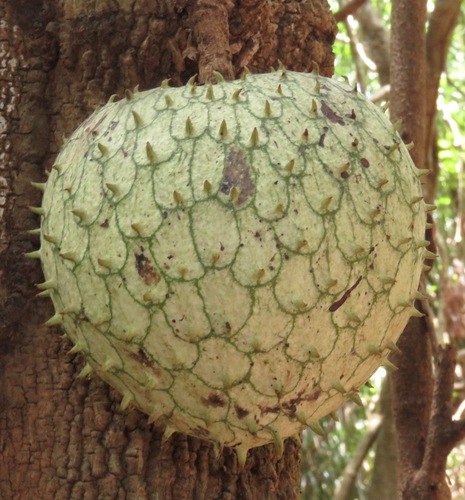
(c) Marco Schmidt, some rights reserved (CC BY-NC-SA)
iNaturalist· cc-by-nc-sa
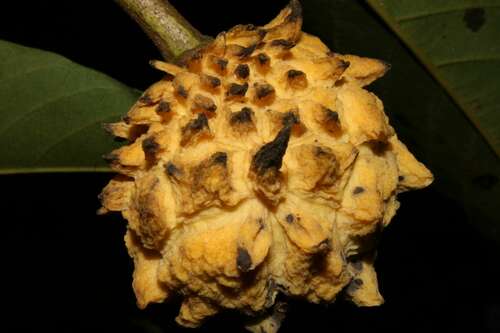
(c) Stefan Dressler, some rights reserved (CC BY-NC-SA)
iNaturalist· cc-by-nc
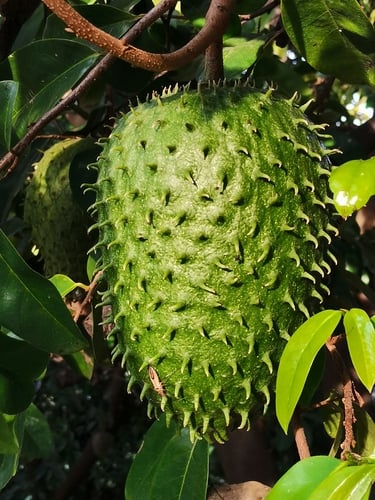
(c) F. Bemmerlein-Lux, some rights reserved (CC BY-NC), uploaded by F. Bemmerlein-Lux
Summary
Source: WikipediaUvaria chamae, commonly known as finger root or bush banana is a climbing large shrub or small tree native to tropical West and Central Africa where it grows in wet and dry forests and coastal scrublands. The common name refers to the fruit growing in its small bunches; the fruit is edible and widely eaten. U. chamae is a medicinal plant used throughout its range to treat fevers and has antibiotic properties. An extract of Uvaria chamae, administered orally at 300–900 mg/kg/day showed significant antimalarial activity against both early and established infections.
Description
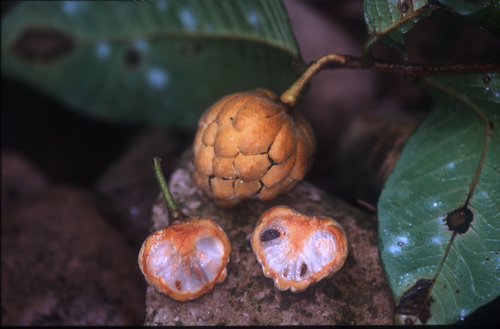
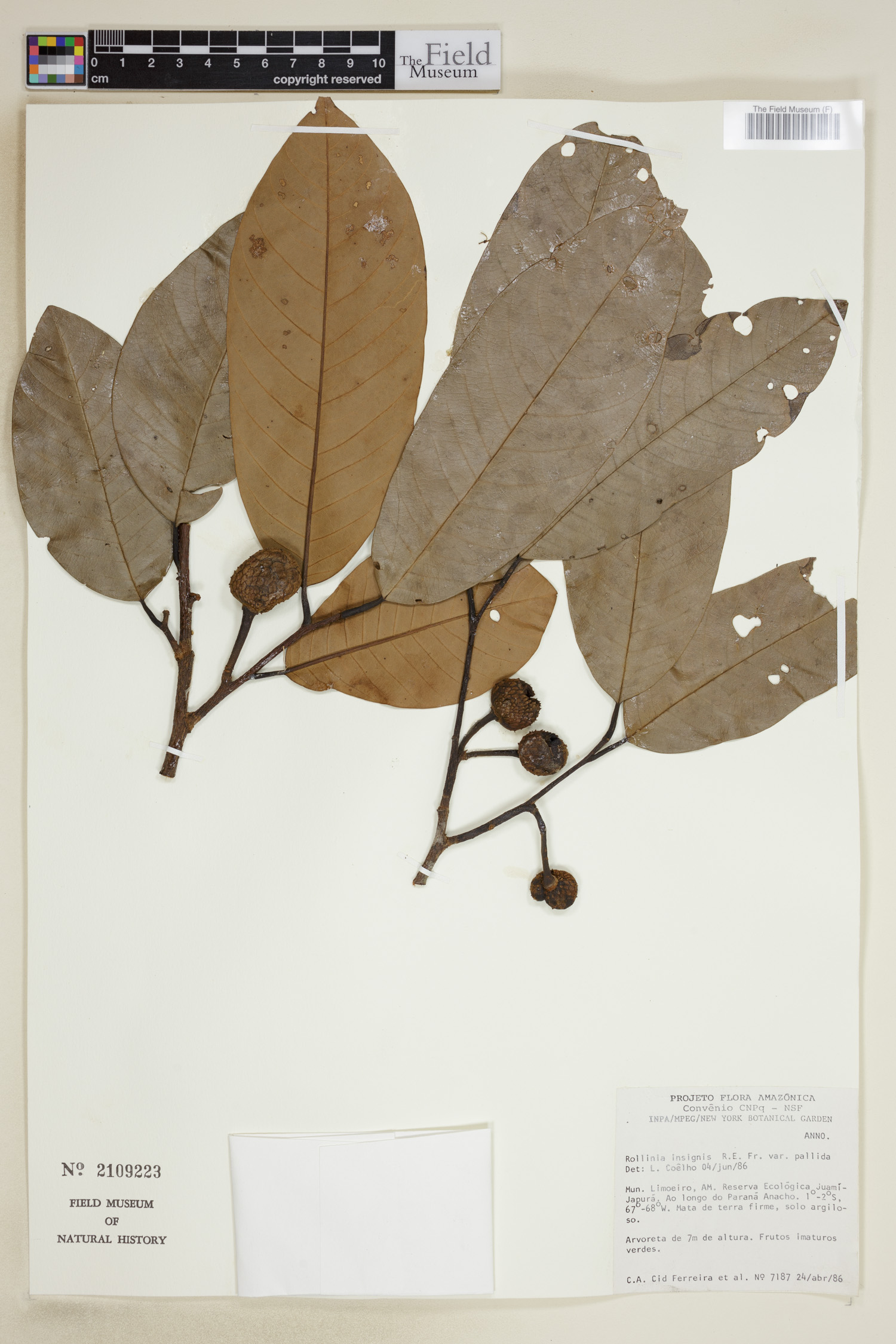
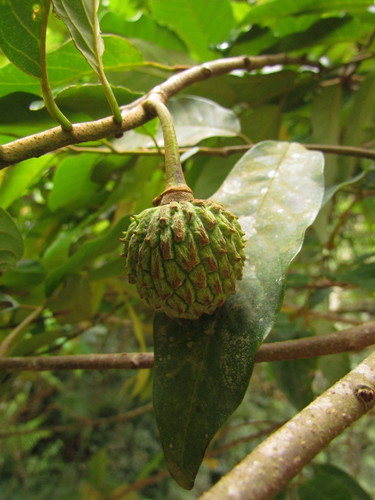
A shrub or small tree. It grows 4.5 m high. It is often straggling and can be a creeper. The fruit are in finger like clusters. The fruit are yellow when ripe and have a sweet pulp.
Edible Uses
The juicy layer surrounding the seeds is eaten fresh; the leaves are occasionally used in soup. The fruit are widely eaten and commonly available during the drier, hungrier seasons.
Traditional Uses
The juicy layer around the seeds is eaten. The leaves are used in soup.
This uses section is brief — help expand it
Medicinal Uses
The root and root-bark have a widespread reputation in traditional medicine in Africa. The plant has been shown to contain several medically active compounds - the root bark yields an oleo-resin; alkaloids are present in small amount in the roots; tannins have been recorded as present but saponins have been recorded as absent. The root bark is antiinflammatory, astringent, febrifuge, galactagogue and styptic. It is taken internally in the treatment of catarrhal inflammation of the mucous membranes; bronchitis and gonorrhoea. It is also used in the treatment of dysentery; as a specific treatment for piles; epistaxis, haematuria, haematemesis and haemoptysis. It is mixed with Guinea grains (Piper guinense) then added to food as a useful treatment for menorrhagia. It is boiled with spices and the decoction drunk in the treatment of fevers that are classed locally as 'yellow-fever', including almost any indisposition that is accompanied by jaundice. The root is said to be febrifuge, purgative, stomachic and vermifuge. It is boiled with spices and the decoction drunk in the treatment of fevers that are classed locally as 'yellow-fever', including almost any indisposition that is accompanied by jaundice. The root is also considered to be a 'woman’s medicine' and is used to treat amenorrhoea, to prevent miscarriage; and to relieve the pains of childbirth. The root is made into a drink and is also used as a body-wash for treating oedematous conditions. Severe abdominal pain is treated by a root-infusion combined with native pepper in gin; whilst the root combined with Guinea grains (probably Piper guinense) is used in an application to the fontanelle for cerebral diseases. The roots are used externally for healing sores. The sap from the root and stem is applied to wounds. The crushed root, combined with Capsicum or other rubefacient substances, is rubbed on as a local counter-irritant. The leaves and roots are macerated together for internal use as a cough mixture, and when mixed with those of Annona senegalensis, then dried and pulverized, are considered strong medicine for renal and costal pain. The sap of the leaves, roots and stems is widely used on wounds and sores and is said to promote rapid healing. A leaf-infusion is used as an eyewash and a leaf-decoction as a febrifuge. The crushed seeds, combined with those of Piper guinense, are rubbed on the body (the reason is not given.
Distribution
A tropical plant. It grows in the savannah and secondary forest in West Africa. It grows in arid places.
Where It Grows
Africa, Benin, Burkina Faso, Cameroon, Central Africa, Congo, Côte d'Ivoire, Gambia, Ghana, Guinea, Guinée, Guinea-Bissau, Ivory Coast, Mali, Nigeria, Senegal, Sierra Leone, Togo, West Africa,
Cultivation
The flowers are sweetly scented.
Other Uses
All parts of the plant are fragrant. The plant is used to make a pomade. An oleoresin is obtained from the root bark. The greyish-brown wood is fairly heavy. It is used for making oars.
Other Information
The fruit are widely eaten. It is a commonly used food plant. The leaves are only occasionally eaten. Fruit tend to be available in the drier more hungry season.
Notes
Uvaria chamae, Uvaria lucida and Uvaria angolensis may not be distinct.
Also Known As
Agbana-asile, Agio, Akotompo, Banana-de-santcho, Banana-sanjo, Begundja, Bogunha, Bugunha, Bu lew, Buurtchi, Eruju, Faso, Fudia, Gundje, Mmimi-ohia, Mouranda, N'pinde, Nkari ikot, Okpaokuko, Oroudjou, Qele-bale, Qele-balei, Quelibaledje, Saada kunji, Sambafiom, Sambahim-o, Sanbefim, Yaha, Yalaha, Yraha, Ziwokouwehouwe
References (31)
- Achigan-Dako, E, et al (Eds), 2009, Catalogue of Traditional Vegetables in Benin. International Foundation for Science.
- Ambe, G., 2001, Les fruits sauvages comestibles des savanes guinéennes de Côte-d’Ivoire : état de la connaissance par une population locale, les Malinké. Biotechnol. Agron. Soc. Environ. 5(1), 43-48
- Assogbadjo, A. E. et al, 2013, Specific Richness and Cultural Importance of Wild Edible Trees in Benin. Acta Hort. 979, ISHS 2013
- Atato, A., et al, 2010, Diversity of Edible Wild Fruit Tree Species of Togo. Global Science Books.
- Atato, A.,et al, 2011, Edible Wild Fruit Highly Consumed during Food Shortage Period in Togo: State of Knowledge and Conservation Status. Journal of Life Sciences 5 (2011) 1046-1057
Show all 31 references Hide references
- Atato, A., et al, 2012 Especes lianescentes a fruits comestibles du Togo. Fruits. 67(5): 353-368
- Boedecker, J., et al, 2014, Dietary contribution of Wild Edible Plants to women’s diets in the buffer zone around the Lama forest, Benin – an underutilized potential. Food Sec. 6:833–849
- Burkill, H. M., 1985, The useful plants of west tropical Africa, Vol. 2. Kew.
- Busson, 1965,
- Catarino, L., et al, 2016, Ecological data in support of an analysis of Guinea-Bissau's medicinal flora. Data in Brief 7 (2016):1078-1097
- Codjia, J. T. C., et al, 2003, Diversity and local valorisation of vegetal edible products in Benin. Cahiers Agricultures 12:1-12
- Dalziel, J. M., 1937, The Useful plants of west tropical Africa. Crown Agents for the Colonies London.
- Dansi, A., et al, 2008, Traditional leafy vegetables and their use in the Benin Republic. Genet Resour Crop Evol (2008) 55:1239–1256
- Djihounouck, Y., et al, 2018, Diversité Et Importance Socio-Economique Des Espèces Fruitières Sauvages Comestibles En Zone Kasa (Sud-Ouest Du Sénégal). European Scientific Journal December 2018 edition Vol.14, No.36 ISSN: 1857 – 7881
- Djihounouck, Y., et al, 2021, Ethnobotanical Uses of Non-cultivated Edible Fruit Species in the Department of Oussouye (South Senegal). Journal of Food Research; Vol. 10, No. 4 p 20
- FAO Corporate Document Repository. The Major Significance of 'Minor' Forest Products. Appendix 3
- Fl. Oware 2:43, t. 83, fig. 2. 1809
- Food Composition Tables for use in Africa FAO http://www.fao.org/infoods/directory No. 876
- Grivetti, L. E., 1980, Agricultural development: present and potential role of edible wild plants. Part 2: Sub-Saharan Africa, Report to the Department of State Agency for International Development. p 33
- INFOODSUpdatedFGU-list.xls
- Jardin, C., 1970, List of Foods Used In Africa, FAO Nutrition Information Document Series No 2.p 167
- JSTOR Global Plants edible
- Kafoutchoni, K. M., et al, 2018, Species richness, cultural importance, and prioritization of wild spices for conservation in the Sudano-Guinean zone of Benin (West Africa). Journal of Ethnobiology and Ethnomedicine. 14:67
- Kuhnlein, H. V., et al, 2009, Indigenous Peoples' food systems. FAO Rome p 261
- Meregini, O. A., 2005, Some endangered plants producing edible fruits and seeds in Southeastern Nigeria. Fruits, Vol. 60 pp 211-220
- Moksia, F., et al, 2019, Diversity and Socio-Economic Value of Wild Edible Plants in the Mounts Mandara Region, Cameroon. International Journal of Sciences. Vol. 8:10
- N'Danikou, S. et al, 2010, Eliciting Local Values of Wild Edible Plants in Southern Bénin to Identify Priority Species for Conservation. Economic Botany, 20(10), 2011, pp. 1–15.
- Nyadanu, D., et al, 2015, Agro-biodiversity and challenges of on-farm conservation: the case of plant genetic resources of neglected and underutilized crop species in Ghana. Genet. Resourc. Crop Evol. 62(7):
- Peters, C. R., O'Brien, E. M., and Drummond, R.B., 1992, Edible Wild plants of Sub-saharan Africa. Kew. p 56
- Segnon, A. C. and Achigan-Dako, E. G., 2014, Comparative analysis of diversity and utilization of edible plants in arid and semi-arid areas in Benin. Journal of Ethnobiology and Ethnomedicine. 10:80
- World Checklist of Useful Plant Species 2020. Royal Botanic Gardens, Kew