Urena lobata
L.
Congo jute
iNaturalist· cc-by-sa
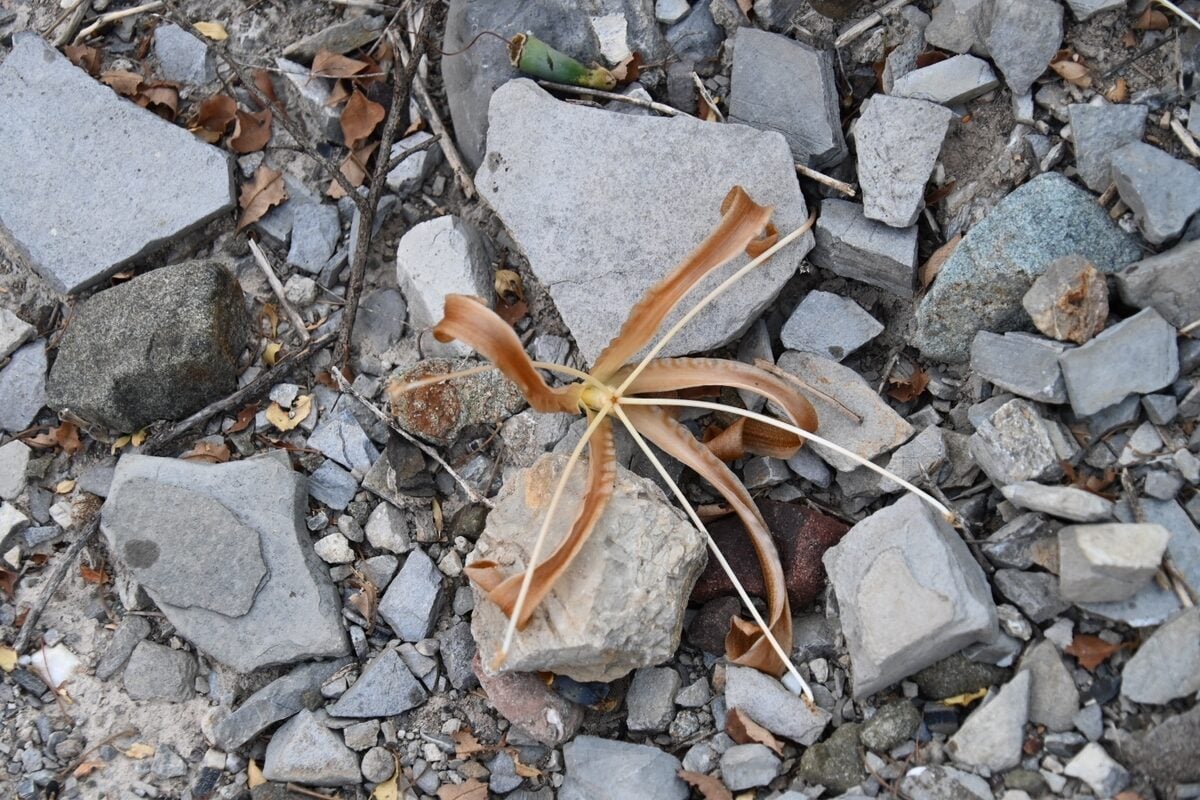
(c) Ong Jyh Seng, some rights reserved (CC BY-SA), uploaded by Ong Jyh Seng
iNaturalist· cc-by-nc
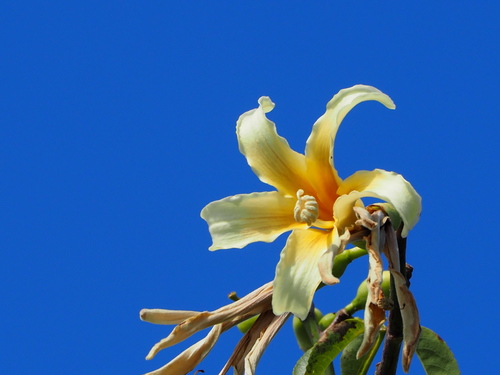
(c) David Rabehevitra, some rights reserved (CC BY-NC)
Summary
Source: WikipediaUrena lobata, commonly known as Caesarweed or Congo jute, is a tender perennial, variable, erect, ascendant shrub or subshrub measuring up to 0.5 meters (1.6 ft) to 2.5 meters (8.2 ft) tall. The stems are covered with minute, star-like hairs and often tinged purple. Considered a weed, it is considered to be native throughout much of the tropical and subtropical world, including South and Central America, Africa, Asia and Pacific Islands.
Description
An evergreen shrub or herb. It grows from seed each year. It grows to 2 m high and spreads to 2 m across. The stem is erect, coarse and hairy. It has an open crown. The bark is stringy. Leaves are green and have 3-5 lobes. They are soft, hairy on both sides and 4-8 cm long by 2-8 cm wide. Underneath the leaf is white with prominent veins. The edges of the leaves are finely toothed. Leaves occur at the tops of branches. The leaf stalks are hairy. Flowers occur singly and have petals united forming a tube. Flowers are pink or can be violet with yellow in the middle. The petals are soft. Flowers are 1-4 cm across. The fruit is a rough, spiny, woody, capsule. It is about 1 cm across. It has 5 cells each with one seed. The seed are wedge shaped and 3 mm long. They have a dull surface and are dark brown. There are named varieties.
Edible Uses
The leaves are eaten as a vegetable, dried for use as a patchouli substitute, or brewed as tea. The seeds can be eaten raw, used in soups and porridge, or pressed for oil. The flowers are eaten raw.
Traditional Uses
The leaves are eaten as a vegetable. They can be dried and used as an adulterant of patchouli leaves. The seeds can be eaten raw. They are also used in soups or porridge. The flowers are eaten raw.
Medicinal Uses
The plant is commonly used in traditional medicine, with the leaves and roots most commonly employed. The juice of the leaves or roots is used widely to treat bowel complaints, especially colic, stomach-ache, diarrhoea and dysentery, and also to treat gonorrhoea and persistent fever from malaria. A decoction from the leaves and roots is drunk to relieve pains all over the body due to excessive exertion. A decoction of a very old plant, boiled with eggs, is said to induce abortion. A lotion made from the plant is used to treat yaws and headache. The whole plant is macerated and used externally for treating fractures, wounds, mastitis and snake bites. The leaves are diuretic, emollient, refrigerant, styptic, vulnerary. They are used to treat inflammation of the intestines and bladder. The leaves are used externally as a poultice on wounds and skin diseases. The roots are diuretic. An infusion is given to aid difficult childbirth. The roots are used to treat rheumatism and lumbago. A decoction of the root is used to treat colds, dysentery, enteritis, goitre, indigestion, leucorrhoea, malaria, rheumatism and tonsillitis. Used externally, they are chewed and applied to swellings caused by filariasis. The twigs are chewed to treat toothache. The bark is used to heal cuts. The flowers are considered maturative and are taken in decoction as a pectoral and expectorant in dry coughs. An infusion of the flowers is used as a gargle for aphthae and a sore throat. A decoction of the seeds is taken as a vermifuge.
Distribution
It is a tropical plant. It will grow in most soils and under many conditions. It is damaged by frost and drought. In Papua New Guinea it mostly grows at low altitudes but occurs to 1500 m altitude. It can grow in arid places. In Sichuan and Yunnan.
Where It Grows
Africa, American Samoa, Angola, Asia, Australia, Bangladesh, Benin, Bhutan, Brazil, Brunei, Burkina Faso, Burundi, Cambodia, Cameroon, Cape Verde, Central Africa, Central African Republic, CAR, Central America, Chad, China, Comoros, Congo DR, Côte d'Ivoire, Cuba, Dominican Republic, East Africa, East Timor, Ecuador, Equatorial Guinea, Fiji, French Guiana, Gabon, Gambia, Ghana, Guadeloupe, Guianas, Guinea, Guinée, Guinea-Bissau, Guyana, Haiti, Hawaii, Himalayas, Honduras, India, Indochina, Indonesia, Ivory Coast, Jamaica, Japan, Kenya, Laos, Liberia, Madagascar, Malawi, Malaysia, Mali, Marquesas, Martinique, Mauritius, Mozambique, Myanmar, Nepal, New Caledonia, Niger, Nigeria, Niue, Pacific, Pakistan, Papua New Guinea, PNG, Paraguay, Peru, Philippines, Puerto Rico, Reunion, Rotuma, Rwanda, Samoa, Sao Tome and Principe, SE Asia, Senegal, Seychelles, Sierra Leone, Solomon Islands, South America, Sri Lanka, St Helena, Sudan, Suriname, Taiwan, Tanzania, Thailand, Timor-Leste, Togo, Tonga, Trinidad-Tobago, Uganda, Vanuatu, Venezuela, Vietnam, Wallis and Futuna, West Africa, West Indies, Zambia, Zimbabwe,
Cultivation
Plants can be grown from seed or cuttings.
Propagation
Seed - germination rates and time are much improved if the seed is scarified prior to sowing.
Other Uses
A good quality fibre is obtained from the stems. Known as 'Aramina fibre', it is fine, lustrous and soft; comparable to jute (Corchorus spp.). It is up to a metre in length, very tine and white, very strong, and takes dyes readily. It is used for sacking cordage, coarse fabrics, ropes, hammocks etc. It is said to resist termites and water. It can be used to make a good quality paper. The seeds are used for making soap. (Probably, the oil from the seed is used.) The charcoal of the whole plant is used for blackening teeth. The plant is a host for cotton stainer bugs (Dysdercus superstitious and Dysdercus voelkeri), cotton spotted bollworm (Earias fabia) and in Thailand it is also attacked by the leaf-sucker Haedus vicarius. It is also a host for the okra mosaic virus.
Other Information
It is sold in local markets in China.
Notes
The plant is used in medicine. There are about 6 Urena species. They grow in the tropics and subtropics.
Nutrition
| Part | Moisture | kJ | kcal | Protein | Vit A | Vit C | Iron | Zinc |
|---|---|---|---|---|---|---|---|---|
| Leaves | 81.8 | 226 | 54 | 3.2 | — | — | — | — |
| Calyces | — | — | — | — | — | — | — | — |
| Flowers | — | — | — | — | — | — | — | — |
Synonyms
Also Known As
Bacaranco, Bachita, Ban okhra, Bherlattha, Bilokapasiva, Bur-fruited Urena, Cadillo, Cancanadje, Cancane, Chope, Corda, Dadjolo, Dajulo, Dale kuro, Di tao hua, Dinkambwala, Hong hua shi mu tou, Kafi-rama, Karasu, Kat-sine, Ke hoa-dao, Khee-khrok, Ki krawk, Kikulokoso, Kolokondwe, Kolokoso, Lapetua, Lunzunzu, Maklolokoso, Mautofu, Msapatonje, Nede, Ottatti, Otte, Ottututti, Paw seng, Peddabenda, Phan-thien-hoa, Pink-flowered burr, Pinkburr, Pithia, Popee, Pulut-pulut, Pungala, Pungpurutan, Toro, Ualacaca, Unga, Uram, Uran, Urena Burr, Van bhendi, Vana-henda, Wetchi-pane, Yakuwa, Zambira
References (49)
- Ambasta, S.P. (Ed.), 2000, The Useful Plants of India. CSIR India. p 662
- Bodkin, F., 1991, Encyclopedia Botanica. Cornstalk publishing, p 1001
- Borrell, O.W., 1989, An Annotated Checklist of the Flora of Kairiru Island, New Guinea. Marcellin College, Victoria Australia. p 97
- Brock, J., 1993, Native Plants of Northern Australia, Reed. p 322
- Burkill, I.H., 1966, A Dictionary of the Economic Products of the Malay Peninsula. Ministry of Agriculture and Cooperatives, Kuala Lumpur, Malaysia. Vol 2 (I-Z) p 2250
Show all 49 references Hide references
- Cobley, L.S. (rev. Steele, W.M.) 2nd Ed., 1976, An Introduction to the Botany of Tropical Crops. Longmans. p 279
- Cooper, W. and Cooper, W., 2004, Fruits of the Australian Tropical Rainforest. Nokomis Editions, Victoria, Australia. p 281
- Cowie, I, 2006, A Survey of Flora and vegetation of the proposed Jaco-Tutuala-Lore National Park. Timor-Lests (East Timor) www.territorystories.nt/gov.au p 50
- Cribb, A.B. & J.W., 1976, Wild Food in Australia, Fontana. p 103
- Dalziel, J. M., 1937, The Useful plants of west tropical Africa. Crown Agents for the Colonies London.
- Facciola, S., 1998, Cornucopia 2: a Source Book of Edible Plants. Kampong Publications, p 148
- Flora of Solomon Islands
- Fowler, D. G., 2007, Zambian Plants: Their Vernacular Names and Uses. Kew. p 46
- Franklin, J., Keppel, G., & Whistler, W., 2008, The vegetation and flora of Lakeba, Nayau and Aiwa Islands, Central Lau Group, Fiji. Micronesica 40(1/2): 169–225, 2008
- Gallagher, D. E., 2010, Farming beyond the escarpment: Society, Environment, and Mobility in Precolonial Southeastern Burkina Faso. PhD University of Michigan.
- Grubben, G. J. H. and Denton, O. A. (eds), 2004, Plant Resources of Tropical Africa 2. Vegetables. PROTA, Wageningen, Netherlands. p 565
- Henty, E.E., & Pritchard, G.S., 1973, Weeds of New Guinea and their control. Botany Bulletin No 7, Division of Botany, Lae, PNG. p 127
- Jackes, B.R., 2001, Plants of the Tropics. Rainforest to Heath. An Identification Guide. James Cook University. p 62
- Jardin, C., 1970, List of Foods Used In Africa, FAO Nutrition Information Document Series No 2.p 49, 108
- Kumar, R. & Saikia, P., 2020, Wild edible plants of Jharkhand and their utilitarian perspectives. Indian Journal of Traditional Knowledge Vol 19 (2), April 2020, pp 237-250
- Latham, P., 2004, Useful Plants of Bas-Congo province. Salvation Army & DFID p 287
- Lazarides, M. & Hince, B., 1993, Handbook of Economic Plants of Australia, CSIRO. p 243
- Li, D. et al, 2017, Ethnobotanical survey of herbal tea plants from the traditional markets in Chaoshan, China. Journal of Ethnopharmacology. 205 (2017) 195-206
- Low, T., 1992, Bush Tucker. Australia’s Wild Food Harvest. Angus & Robertson. p 88
- Martin, F.W. & Ruberte, R.M., 1979, Edible Leaves of the Tropics. Antillian College Press, Mayaguez, Puerto Rico. p 72, 204
- McMakin, P.D., 2000, Flowering Plants of Thailand. A Field Guide. White Lotus. p 99
- Menninger, E.A., 1977, Edible Nuts of the World. Horticultural Books. Florida p 66
- MORTIMORE,
- Paczkowska, G. & Chapman, A.R., 2000, The Western Australian Flora. A Descriptive Catalogue. Western Australian Herbarium. p 294
- Pearson, S. & A., 1992, Rainforest Plants of Eastern Australia. Kangaroo Press p 208
- Peekel, P.G., 1984, (Translation E.E.Henty), Flora of the Bismarck Archipelago for Naturalists, Division of Botany, Lae, PNG. p 361, 360
- Peters, C. R., O'Brien, E. M., and Drummond, R.B., 1992, Edible Wild plants of Sub-saharan Africa. Kew. p 146
- Pham-Hoang Ho, 1999, An Illustrated Flora of Vietnam. Nha Xuat Ban Tre. p 520
- Pickering, H., & Roe, E., 2009, Wild Flowers of the Victoria Falls Area. Helen Pickering, London. p 82
- Plants of Haiti Smithsonian Institute http://botany.si.edu/antilles/West Indies
- Purseglove, J.W., 1968, Tropical Crops Dicotyledons, Longmans. p 374
- Ramachandran,V. S., & Udhayavani, C., 2013, Knowledge and uses of wild edible plants by Paniyas and Kurumbas of Western Nilgiris, Tamil Nadu. Indian Journal of Natural Products and Resources. 4(4) December 2013, pp 412-418
- Royal Botanic Gardens, Kew (1999). Survey of Economic Plants for Arid and Semi-Arid Lands (SEPASAL) database. Published on the Internet; http://www.rbgkew.org.uk/ceb/sepasal/internet [Accessed 3rd May 2011]
- Smith, A.C., 1981, Flora Vitiensis Nova, Lawaii, Kuai, Hawaii, Volume 2 p 431
- Sp. pl. 2:692. 1753
- Sukarya, D. G., (Ed.) 2013, 3,500 Plant Species of the Botanic Gardens of Indonesia. LIPI p 730
- Terra, G.J.A., 1973, Tropical Vegetables. Communication 54e Royal Tropical Institute, Amsterdam, p 80
- Vickery, M.L. and Vickery, B., 1979, Plant Products of Tropical Africa, Macmillan. p 76
- von Katja Rembold, 2011, Conservation status of the vascular plants in East African rain forests. Dissertation Universitat Koblenz-Landau p 185
- Wheeler, J.R.(ed.), 1992, Flora of the Kimberley Region. CALM, Western Australian Herbarium, p 234
- Williams, C.N., Chew, W.Y., and Rajartnam, J.A., 1989, Tree and Field Crops of the Wetter Regions of the Tropics. Longman, p 83
- Williamson, J., 2005, Useful Plants of Malawi. 3rd. Edition. Mdadzi Book Trust. p 255
- World Checklist of Useful Plant Species 2020. Royal Botanic Gardens, Kew
- Yuncker, T.G., 1959, Plants of Tonga, Bernice P. Bishop Museum, Hawaii, Bulletin 220. p 182