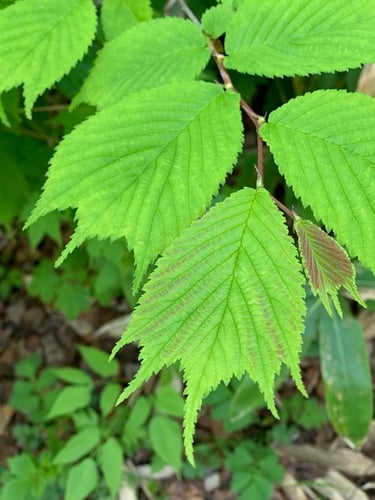
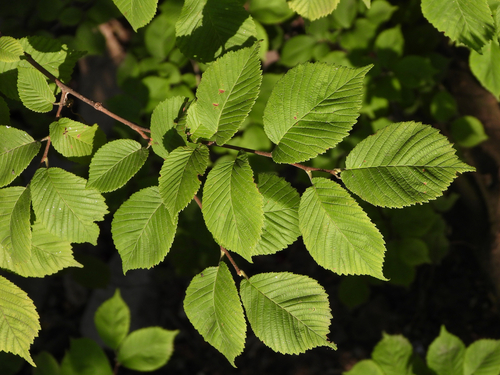
Ulmus villosa
Brandis ex Gamble
Cherry bark elm
wikimedia· cc0
Wikimedia Commons - Ronnie Nijboer
wikimedia· cc-by-sa
Wikimedia Commons - Ian Alexander
Summary
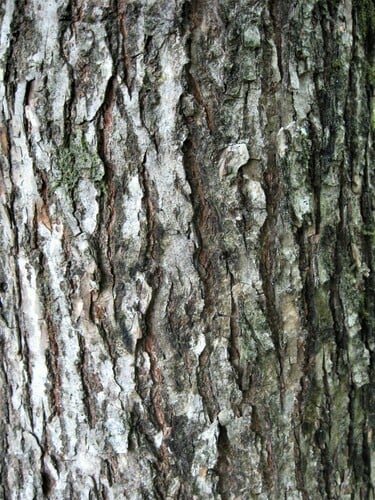
Source: WikipediaUlmus villosa, the cherry-bark elm or Marn elm, is one of the more distinctive Asiatic elms, and a species capable of remarkable longevity. It is endemic to the valleys of the Kashmir at altitudes of 1,200–2,500 metres (3,900–8,200 feet) but has become increasingly rare owing to its popularity as cattle fodder. Mature trees are now largely restricted to temples and shrines where they are treated as sacred. Some of these trees are believed to be over 800 years old.
Description
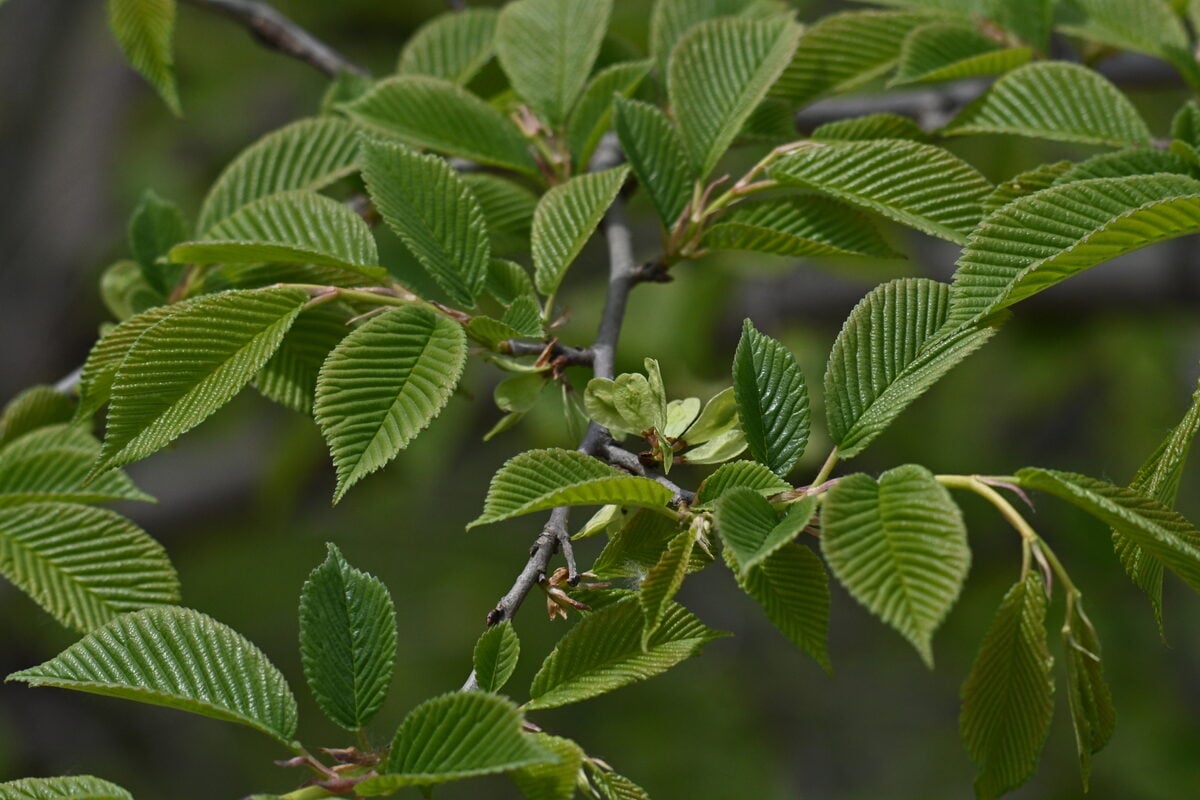
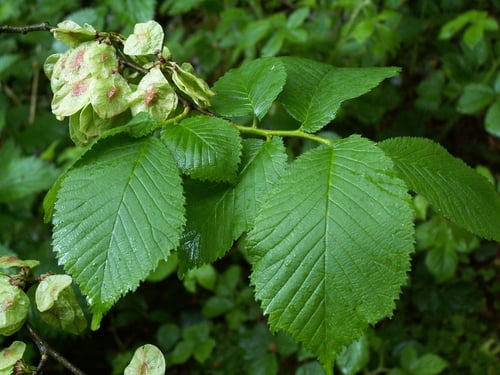
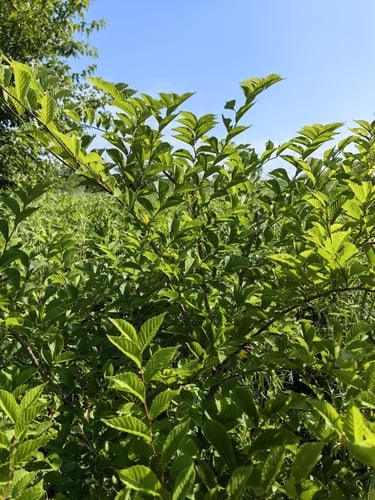
A medium sized tree. The branches are drooping. They have small hairs. The leaves are narrowly oval and 10 cm long by 5 cm wide. The lower surface is slightly hairy.
Edible Uses
The leaves can be eaten raw or cooked.
Medicinal Uses
None known
Distribution
It is a temperate plant. In Pakistan it grows in the Himalayas between 1,200-2,700 m altitude.
Where It Grows
Asia, Himalayas, India, Pakistan,
Cultivation
Prefers a fertile soil in full sun, but is easily grown in any soil of at least moderate quality so long as it is well drained. Susceptible to 'Dutch elm disease', a disease that has destroyed the greater part of all the elm trees growing in Britain. The disease is spread by means of beetles. There is no effective cure (1992) for the problem, but most E. Asian, though not Himalayan, species are resistant (though not immune) to the disease so the potential exists to use these resistant species to develop new resistant hybrids with the native species. The various species of this genus hybridize freely with each other and pollen is easily saved, so even those species with different flowering times can be hybridized.
Propagation
Seed sown in a cold frame as soon as it is ripe usually germinates within a few days. Stored seed germinates less reliably and is best sown in early spring. Seed can also be harvested green — fully developed but before drying on the tree — and sown immediately in a cold frame, where it germinates quickly and produces a larger plant by the end of the growing season. Once large enough to handle, prick seedlings into individual pots and grow on in a greenhouse through their first winter, then plant out in late spring or early summer after the last expected frosts. Do not leave plants in a nursery bed for more than two years, as they develop a tap root and transplant poorly after that point. Can also be propagated by layering suckers or coppiced shoots.
Other Uses
The wood is hard and somewhat scented, and is used for making furniture.
Other Information
It is cultivated.
Synonyms
Also Known As
Bhamri, Maldang, Mannu, Marn
References (5)
- Ambasta, S.P. (Ed.), 2000, The Useful Plants of India. CSIR India. p 660
- Flora of Pakistan. www.eFloras.org
- Man. Ind. timb. ed. 2, 628. 1902
- Plants for a Future database, The Field, Penpol, Lostwithiel, Cornwall, PL22 0NG, UK. http://www.scs.leeds.ac.uk/pfaf/
- Zeven, A. C. & de West, J. M. J., 1982, Dictionary of cultivated plants and their regions of diversity. Wageningen. p 86