Ulmus davidiana
Planchon
Japanese elm, Hairy elm
iNaturalist· cc-by-sa
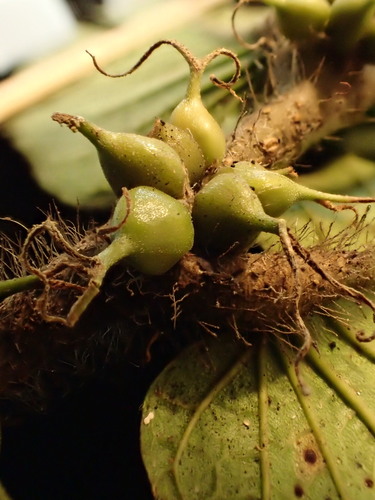
(c) Stavast22, some rights reserved (CC BY-SA)
iNaturalist· cc-by-sa
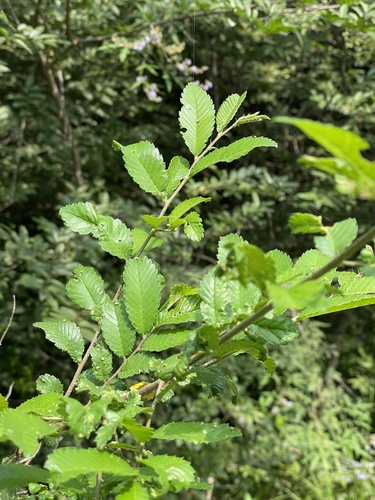
(c) Stavast22, some rights reserved (CC BY-SA)
iNaturalist· pd
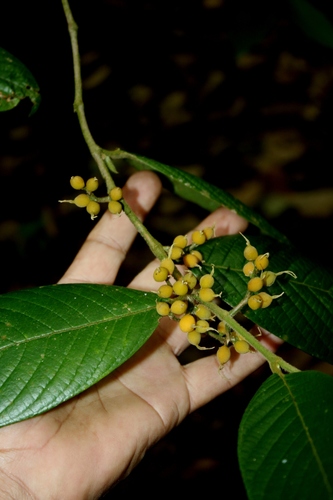
Ptelea, no known copyright restrictions (public domain)
Summary
Source: WikipediaUlmus davidiana, also known as the David elm, or Father David elm (named after the botanist Armand David, who collected specimens), is a small deciduous tree widely distributed across China, Mongolia, Korea, Siberia, and Japan, where it is found in wetlands along streams at elevations of 2000–2300 m (6,500–7,500 ft). The tree was first described in 1873 from the hills north of Beijing, China. The tree suffered confusion with Ulmus uyematsui, a Taiwanese species widely planted in China, at the Morton Arboretum.
Description
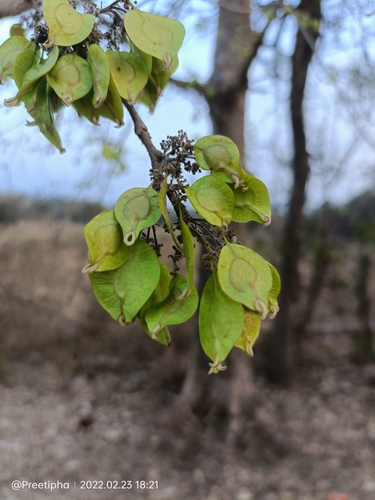
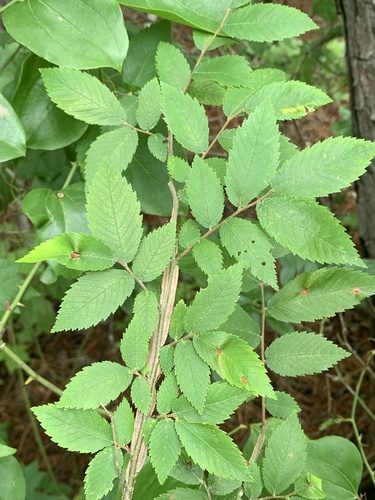
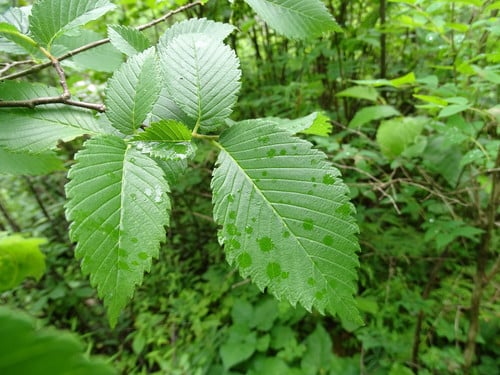
A medium sized tree. It loses its leaves during the year. It grows 10-20 m high. The current year's growth is softly hairy. Older branches have 2 corky wings. The leaves are broadly oval and 4-10 cm long by 2-6 cm wide. It has a tip at the end and is rounded at the base. There are double teeth along the edge. The flowers are in bunches on last year's growth. The fruit are winged seeds.
Edible Uses
Leaves can be eaten raw or cooked. Young fruits are edible when cooked. The inner bark can be dried, ground into a powder and used as a thickening agent in soups or added to cereal flours when making bread.
Traditional Uses
The fully grown but still tender fruits and the leafy shoots are eaten.
This uses section is brief — help expand it
Medicinal Uses
None known.
Distribution
It is a temperate plant. It grows on mountains in northern China. It grows on dry and exposed limestone hillsides. Arboretum Tasmania.
Where It Grows
Asia, Australia, China, Japan, Korea, Mongolia, Russia, Siberia, Tasmania,
Cultivation
Prefers a fertile soil in full sun, but it is easily grown in any soil of at least moderate quality so long as it is well drained. This species is resistant to 'Dutch elm disease', a disease that has destroyed the greater part of all the elm trees growing in Britain. The disease is spread by means of beetles. There is no effective cure (1992) for the problem, but most E. Asian, though not Himalayan, species are resistant (though not immune) to the disease so the potential exists to use these resistant species to develop new resistant hybrids with the native species. The various species of this genus hybridize freely with each other and pollen is easily saved, so even those species with different flowering times can be hybridized. Closely related to U. japonica.
Propagation
Sow seed in a cold frame as soon as it is ripe — it usually germinates within a few days. Stored seed germinates less reliably and is best sown in early spring. Seed can also be harvested green (fully developed but not yet dried on the tree) and sown immediately in a cold frame, where it will germinate quickly and produce a larger plant by the end of the season. Once large enough to handle, prick seedlings into individual pots and grow on in a greenhouse through their first winter. Plant out in late spring or early summer after the last expected frosts. Do not leave plants in a nursery bed for more than two years, as they develop a tap root and transplant poorly after that point. Propagation is also possible by layering suckers or coppiced shoots.
Other Uses
A fibre obtained from the inner bark can be made into coarse fabric. To process it, the bark is soaked in water for 7–10 days, after which the inner and outer barks are separated. The inner bark is then stripped into strands and made into thread by chewing. The wood is heavy and difficult to work, and is used for axles and hubs.
References (5)
- A. L. P. P. de Candolle, Prodr. 17:158. 1873
- Flora of China @ efloras.org Volume 5
- Hu, Shiu-ying, 2005, Food Plants of China. The Chinese University Press. p 353
- Plants for a Future database, The Field, Penpol, Lostwithiel, Cornwall, PL22 0NG, UK. http://www.scs.leeds.ac.uk/pfaf/
- Ryan, S., 2008, Dicksonia. Rare Plants Manual. Hyland House. p 59