Ulmus americana
L.
American elm, White elm, Soft elm
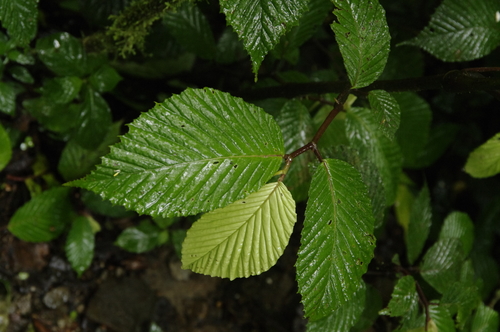
iNaturalist· cc-by-nc
(c) William Van Hemessen, some rights reserved (CC BY-NC), uploaded by William Van Hemessen
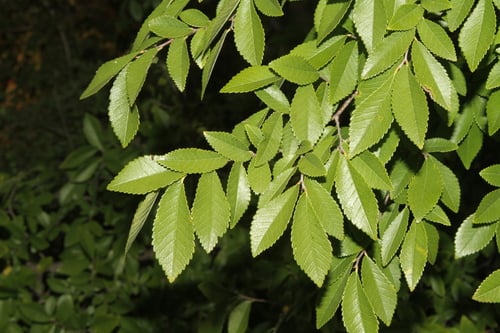
iNaturalist· cc-by-nc
(c) Susan Elliott, some rights reserved (CC BY-NC)
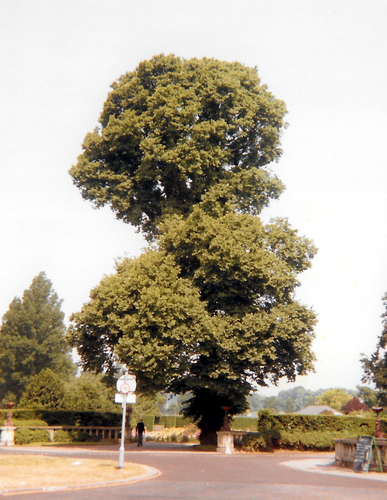
iNaturalist· cc-by-nc
(c) Owen Clarkin, some rights reserved (CC BY-NC)
Summary
Source: WikipediaUlmus americana, generally known as the American elm or, less commonly, as the white elm or water elm, is a species of elm native to eastern North America. The trees can live for several hundred years. It is a very hardy species that can withstand low winter temperatures. The American elm was once exceptionally common as a street tree, its tolerance of urban conditions making it a popular choice to line American streets in the 19th and early 20th centuries. The coming of beetles bearing Dutch elm disease devastated the American elm population, starting in the 1920s. The species still holds out in some locations, but is also no longer nearly as common as during its height. The wood was seldom utilized until the advent of mechanical sawing. It is the state tree of Massachusetts and North Dakota.
Description
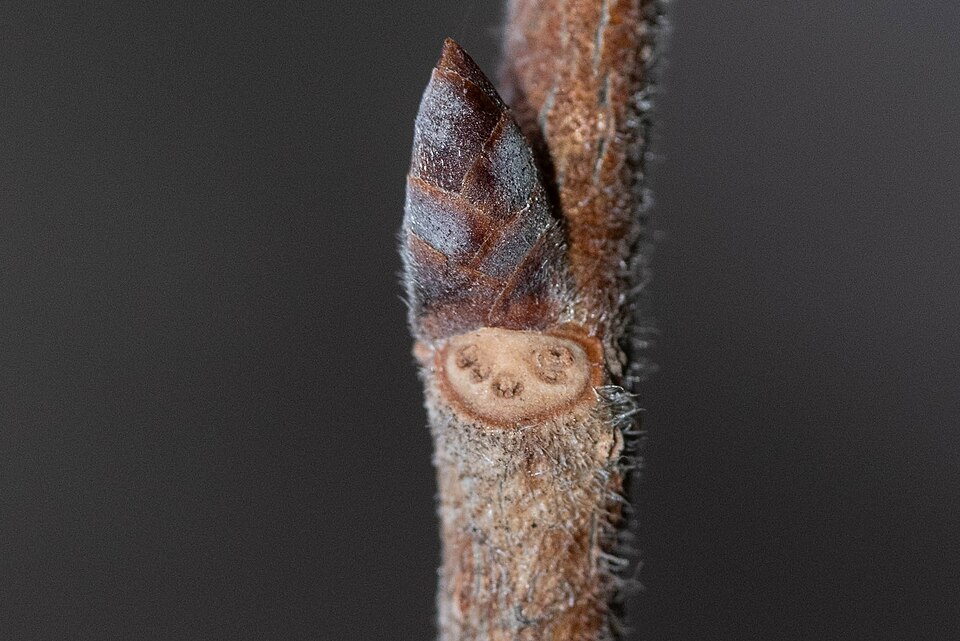
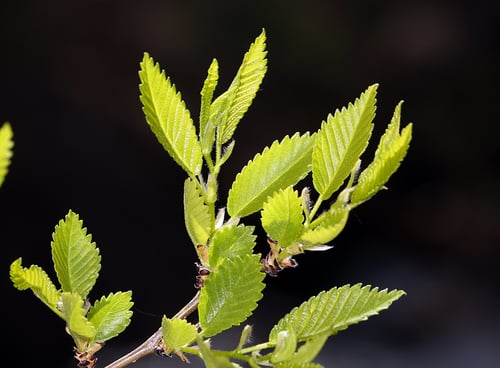
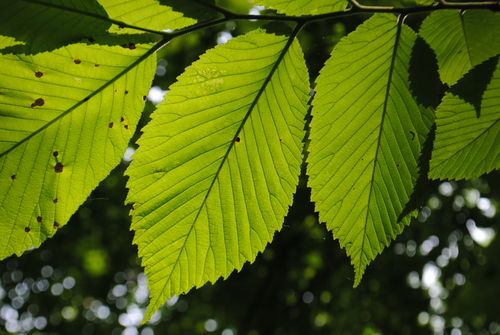
A large tree. It grows to 35 m tall. It spreads 30 m wide. The trunk can be 175 cm across. The bark is dark grey and has furrows. The leaves are large and turn bright yellow in autumn. They are in 2 rows. They are 7.5-15 cm long by 2.5-7.5 cm wide. The base is rounded and the sides are unequal. They have double teeth along the edge. They are dark green above and paler underneath. They turn bright yellow in autumn. The flowers are 3 mm wide and green. They are clustered along the twigs. The fruit are 10-12 mm long and one seeded keys. They are deeply notched and with points that curve inwards.
Edible Uses
Leaves can be eaten raw or cooked. The red inner bark has been used to make a coffee-like drink.
Traditional Uses
The inner bark is eaten as a famine food. It is also used to make a coffee like drink.
This uses section is brief — help expand it
Medicinal Uses
A bark infusion has been used to treat bleeding from the lungs, ruptures, coughs, colds, influenza, dysentery, eye infections, cramps and diarrhoea. Pregnant women have taken a bark infusion to promote stability in their children. A bark decoction can be applied as a wash on wounds. A decoction of the inner bark has been taken for severe coughs, colds and menstrual cramps. An inner bark infusion has been both drunk and used as a bath treatment for appendicitis. A root bark infusion has been used for coughs, colds and excessive menstruation. A decoction has also been used as an eye wash for sore eyes. The inner bark has been applied as an emollient on tumours.
Distribution
It grows on wet sites and alluvial flats. It can tolerate some shade. It suits hardiness zones 3-9.
Where It Grows
Australia, Canada, Hawaii, North America, Pacific, USA,
Cultivation
Prefers a fertile soil in full sun, but it can be grown in any soil of at least moderate quality so long as it is well drained. Trees are moderately fast-growing and live for at least 300 years in the wild, but they do not thrive in Britain. This species is particularly susceptible to 'Dutch elm disease', a disease that has destroyed the greater part of all the elm trees growing in Britain. The disease is spread by means of beetles. Mature trees killed back by the disease will often regrow from suckers, but these too will succumb when they get larger. There is no effective cure (1992) for the problem, but most E. Asian, though not Himalayan, species are resistant (though not immune) to the disease so the potential exists to use these resistant species to develop new resistant hybrids with the native species. The various species of this genus hybridize freely with each other and pollen is easily saved, so even those species with different flowering times can be hybridized.
Propagation
Sow seed in a cold frame as soon as it is ripe — it usually germinates within a few days. Stored seed germinates less reliably and is best sown in early spring. Seed can also be harvested green (fully developed but not yet dried on the tree) and sown immediately in a cold frame, where it will germinate quickly and produce a larger plant by the end of the season. Once large enough to handle, prick seedlings into individual pots and grow on in a greenhouse through their first winter. Plant out in late spring or early summer after the last expected frosts. Do not leave plants in a nursery bed for more than two years, as they develop a tap root and transplant poorly after that point. Propagation is also possible by layering suckers or coppiced shoots.
Other Uses
A fibre from the stems can be used to make paper. Stems are harvested in spring, stripped of leaves, steamed to loosen the fibres, and the outer bark is removed by scraping or peeling. The fibres are then cooked for 2 hours in lye and beaten with mallets, producing a beige paper. The fibrous inner bark is also used to make string and strong ropes. The bark has been shaped into various containers, including those used for collecting maple syrup. The wood is hard, strong, heavy, durable and coarse-grained. It shrinks moderately, tends to warp and twist, bends well, and is difficult to split. Very durable in water, it weighs 40lb per cubic foot and is commercially harvested for flooring, wheel hubs, cooperage, agricultural implements and many other uses.
Production
Trees live for 200 years.
Synonyms
References (9)
- Cundall, P., (ed.), 2004, Gardening Australia: flora: the gardener's bible. ABC Books. p 1448
- Farrar, J.L., 1995, Trees of the Northern United States and Canada. Iowa State University press/Ames p 354
- Little, E.L., 1980, National Audubon Society Field Guide to North American Trees. Alfred A. Knopf. p 419
- Lord, E.E., & Willis, J.H., 1999, Shrubs and Trees for Australian gardens. Lothian. p 74
- MacKinnon, A., et al, 2009, Edible & Medicinal Plants of Canada. Lone Pine. p 63
Show all 9 references Hide references
- Moerman, D. F., 2010, Native American Ethnobotany. Timber Press. p 576
- Plants for a Future database, The Field, Penpol, Lostwithiel, Cornwall, PL22 0NG, UK. http://www.scs.leeds.ac.uk/pfaf/
- Sp. pl. 1:226. 1753
- Staples, G.W. and Herbst, D.R., 2005, A tropical Garden Flora. Bishop Museum Press, Honolulu, Hawaii. p 550