Holoptelea integrifolia
(Roxb.) Planch
Indian elm tree
iNaturalist· cc-by-nc
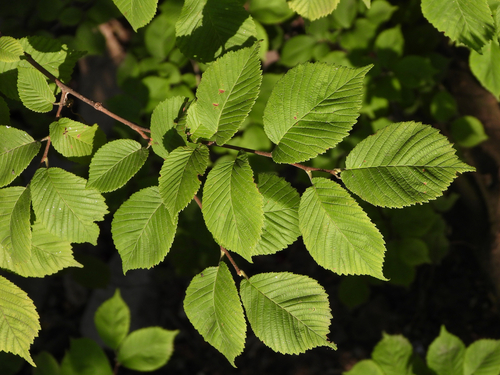
(c) Dr. Preeti V. Phate, some rights reserved (CC BY-NC), uploaded by Dr. Preeti V. Phate
iNaturalist· cc-by
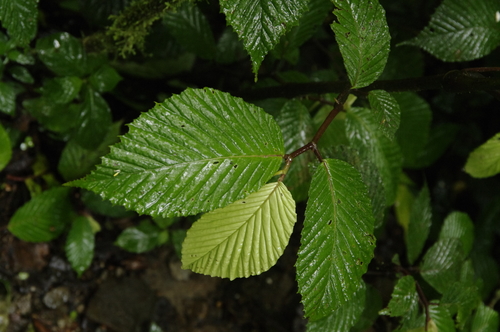
(c) T R Shankar Raman, some rights reserved (CC BY), uploaded by T R Shankar Raman
iNaturalist· cc0
no rights reserved, uploaded by S.MORE
Summary
Source: WikipediaHoloptelea integrifolia, the Indian elm or jungle cork tree, is a species of tree in the family Ulmaceae, and a close relative to the true elms (Ulmus). It is native to most of Indian subcontinent, Indo-China and Myanmar. It is found mostly on plains but also in mountains on elevations up to 1100 m.
Description
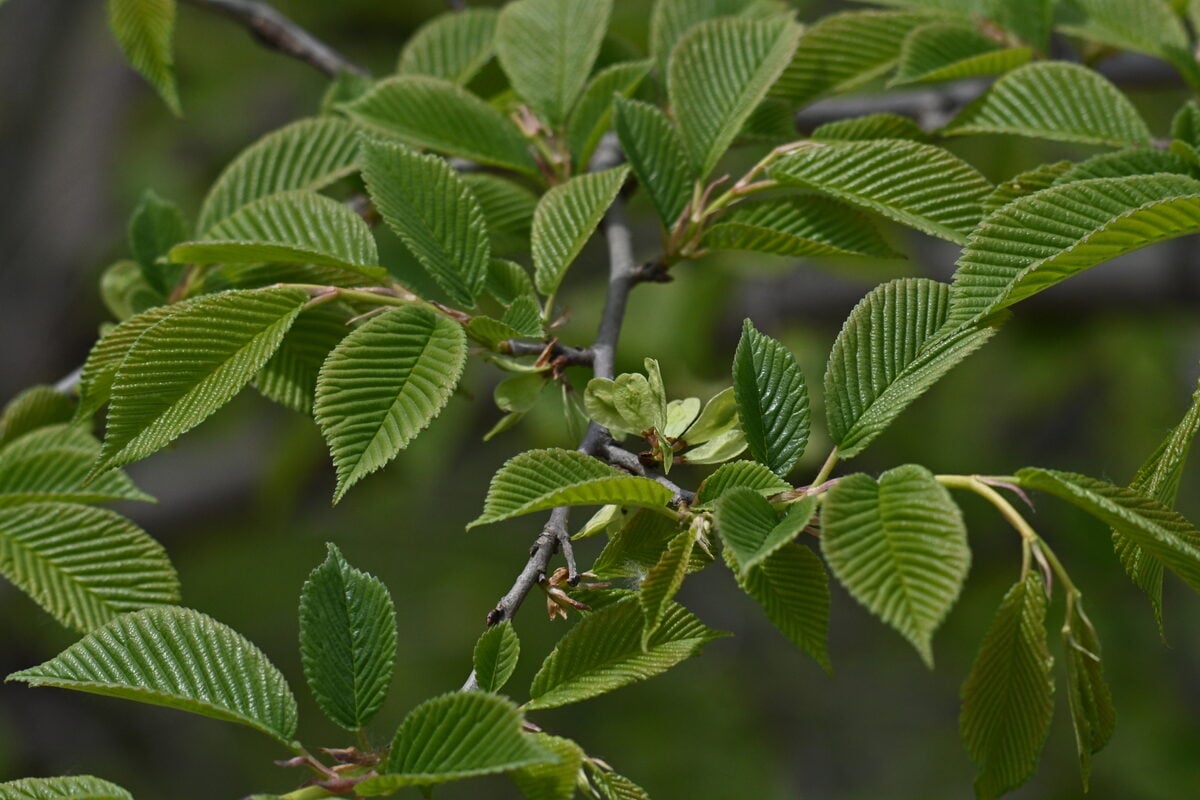
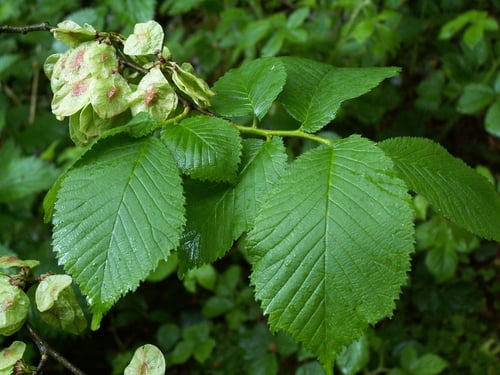
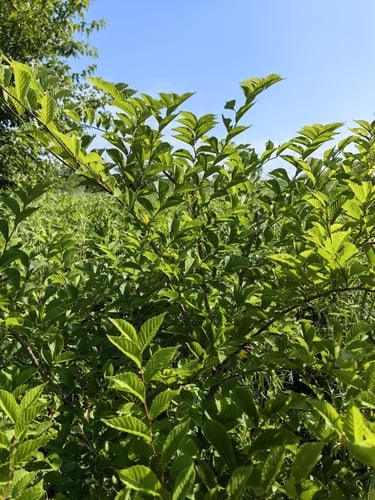
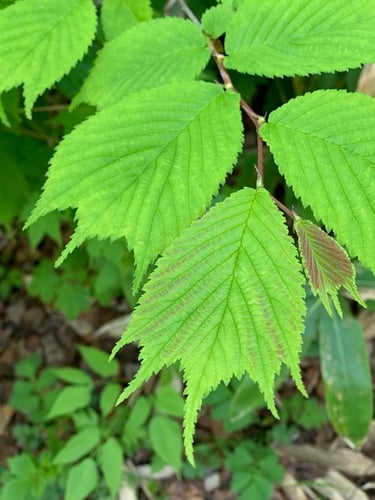
A large tree. It loses its leaves. It grows 25-50 m high. The bark is grey or dark brown. It is rough in patches. The trunk is usually divided low down and has buttresses. The leaves are smooth and have a short blunt tip. The base is rounded. The young leaves often have teeth. The leaves are 8-15 cm long. The flowers are small and green in dense clusters. The flowers can be male and bisexual in the same cluster. The fruit are round, thin and papery disks. They are yellow-brown when ripe. The seed is in the centre.
Edible Uses
The ripe fruit are eaten raw. The seeds are roasted and eaten after draining the cooking water, and contain a fatty oil that can be extracted.
Traditional Uses
The seed contain a fatty oil. The seeds are also roasted and eaten. The cooking water is drained off. The ripe fruit are eaten raw.
This uses section is brief — help expand it
Medicinal Uses
The bark and leaves are used for treating oedema, diabetes, leprosy and other skin diseases, intestinal disorders, piles and sprue. A poultice of the bark and leaves is applied topically to treat boils, swellings and rheumatic pains. The bark is used externally as a treatment for rheumatism, ringworm, scabies, ulcers and scorpion stings. The mucilaginous bark is boiled then the juice is squeezed out and applied to rheumatic swellings; the exhausted bark is then powdered and applied over the parts covered by the sticky juice. The seed and a paste of the stem bark is used in treating ringworm.
Known Hazards
The bark is used as a fish poison.
Distribution
A tropical plant. It grows in wasteland. On poor soil the tree is stunted. It grows in dry deciduous forest. It does best on sandy or gravelly soil with good drainage. It is damaged by frost. In XTBG Yunnan.
Where It Grows
Asia, China, Himalayas, India, Indochina, Indonesia, Laos, Myanmar, Nepal, SE Asia, Sri Lanka, Thailand,
Cultivation
Plants can be grown by seeds.
Other Uses
An oil is extracted from the seed. The seed contains around 37.4% oil. The wood is a light, yellowish grey; there is no distinction between the sapwood and the heartwood. The wood is strong and moderately hard. It is easy to work and capable of a beautiful polished finish. Of little importance, though it is used locally for purposes such as construction, making carts and for carving statues etc. Its most common use is for making matches, boxes and the frames of brushes.
Production
It grows quickly. In India fruit are available between February to May.
Also Known As
Aali maram, Arjan, Aval, Aya, Ayil, Banchilla, Begana, Charla, Chilbil, Chirabilva, Chirhol, Churil, Dauranja, Dhamma, Kachao, Kaladri, Kanci, Kanjho, Kanju, Karanjalam, Karanji, Khulen, Kunjo, Myauk-seik, Nemali, Nilavahi, Papar, Papara, Papdi, Papri, Pedanevili, Pohon elem India, Punjo, Pyauk-seik, Rajain, Rasbija, Thapasi, Thavasai, Turuda, Vavli, Vellaya, Waola, Yensadad
References (14)
- Ambasta, S.P. (Ed.), 2000, The Useful Plants of India. CSIR India. p 271
- Ann. Sci. Nat. Bot. ser. 3, 10:259, 266. 1848
- Avinash, B. K., Kumar, R., et al, 2013, Ethnoboptany of Tharus of Dudhwa National Park, India. Mintage journal of Pharmaceutical & Medical Science 6-11
- Bajpai, O., et al, 2015, Tree species of the Himalayan Terai region of Uttar Pradesh, India: a checklist. Check List 11(4): 1718
- Burkill, I.H., 1966, A Dictionary of the Economic Products of the Malay Peninsula. Ministry of Agriculture and Cooperatives, Kuala Lumpur, Malaysia. Vol 1 (A-H) p 1200
Show all 14 references Hide references
- Chauhan, S. H., et al, 2018, Consumption patterns of wild edibles by the Vasavas: a case study from Gujarat, India. Journal of Ethnobiology and Ethnomedicine (2018) 14:5
- Dobriyal, M. J. R. & Dobriyal, R., 2014, Non Wood Forest Produce an Option for Ethnic Food and Nutritional Security in India. Int. J. of Usuf. Mngt. 15(1):17-37
- Kannan, M., et al, 2015, Ethnobotanical survey on wild edible plants of Kalrayan Hills, Salem District, Tamil Nadu, India. Global J. Res. Med Plants & Indigen. med. 4(12): 236-246
- Krishen P., 2006, Trees of Delhi, A Field Guide. DK Books. p 64
- Misra S. & Misra M., 2016, Ethnobotanical and Nutritional Evaluation of Some Edible Fruit Plants of Southern Odisha, India. International Journal of Advances in Agricultural Science and Technology, Vol.3 Issue.1, March- 2016, pg. 1-30
- Setiya, A. V., et al, 2016, Exploration and documentation of some wild edible plants used by the aboriginals from Gadchiroli District (M.S.) India. International Advanced Research Journal in Science, Engineering and Technology. 3(7)
- Singh, V. and Singh, P., 1981, Edible Wild Plants of Eastern Rajasthan. J. Econ. Tax. Bot. Vol 2 pp 197-207
- Sukarya, D. G., (Ed.) 2013, 3,500 Plant Species of the Botanic Gardens of Indonesia. LIPI p 326
- Yadav, D. K., 2011, Study on Biodiversity and Edible Bioresources of Betla National Park, Palamu, Jharkhand (India). The 2011 Las Vegas International Academic Conference.