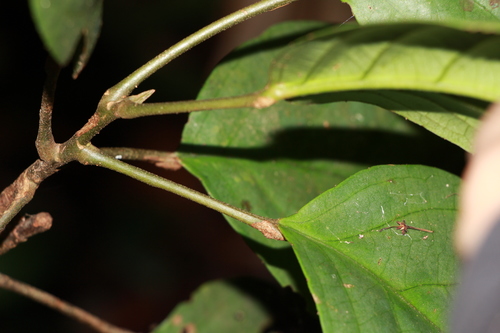
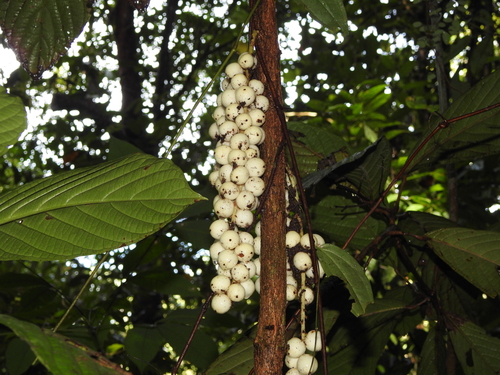
Uapaca kirkiana
Mull. Arg.
Wild loquat, Masuku
iNaturalist· cc-by-nc-sa
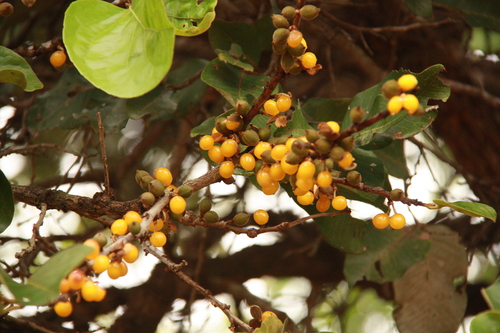
(c) Günter Baumann, some rights reserved (CC BY-NC-SA)
iNaturalist· cc-by
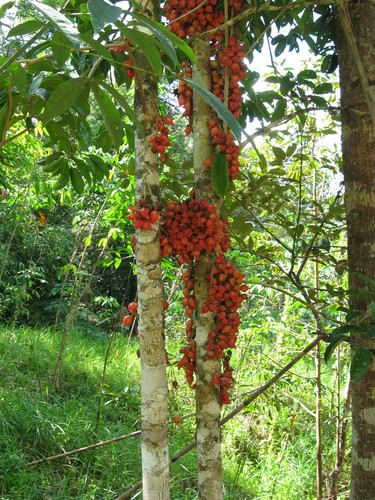
(c) i_c_riddell, some rights reserved (CC BY)
Summary
Source: WikipediaUapaca kirkiana, the sugar plum or mahobohobo, is a species of dioecious plant in the family Phyllanthaceae. It is native to the southern Afrotropics, where it occurs in well-watered miombo woodlands. Within range it is one of the most popular wild fruits. It is rarely cultivated but trees are left when land is being cleared. Still a traditional food plant in Africa, this little-known fruit has the potential to improve nutrition, boost food security, foster rural development and support sustainable land care. In Shona, the fruit are referred to as mazhanje, and in Chichewa masuku.
Description
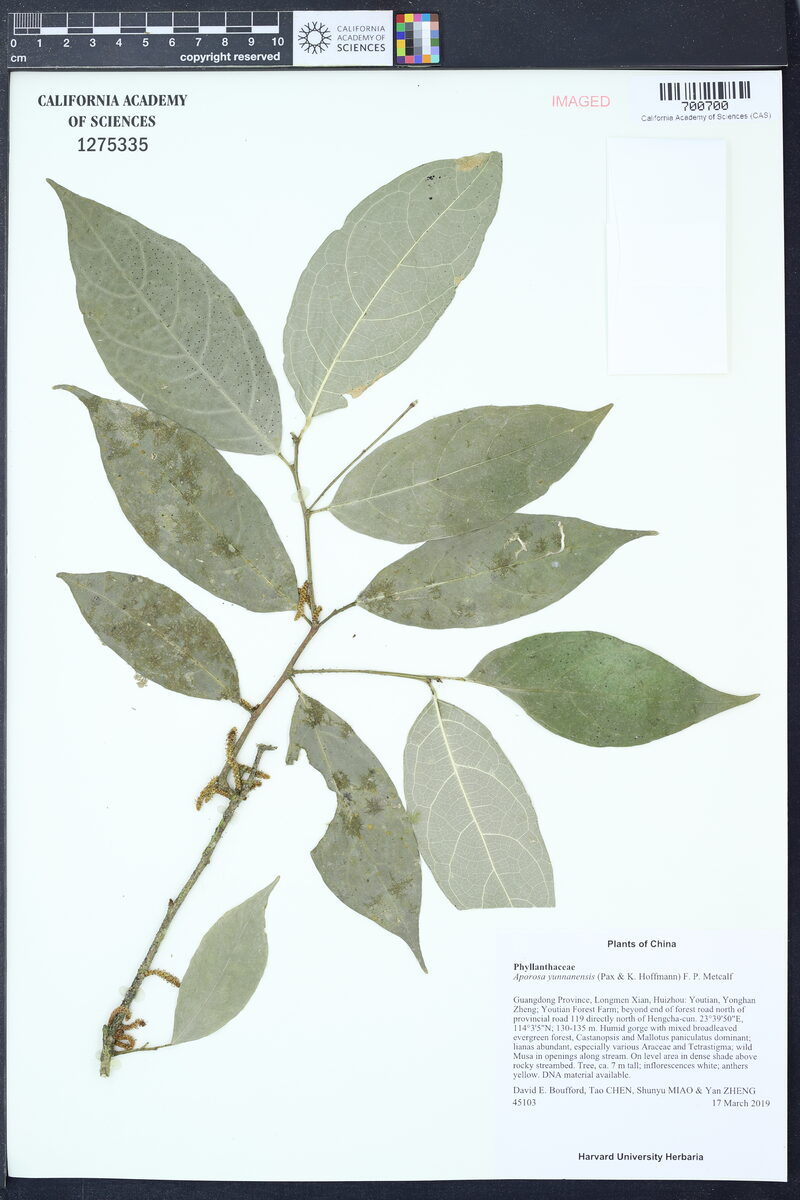
A small tree. It grows 5-6 m high. It can be 13 m high. It has a rounded crown. The bark is dark grey and rough. The leaves are scattered or clustered at the tips of branches. They are oval and 11 cm long by 11 cm wide. They are thickly leathery. The upper surface is dark green and shiny. The lower surface has rust coloured woolly hairs. The male and female flowers are greenish-yellow. The fruit is round and rusty-yellow. They are 3-4 cm across. They are fleshy with a rather hard skin. The flesh is edible.
Edible Uses
The fruit can be eaten raw or cooked. It is fleshy, sweet, and considered delicious. Commonly eaten fresh and highly regarded, it can also be used to brew a pleasant wine or made into fried cakes. The juice mixes with sorghum meal to form a thin, orange-flavoured porridge. The fruit pulp is juicy, honey-like, and somewhat reminiscent of pears, while dried fruits take on a toffee-like flavour. Each fruit measures approximately 4cm × 4cm.
Traditional Uses
The flesh of the fruit is eaten. The dried fruit have a toffee like flavour. The fruit are used for jam. It can be used for cakes that are fried and eaten. The juice of the fruit is mixed with sorghum meal to form a porridge. They are fermented into wine.
Medicinal Uses
An infusion made from the roots is used to treat indigestion and dysentery.
Distribution
A tropical plant. It grows in the lowlands and the highlands. It occurs at medium altitudes in open woodland. It can be dominant on gravelly soils. It grows between 720-1,950 m above sea level. It grows in areas with an annual rainfall between 500-1,300 mm. It needs a temperature in the range 14°-29°C. It can grow in arid places. It grows in Miombo woodland in Africa.
Where It Grows
Africa, Angola, Burundi, Central Africa, Congo DR, East Africa, Madagascar, Malawi, Mozambique, Sierra Leone, South Africa, Southern Africa, Tanzania, West Africa, Zambia, Zimbabwe,
Cultivation
Plants can be grown from seeds. The seeds need to be planted fresh. It can be grown from root suckers. It can be cut back and will re-grow. When fertilized or manured, survival and early growth of the tree is reduced. It can be grown by grafting.
Propagation
Seed must be sown fresh as viability lasts only about 3 weeks. Germination is generally good, particularly if the seed is scarified first. Young seedlings require some shade. Division of suckers is also possible, as are cuttings.
Other Uses
The tree is planted for erosion control, shade, shelter, living fences, and as an ornamental. It forms a mutual association with mycorrhizae, acting as a soil improver and making it a valuable agroforestry tree. A blue dye is obtained from the roots. Leaves are used as a cockroach repellent in homes. The wood has white sapwood and reddish-brown, figured heartwood. It is light, hard, and durable with a straight grain that saws cleanly, planes to a smooth finish, glues well, holds nails firmly, and takes a clear varnish. It is termite resistant and suited to general carpentry, house building, domestic utensils, furniture, joinery, carvings, and boxes. The wood is used as fuel and for making charcoal — the charcoal produced is highly regarded, and many trees are felled specifically for this purpose.
Production
Trees from seed can reach 1.3 m after 4 years. The fruit are kept in the dark for a few days after picking to ripen. In Tanzania ripe fruit are collected from October to January. Fruit can be collected from the ground.
Other Information
The fruit are delicious. It is a significant fruit. They are sold in local markets. The wine is sold in supermarkets. The fruit are eaten especially by children. It is a commonly used fruit in Mozambique and Malawi.
Notes
16 species of edible fungi are associated with this tree.
Nutrition
| Part | Moisture | kJ | kcal | Protein | Vit A | Vit C | Iron | Zinc |
|---|---|---|---|---|---|---|---|---|
| Fruit | 76 | 276 | 66 | 0.6 | — | — | — | — |
Synonyms
Also Known As
Hekela msuku, Kanono, Macunapa, Mahobohobo, Makusu, Masuku, Matue, Mazhenje, Mesange, Mguhu, Mgulu, Mgusu, Mikusu, Mkusu, Mompangwe, Msuku, Mtjunku, Mtoto, Muguhu, Musukuti, Muzhenje, Umugusu
References (41)
- Akinnifesi F. K., et al, 2008, Early growth and survival of three miombo woodland fruit tree species under fertilizer, manure and dry-season irrigation in southern Malawi. Forest Ecology and Management 255:546-557
- Bunderson, W. T. et al, 2002, Common Agroforestry Species in Malawi. Malawi Agroforestry Extension Project, Pubication No. 46, Lilongwe. p 8
- Bvenura, C. & Sivakumar, D., 2017, The role of wild fruits and vegetables in delivering a balanced and healthy diet. Food Research International 99 (2017) 15–30
- Campbell, B. M., 1987, The Use of Wild Fruits in Zimbabwe. Economic Botany 41(3): 375-385
- Davis, S.D., Heywood, V.H., & Hamilton, A.C. (eds), 1994, Centres of plant Diversity. WWF. Vol 1. p 244
Show all 41 references Hide references
- Drummond, R. B., 1981, Common Trees of the Central Watershed Woodlands of Zimbabwe, National Herbarium Salisbury. p 112
- Facciola, S., 1998, Cornucopia 2: a Source Book of Edible Plants. Kampong Publications, p 243
- FAO. 1983, Food and fruit-bearing forest species 1: Examples from Eastern Africa. FAO Food and Forestry Paper 44/1 p 115
- Flora 47:517. 1864
- Food Composition Tables for use in Africa FAO http://www.fao.org/infoods/directory No. 1058
- Fowler, D. G., 2007, Zambian Plants: Their Vernacular Names and Uses. Kew. p 28
- Fox, F. W. & Young, M. E. N., 1982, Food from the Veld. Delta Books. p 196
- Hines, D. A. & Eckman, K., 1993, Indigenous multipurpose trees of Tanzania: Uses and economic benefits for people. FAO Forestry Department. p 223
- INFOODS:FAO/INFOODS Databases
- Jardin, C., 1970, List of Foods Used In Africa, FAO Nutrition Information Document Series No 2.p 166 (Also as Uapaca dubia)
- JSTOR Global Plants edible
- Kakeya, 1976,
- Leakey, R. R. B., 1999, Potential for novel food products from agroforestry trees: A review. Food Chemistry. 66:1-14
- Maroyi, A., 2011, The Gathering and Consumption of Wild Edible Plants in Nhema Communal Area, Midlands Province, Zimbabwe. Ecology of Food and Nutrition 50:6, 506-525
- Maroyi, A. & Cheikhyoussef, A., 2017, Traditional knowledge of wild edible fruit in southern Africa: A comparative use patterns in Namibia and Zimbabwe. Indian Journal of Traditional Knowledge. 16(3): 385-392
- Mbuya, L.P., Msanga, H.P., Ruffo, C.K., Birnie, A & Tengnas, B., 1994, Useful Trees and Shrubs for Tanzania. Regional Soil Conservation Unit. Technical Handbook No 6. p 494
- Mpasiwakomu, R. A., 2017, The Diversity and Utilization of Wild Edible and Medicinal Plant Species found in Uvinza Miombo Woodlands, Tanzania. M. Sc. thesis University of Tanzania.
- Msola, D. K., 2007, The role of Wild Foods in Household Income and Food Security in Mufundi District, Tanzania. Morogoro, Tanzania.
- Orwa C, Mutua A , Kindt R , Jamnadass R, Simons A. 2009. Agroforestree Database:a tree reference and selection guide version 4.0 (http://www.worldagroforestry.org/af/treedb/)
- Palgrave, K.C., 1996, Trees of Southern Africa. Struik Publishers. p 408
- Peters, C. R., O'Brien, E. M., and Drummond, R.B., 1992, Edible Wild plants of Sub-saharan Africa. Kew. p 113
- Prins, H. & Maghembe, J. A., 1994, Germination studies on seed of fruit trees indigenous to Malawi. Forest Ecology and Management 64:111-125
- Royal Botanic Gardens, Kew (1999). Survey of Economic Plants for Arid and Semi-Arid Lands (SEPASAL) database. Published on the Internet; http://www.rbgkew.org.uk/ceb/sepasal/internet [Accessed 16th April 2011]
- Ruffo, C. K., Birnie, A. & Tengnas, B., 2002, Edible Wild Plants of Tanzania. RELMA p 686
- Ruiters-Welcome, A. K., 2019, Food plants of southern Africa. Ph.D. thesis. Univ. of Johannesburg p 86
- Tredgold, M.H., 1986, Food Plants of Zimbabwe. Mambo Press. p 130
- USDA, ARS, National Genetic Resources Program. Germplasm Resources Information Network - (GRIN). [Online Database] National Germplasm Resources Laboratory, Beltsville, Maryland. Available: www.ars-grin.gov/cgi-bin/npgs/html/econ.pl (10 April 2000)
- van Wyk, Be., & Gericke, N., 2007, People's plants. A Guide to Useful Plants of Southern Africa. Briza. p 58
- van Wyk, B, van Wyk, P, and van Wyk B., 2000, Photographic guide to Trees of Southern Africa. Briza. p 312
- Van Wyk, Br. and van Wyk P., 2009, Field Guide to Trees of Southern Africa. Struik Nature. p 80
- Wehmeyer, A. S, 1986, Edible Wild Plants of Southern Africa. Data on the Nutrient Contents of over 300 species
- Welcome, A. K. & Van Wyk, B.-E., 2019, An inventory and analysis of the food plants of southern Africa. South African Journal of Botany 122 (2019) 136–179
- Wiersema, J. H. & Leon, B., 2013, World Economic Plants. A Standard Reference CRC Press. 2nd Ed. p 704
- Williamson, J., 2005, Useful Plants of Malawi. 3rd. Edition. Mdadzi Book Trust. p 254
- World Checklist of Useful Plant Species 2020. Royal Botanic Gardens, Kew
- www.worldagroforestrycentre.org/treedb/