Aporosa villosa
(Wall. ex Lindl.) Baill.
Nanmuer
iNaturalist· cc-by-nc
(c) Wangworn Sankamethawee, some rights reserved (CC BY-NC), uploaded by Wangworn Sankamethawee
iNaturalist· cc-by-nc-sa
(c) LannaMountainsCharlie, some rights reserved (CC BY-NC-SA)
iNaturalist· cc-by-nc-sa
(c) LannaMountainsCharlie, some rights reserved (CC BY-NC-SA)
Summary
Source: WikipediaAporosa villosa is a species of shrub or small tree in the family Phyllanthaceae. It is found in Southeast Asia, including the Nicobar, Andaman and Paracel Islands. There are some traditional medicinal uses for plant, particularly around care after childbirth. The shrub is often a pioneer species, tolerant of full sun, but intolerant of frequent fires.
Description
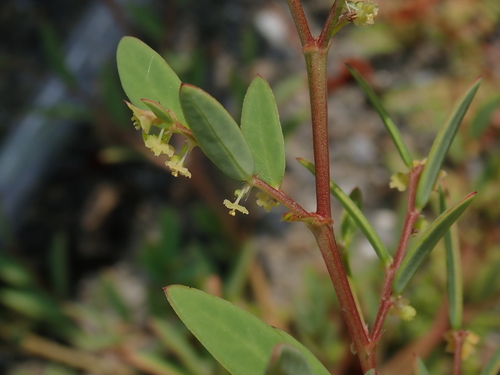
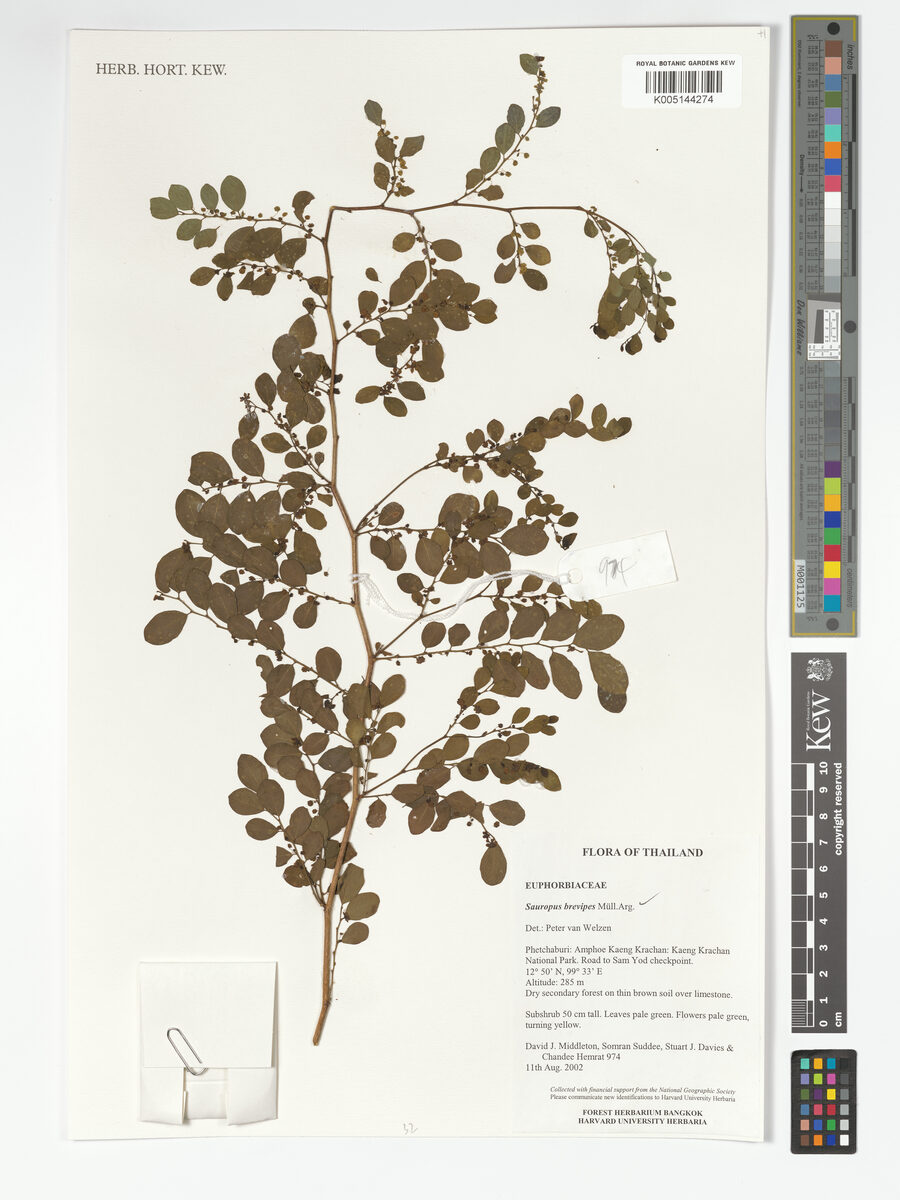
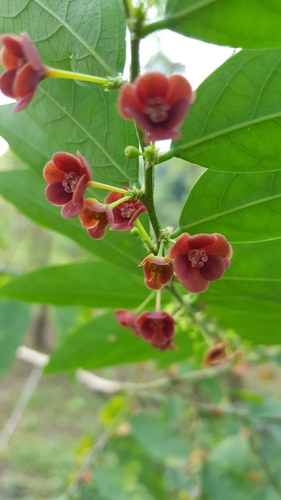
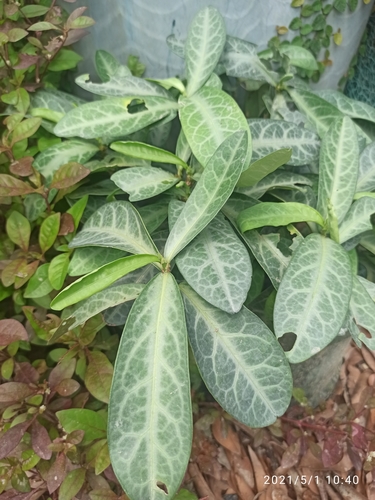
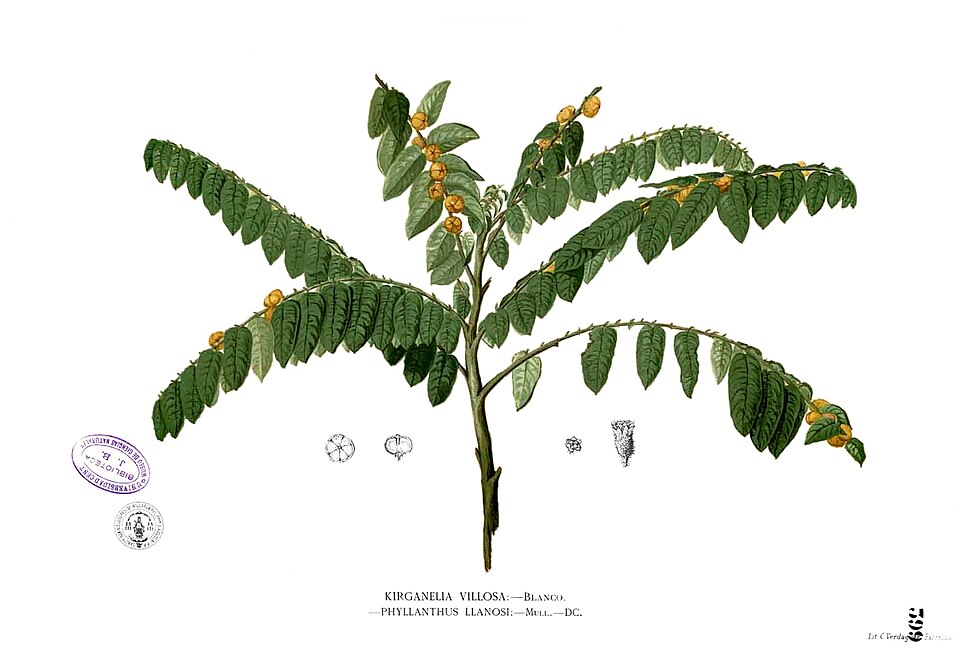
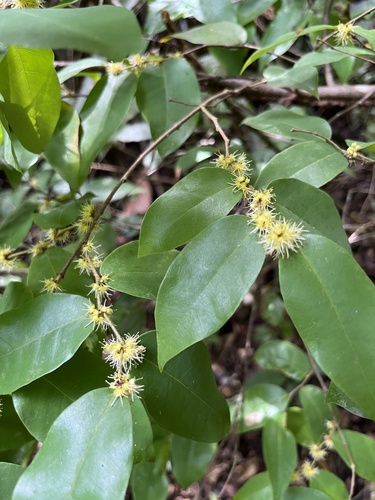
A shrub or tree. It grows up to 15 m tall. The young branches are hairy. The leaf stalk us 10-25 mm long. The leaf blade is narrowly oval and 9-30 cm long by 6-12 cm wide. The male and female flowers are separate. The fruit is oval and 10 mm long by 7-9 mm wide.
Edible Uses
The fruit are eaten raw.
Traditional Uses
The fruit are eaten raw.
This uses section is brief — help expand it
Medicinal Uses
Villagers living on the plateau of Phnom Kulen National Park, in Svay Leu District, Siem Reap Province, northwestern Cambodia, use parts of the shrub in their traditional medicinal practices. The wood chips and root, either alone or in different mixtures with other species, are made into decoctions to drink as part of post-childbirth care, while a mixture of the 2 plant parts, together with root/woodchips of Prismatomeris tetrandra, and the wood chips of Melastoma sp., Rhodomytrus sp. puach toich, and Rhodomyrtus tomentosa is decocted and drunk to encourage lactation. The Bunong people of Mondulkiri Province, northeastern Cambodia, use the leaves and bark of the plant to treat a variety of illnesses. The leaves are decocted in water then drunk, applied to the stomach, bathed in or used in a steam-bath, macerated in alcohol and drunk, or made into a decocted mixture with the leaves of Ageratum conyzoides, Blumea balsamifera, Chromolaena odorata and Melicope pteleifolia and used in a steam-bath. In one treatment to strengthen the body after childbirth the leaves and wood of the species are boiled together and then drunk or applied to the body.
Distribution
A tropical plant. It grows below 1500 m altitude in Yunnan in China. It grows in secondary forest. It can be in dry or partly swampy ground. It grows between 300-1,500 m altitude.
Where It Grows
Andamans, Asia, Cambodia, China, India, Indochina, Laos, Myanmar, SE Asia, Thailand, Vietnam,
Cultivation
Plants can flower and produce fruit almost all year round. A dioecious species, both male and female forms need to be grown if fruit and seed are required.
Other Uses
The wood is used for fuel.
Other Information
The fruit are not particularly attractive.
Synonyms
Also Known As
Krom, Mak muat, Meud lode, Muat son
References (6)
- Altschul, S.V.R., 1973, Drugs and Foods from Little-known Plants. Notes in Harvard University Herbaria. Harvard Univ. Press. Massachusetts. no. 2149 (As Aporosa sphaerosperma)
- Ambasta S.P. (Ed.), 2000, The Useful Plants of India. CSIR India. p 48
- Schmidt-Vogt, D., 2001, Secondary Forests in Swidden Agriculture in the Highland of Thailand. Journal of tropical Forest Science 13(4): 748-767
- Schot, A. M., 2004, Systematics of Aporosa (Euphorbiaceae). Blumea Supplement 17. p 219
- www.nationalherbarium.nl/thaueuph/ Flora of Thailand.
Show all 6 references Hide references
- www.mekonginfo.org/assets/midocs/0001714-environment-forests-and-trees-of-the-central-highlands-of-xieng-khouang-lao