Baccaurea brevipes
Hook. f.
iNaturalist· cc-by-nc
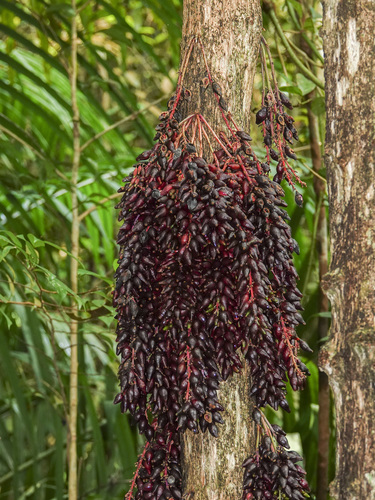
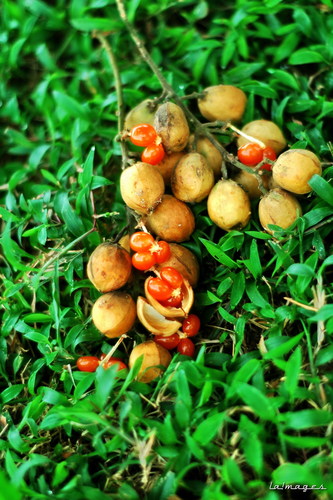
(c) Mira Farhana, some rights reserved (CC BY-NC), uploaded by Mira Farhana
iNaturalist· cc-by-nc
(c) SunGW, some rights reserved (CC BY-NC), uploaded by SunGW
iNaturalist· cc-by-nc-sa
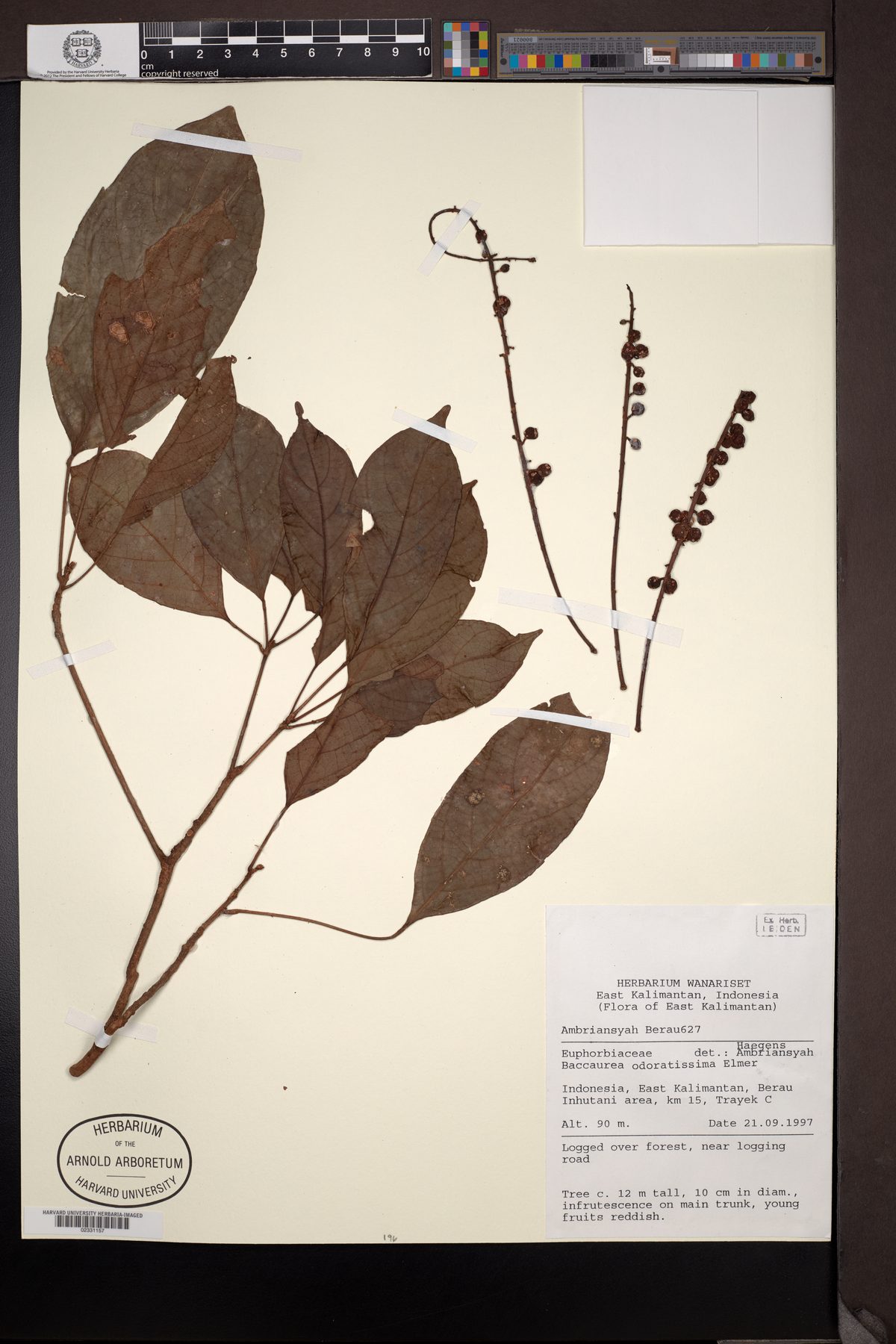
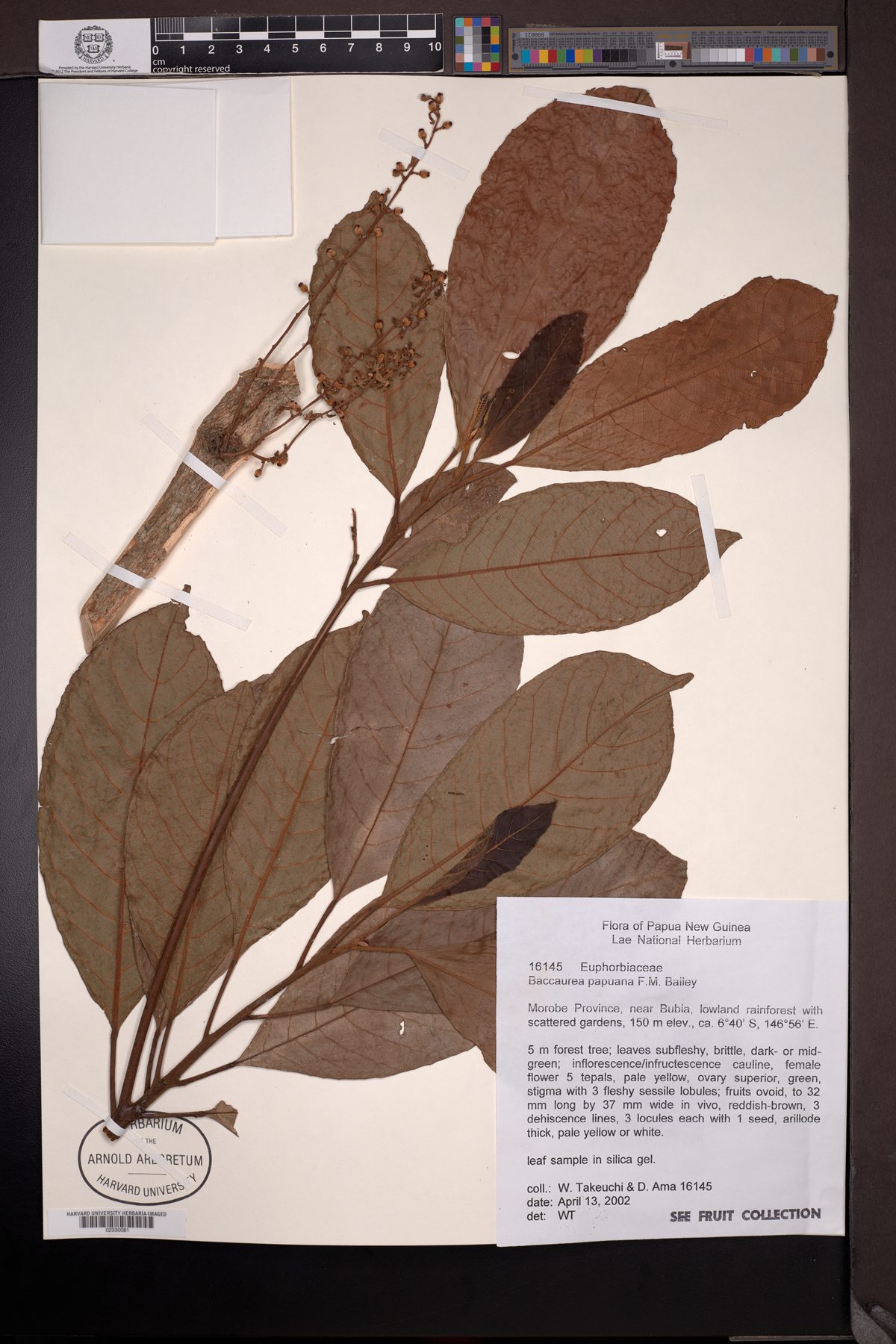
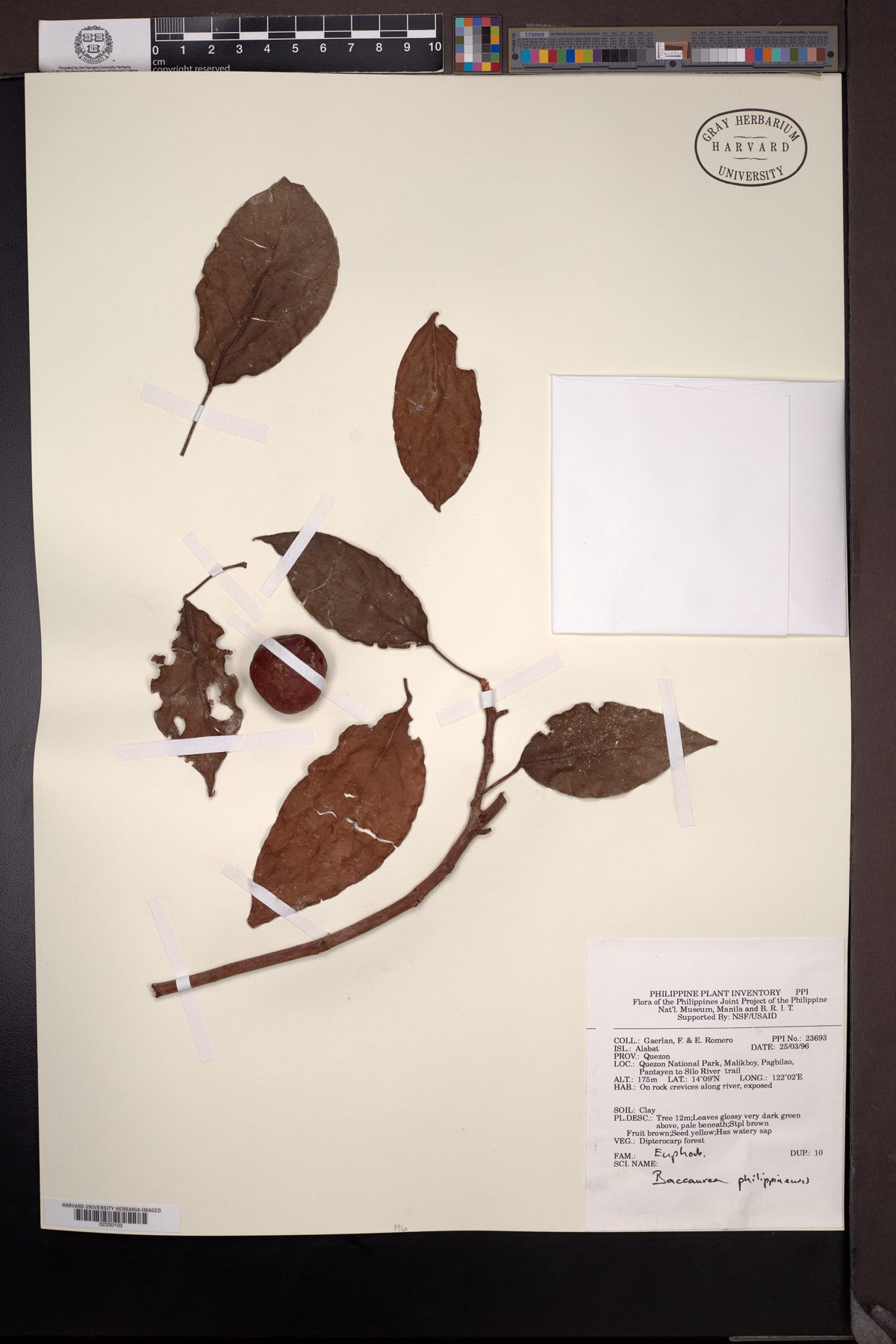
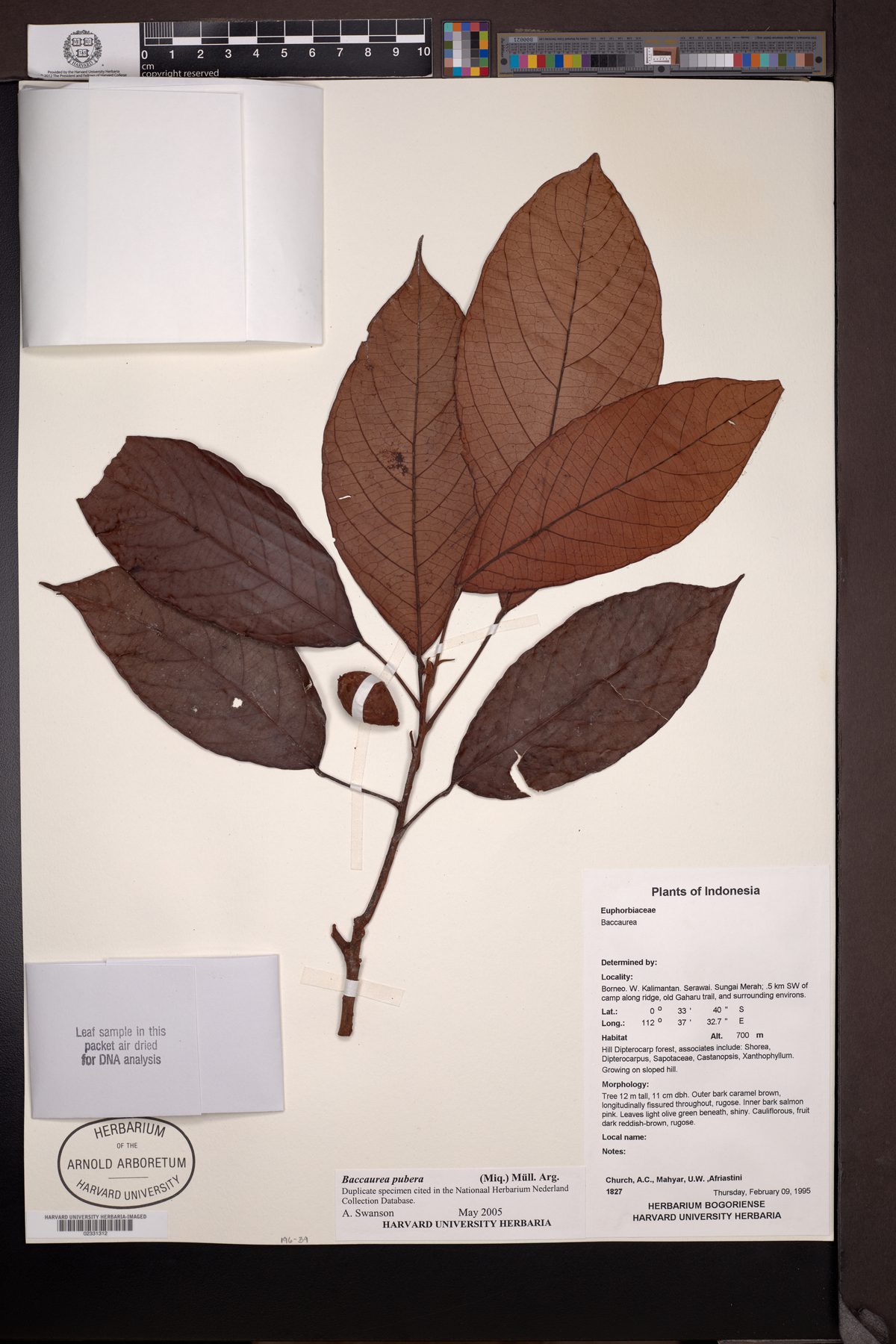
(c) Smithsonian Institution, National Museum of Natural History, Department of Botany, some rights reserved (CC BY-NC-SA)
Description
A small tree. It grows 10 m tall. Plants are separately male and female. The leaves are oval and 15-35 cm long by 7-14 cm wide. The fruit are in groups of 14-20. They are 10-18 mm across. The fruit are waxy white. They grow on the stems. The flesh is violet.
Edible Uses
Fruit. Insipid. The globose fruit is up to 20mm in diameter. The fruit is carried in clusters on stems 7 - 30cm long.
Traditional Uses
The flesh of the ripe fruit is eaten raw.
This uses section is brief — help expand it
Medicinal Uses
An extract of the leaves is used to regulate menstruation. We have no specific information on this species, but the bark of several members of this genus is used to relieve eye inflammation.
Distribution
A tropical plant. It is often in forest that is flooded in the wet season. It grows from 20-700 m altitude.
Where It Grows
Asia, Indochina, Indonesia, Malaysia, SE Asia, Thailand,
Cultivation
Found in the wild on sand, clay or granite soils. A dioecious species, both male and female forms need to be grown if fruit and seed are required.
Propagation
Seed - when sown fresh it usually germinates in a few days.
Other Uses
We have no specific information for this species, but the bark of several members of this genus is used, along with other ingredients, as a dyestuff to colour silk yellow, red or mauve, using the dyeing process known as 'pekan' in Malay. The wood is used in traditional house building, although it is not resistant to insects. In common with other trees that produce their flowers and fruits on the trunk of the tree, members of this genus are generally considered to be good support trees for the climbing rattan palms, which are grown to provide material for basket making, weaving into furniture, making ropes etc.
Other Information
It is not popular. It is grown as a food plant.
Notes
There are about 80 Baccaurea species.
Also Known As
Mata ayam, Rambai atan, Rambai ayam, Rambai bukit, Rambai burong, Rami, Setambun lilin, Tajam molek, Tampoi hutan
References (8)
- Bircher, A. G. & Bircher, W. H., 2000, Encyclopedia of Fruit Trees and Edible Flowering Plants in Egypt and the Subtropics. AUC Press. p 51
- Burkill, I.H., 1966, A Dictionary of the Economic Products of the Malay Peninsula. Ministry of Agriculture and Cooperatives, Kuala Lumpur, Malaysia. Vol 1 (A-H) p 280
- Hanum, F. I., 1999, Plant Diversity and Conservation Value of Ayer Hitam Forest, Selangor, Peninsula Malaysia. Pertanika J. Trop. Agric. Sci. 22(2):73-83
- Milow, P., et al, 2013, Malaysian species of plants with edible fruits or seeds and their evaluation. International Journal of Fruit Science. 14:1, 1-27
- Ong, H., et al, 2012, Traditional knowledge and usage of edible plants among the Semai community of Kampung Batu 16, Tapah, Perak, Malaysia. Scientific Research and Essays Vol. 7(4), pp. 441-445, 30 January, 2012
Show all 8 references Hide references
- Suwardi, A. B., et al, 2020, Ethnobotany and conservation of indigenous edible fruit plants in South Aceh, Indonesia. Biodiversitas Vol. 21, No. 5, pp 1850-1860
- World Checklist of Useful Plant Species 2020. Royal Botanic Gardens, Kew
- www.nationalherbarium.nl/thaueuph/ Flora of Thailand.