Tussilago farfara
L.
Coltsfoot, Coughwort
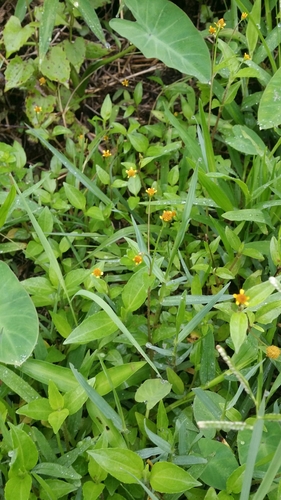
iNaturalist· cc-by-nc
(c) snsergeevna, some rights reserved (CC BY-NC)
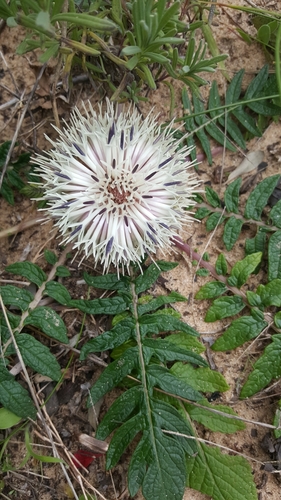
iNaturalist· cc-by-nc
(c) Igor Kuzmin, some rights reserved (CC BY-NC)
iNaturalist· cc-by-nc
(c) Igor Kuzmin, some rights reserved (CC BY-NC)
Summary
Source: WikipediaA perennial plant growing 0.2 m (8 in) tall with a spread of 1 m (3 ft 3 in) at a fast rate. Hardy to UK zone 5. Flowers February to April with seed ripening March to May. Hermaphrodite and self-fertile, pollinated by bees and flies. Tolerates light sandy, medium loamy, and heavy clay soils, including very alkaline conditions. Grows in semi-shade or full sun and prefers moist soil. Can tolerate maritime exposure.
Description
A small plant that keeps growing from year to year. It grows 30 cm high and spreads 20 cm wide. The stem is erect, and downy. It is white with purple scales. The leaves appear after flowering. The leaves are wide "like a horse's hoof". They are heart shaped and 20 cm across. They are serrated around the edge and downy underneath. The flowers are yellow. They are large and at the top of the plant and occur singly. These open only in sunny weather.
Edible Uses
Flower buds and young flowers can be eaten raw or cooked, with a pleasant aniseed flavour that adds a distinctive aromatic note to salads. Young leaves are eaten raw or cooked — in salads, added to soups, or prepared as a vegetable; they taste bitter unless washed after boiling. An aromatic tea with a liquorice-like flavour is made from fresh or dried leaves and flowers. The dried and burnt leaves serve as a salt substitute. The slender rootstock can be candied in sugar syrup.
Traditional Uses
Young leaves are boiled and washed to remove tannin then eaten with oil and salt. The older leaves are eaten as a vegetable. They are also used in soup. The leaves are used for sarma in Turkey. They are rolled around a filling of rice or minced meat. The dried leaves can be soaked to make a fragrant tea, or burned and the residue used as a salt like seasoning. The ash from the plant is used as a salt substitute. The flowers and stalk are also eaten raw. The flowers are used for wine. The dried flowers are used for tea. The rootstock is candied in syrup. The slender rootstock is candied in sugar. CAUTION: It contains pyrrolizidine alkaloids that cause cancer but these are destroyed with heating.
Medicinal Uses
Coltsfoot is a well-established demulcent and expectorant used across Europe for a wide range of chest complaints and is widely available in health food shops. The leaves are the main part used in Europe, though China favours the flowering stems, which contain higher levels of pyrrolizidine alkaloids. The leaves are rich in mucilage; the root is also occasionally used. Pyrrolizidine alkaloids are toxic to the liver but are largely destroyed when the plant is boiled into a decoction. Caution is advised: flowers should only be used under professional supervision; leaves should not be used for more than 4–6 weeks at a time; the herb should not be taken during pregnancy or breastfeeding; and it should not be given to children under six years old. Research has shown that whole-plant extracts can increase immune resistance. In a Chinese clinical trial, 75% of bronchial asthma patients showed some improvement after treatment, though the anti-asthmatic effect was short-lived. Leaves are harvested in June and early July; flowers when fully open; roots in autumn — all can be dried for later use. The plant is antitussive, astringent, demulcent, emollient, expectorant, stimulant and tonic, widely used for coughs and respiratory problems, and often candied for use as a medicinal sweet. It is particularly useful for chronic emphysema and silicosis, helping to relieve persistent coughs. It works especially well in combination with liquorice (Glycyrrhiza species), thyme (Thymus vulgaris) and wild cherry (Prunus serotina). A poultice of the flowers soothes skin conditions including eczema, ulcers, sores, bites and inflammations. The root yields a bitter, tonic and diaphoretic preparation.
Known Hazards
Tussilago farfara contains tumorigenic pyrrolizidine alkaloids. Senecionine and senkirkine, present in coltsfoot, have the highest mutagenetic activity of any pyrrolozidine alkaloid, tested using Drosophila melanogaster to produce a comparative genotoxicity test. Two cases of supposed liver damage (and death) due to coltsfoot tea have been shown to actually be the result of mistaken identity. In one, coltsfoot tea causing severe liver problems in an infant was actually the result of Adenostyles alliariae (alpendost). In another case, an infant developed liver disease and died because the mother drank tea originally believed to contain coltsfoot during her pregnancy, but which was later shown to be Petasites hybridus (butterbur) or a similar species. In one 27-year-old male, ingesting a multicomponent herbal supplement that included coltsfoot may have caused him to develop non-lethal deep vein thrombosis and pulmonary embolism. In response, the German government banned the sale of coltsfoot. Clonal plants of coltsfoot free of pyrrolizidine alkaloids were then developed in Austria and Germany. This has resulted in the development of the registered variety Tussilago farfara 'Wien', which has no detectable levels of these alkaloids.
Distribution
A temperate plant. It does best in wet, loamy, limestone based soils. It needs a protected, partly shaded position. It often grows naturally on moist river banks. It suits hardiness zones 3-9. In Sichuan and Yunnan.
Where It Grows
Africa, Andorra, Armenia, Asia, Australia, Austria, Balkans, Belarus, Bosnia and Herzegovina, Britain*, Canada, Caucasus, Central Asia, Chile, China, Estonia, Eurasia, Europe, Falklands, Finland, France, Georgia, Himalayas, Hungary, India, Ireland, Italy, Japan, Kyrgyzstan, Latvia, Lithuania, Luxembourg, Macedonia, Mediterranean, Moldova, Nepal, New Zealand, North Africa, North America, Norway, Pakistan, Poland, Romania, Russia, Scandinavia, Slovakia, Slovenia, South America, Spain, Switzerland, Tajikistan, Tasmania, Tibet, Turkey, Türkiye, Ukraine, USA,
Cultivation
A very easily grown plant, it succeeds in most soils when grown in full sun. It prefers a moist neutral to alkaline soil and will also succeed in partial shade. Plants are hardy to about -29°c. Coltsfoot is a very tough plant that is more than capable of looking after itself. When well sited its roots will spread very freely sending up new shoots at some distance from the clump even if growing amongst dense weed competition. This can make it a problem weed in gardens, so either choose your site with care or find some means of restraining it such as by planting in a large tub that is buried in the ground. The rhizomes can lay dormant in the soil for many years, emerging when the soil is disturbed. In garden design, as well as the above-ground architecture of a plant, root structure considerations help in choosing plants that work together for their optimal soil requirements including nutrients and water.
Propagation
Seed — the plant spreads readily on its own, but if needed, sow in situ in early spring or autumn. Root division is very straightforward and can be done at almost any time of year; divisions can be planted directly into permanent positions.
Other Uses
The soft down on the underside of the leaves makes a useful stuffing material. Wrapped in a rag, dipped in saltpetre and dried in the sun, it produces an excellent tinder. The plant's extensive root system makes it effective for stabilizing banks. Leaves are a valuable addition to the compost heap.
Production
The plant can spread widely and easily and become invasive.
Other Information
It is sold in local markets.
Notes
There are about 15 Tussilago species. The young leaves are boiled, then washed to remove tannin. The ash is rich in zinc. Contains biologically active substances, polysaccharides (fructose, galactose, arabinose, glucose, xylose and uronic, acids, mucus (up to 7% - 10%), saponins, carotenoids, ascorbic acid, gallic acid, flavonoids, tannins, organic acids (malic, tartar).
Synonyms
Also Known As
Farfara, Hazi degh, Hestehov, Hindiba, Hortmair, Kinacicegi, Kinaotu, Khochkorik, Loshtak, Mallepe, Mat'-i-machekha, Navadni lapuh, Oksurukotu, Paiseleht, Pie d'asino, Podbal, Podbjel, Podlieu, Podmackam, Pota de cavall, Taconnet, Tatrak, Virist'erpa, Watpan, Whitefish
References (57)
- Abbet, C., et al, 2014, Ethnobotanical survey on wild alpine food plants in Lower and Central Valais (Switzerland). Journal of Ethnopharmacology 151 (2014) 624–634
- Ambasta, S.P. (Ed.), 2000, The Useful Plants of India. CSIR India. p 657
- Bodkin, F., 1991, Encyclopedia Botanica. Cornstalk publishing, p 997
- Bonet, M. A. & Valles, J., 2002, Use of non-crop food vascular plants in Montseny biosphere reserve (Catalonia, Iberian Peninsula). International Journal of Food Sciences and Nutrition (2002) 53, 225–248
- Bremness, L., 1994, Herbs. Collins Eyewitness Handbooks. Harper Collins. p 223
Show all 57 references Hide references
- Bussman, R. W., et al, 2016, A comparative ethnobotany of Khevsureti, Samtskhe-Javakheti, Tusheti, Svaneti, and Racha-Lechkhumi, Republic of Georgia (Sakartvelo), Caucasus. Journal of Ethnobiology and Ethnomedicine (2016) 12:4
- Bussman, R. W., et al, 2021, Unity in diversity—food plants and fungi of Sakartvelo (Republic of Georgia), Caucasus. Journal of Ethnobiology and Ethnomedicine (2021) 17:72 p 7
- Cerne, M., 1992, Wild Plants from Slovenia used as Vegetables. Acta Horticulturae 318
- Christanell, A., et al, 2010, The Cultural Significance of Wild Gathered Plant Species in Kartitsch (Eastern Tyrol, Austria) and the Influence of Socioeconomic Changes on Local Gathering Practices. Chapter 3 in Ethnobotany in the New Europe. Berghahn Books.
- Denes, A., et al, 2012, Wild plants used for food by Hungarian ethnic groups living in the Carpathian Basin. Acta Societatis Botanicorum Poloniae 81 (4): 381-396
- Dogan, Y., et al, 2004, The Use of Wild Edible Plants in Western and Central Anatolia (Turkey). Economic Botany 58(4) pp. 684-690
- Dogan, Y., 2012, Traditionally used wild edible greens in the Aegean Region of Turkey. Acta Societatis Botanicorum Poloniae 81(4): 329-342
- Dogan, Y., et al, 2015, Of the importance of a leaf: the ethnobotany of sarma in Turkey and the Balkans. Journal of Ethnobiology and Ethnomedicine, 11:56
- Duke, J.A., 1992, Handbook of Edible Weeds. CRC Press. p 200
- Ertug, F, Yenen Bitkiler. Resimli Türkiye Florası -I- Flora of Turkey - Ethnobotany supplement
- Esperanca, M. J., 1988. Surviving in the wild. A glance at the wild plants and their uses. Vol. 1. p 247
- Facciola, S., 1998, Cornucopia 2: a Source Book of Edible Plants. Kampong Publications, p 44
- Famine foods
- Girard, N. J., 2020, Sustainable Foraging of Wild Edible Plants in Norway. A Biocultural Approach. M. Sc. thesis Norwegian University. p 128
- Hibbert, M., 2002, The Aussie Plant Finder 2002, Florilegium. p 302
- Hirono, I., 1993, Edible Plants Containing Naturally Occurring Carcinogens in Japan. Jpn. J. Cancer Res. 84, 997-1006
- http://www.botanic-gardens-ljubljana.com/en/plants
- Huxley, A. (Ed.), 1977, The Encyclopedia of the Plant Kingdom. Chartweil Books. p 157
- Irving, M., 2009, The Forager Handbook, A Guide to the Edible Plants of Britain. Ebury Press p 164
- Jack, M., Wild Foods and Medicines of Forest Garden Transylvania. http://www.forestgardentransylvania.org/ p10
- Kermath, B. M., et al, 2014, Food Plants in the Americas: A survey of the domesticated, cultivated and wild plants used for Human food in North, Central and South America and the Caribbean. On line draft. p 885
- Kiple, K.F. & Ornelas, K.C., (eds), 2000, The Cambridge World History of Food. CUP p 1761
- Kizilarslan, C. & Ozhatay, N., 2012, An ethnobotanical study of the useful and edible plants of İzmit. Marmara Pharmaceutical Journal 16: 134-140, 2012.
- Kolosova, V., et al, 2020, Foraging in Boreal Forest: Wild Food Plants of the Republic of Karelia, NW Russia. Foods 2020, 9, 1015; p 8
- Lim, T. K., 2015, Edible Medicinal and Non Medicinal Plants. Volume 9, Modified Stems, Roots, Bulbs. Springer p 83
- Liu, Yi-tao, & Long, Chun-Lin, 2002, Studies on Edible Flowers Consumed by Ethnic Groups in Yunnan. Acta Botanica Yunnanica. 24(1):41-56
- Łukasz Łuczaj and Wojciech M Szymański, 2007, Wild vascular plants gathered for consumption in the Polish countryside: a review. J Ethnobiol Ethnomedicine. 3: 17
- Luczaj, L., 2012, Ethnobotanical review of wild edible plants of Slovakia. Acta Societatis Botanicorum Poloniae 81(4):245-255
- Luczaj, L., et al, 2015, Wild food plants and fungi used by Ukrainians in the western part of the Maramureş region in Romania. Acta Soc Bot Pol 84(3):339–346
- Lukasz, L., 2016, Wild Edible Plants Traditionally Used in Poland.
- MacKinnon, A., et al, 2009, Edible & Medicinal Plants of Canada. Lone Pine. p 364
- Mattalia, G., et al, 2012, Traditional uses of wild food and medicinal plants among Brigasc, Kye ́, and Provenc ̧al communities on the Western Italian Alps. Genet Resour Crop Evol. Springer
- Michael, P., 2007, Edible Wild Plants and Herbs. Grub Street. London. p 65
- Nanagulyan, S., et al, 2020, Wild plants and fungi sold in the markets of Yerevan (Armenia). Journal of Ethnobiology and Ethnomedicine 16:26
- Pieroni, A.,& Giusti, M. E., 2009, Alpine Ethnobotany in Italy: Journal of Ethnobiology and Ethnomedicine. 5:32
- Pieroni, A. & Soukand, R., 2017, Are Borders more Important than Geographical Distance? The Wild Food Ethnobotany of the Boykos and its Overlap with that of the Bukovinian Hutsuls in Western Ukraine. Journal of Ethnobiology 37(2): 326–345
- Pieroni, A. & Soukand, R., 2018, Forest as Stronghold of Local Ecological Practice: Currently Used Wild Food Plants in Polesia, Northern Ukraine. Economic Botany, XX(X) pp. 1-21
- Pieroni, A., et al, 2020, Wild food plants traditionally gathered in central Armenia: archaic ingredients or future sustainable foods? Environment, Development and Sustainability. Springer p 11
- Plants for a Future database, The Field, Penpol, Lostwithiel, Cornwall, PL22 0NG, UK. http://www.scs.leeds.ac.uk/pfaf/
- Prakofjewa, J., et al, 2023, Boundaries Are Blurred: Wild Food Plant Knowledge Circulation across the Polish-Lithuanian-Belarusian Borderland. Biology 2023, 12, 571.
- Pruse, B., et al, 2021, Active Wild Food Practices among Culturally Diverse Groups in the 21st Century across Latgale, Latvia. Biology 2021, 10, 551.
- READ
- Redzic, S. J., 2006, Wild Edible Plants and their Traditional Use in the Human Nutrition in Bosnia-Herzegovina. Ecology of Food and Nutrition, 45:189-232
- Redzic, S., 2010, Use of Wild and Semi-Wild Edible Plants in Nutrition and Survival of People in 1430 Days of Siege of Sarajevo during the War in Bosnia and Herzegovina (1992–1995). Coll. Antropol 34 (2010) 2:551-570
- Shikov, A. N. et al, 2017, Traditional and Current Food Use of Wild Plants Listed in the Russian Pharmacopoeia. Frontiers in Pharmacology. Vol. 8 Article 841
- Siminiuc, R. & Turcanu, D., 2021, Study of Edible Spontaneous Herbs in the Republic of Moldova for Ensuring a Sustainable Food System. Food and Nutrition Sciences, 2021, 12, 703-718 p 709
- Sp. pl. 2:865. 1753
- Upson, R., & Lewis R., 2014, Updated Vascular Plant Checklist and Atlas for the Falkland Islands. Falklands Conservation and Kew.
- Vari, A., et al, 2020, Berries, greens, and medicinal herbs—mapping and assessing wild plants as an ecosystem service in Transylvania (Romania). Journal of Ethnobiology and Ethnomedicine (2020) 16:13
- Wiersema, J. H. & Leon, B., 2013, World Economic Plants. A Standard Reference CRC Press. 2nd Ed. p 703
- World Checklist of Useful Plant Species 2020. Royal Botanic Gardens, Kew
- www.ediblewildfood.com