Crepis setosa
Hallier f.
Rough hawksbeard, Bristly hawksbeard
iNaturalist· cc-by
(c) Drepanostoma, some rights reserved (CC BY), uploaded by Drepanostoma
iNaturalist· cc-by-nc
(c) Nicolas Schwab, some rights reserved (CC BY-NC)
Summary
Source: WikipediaCrepis setosa, the bristly hawksbeard, is a European species of flowering plant in the family Asteraceae. It has become naturalized in North America and occurs Washington, Oregon, California, Idaho, Montana, Texas, Arkansas, Missouri, Tennessee, Wisconsin, Ohio, Pennsylvania, New York, Connecticut and Vermont. Crepis setosa grows in forest and areas with disturbance.
Description
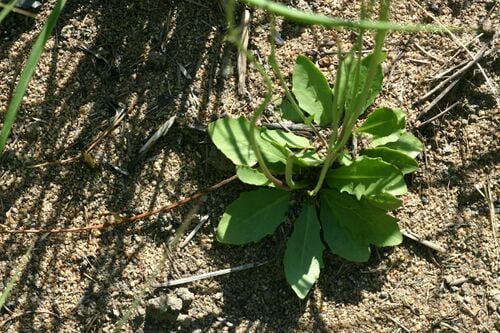
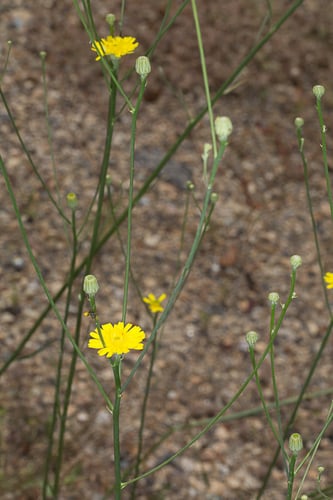
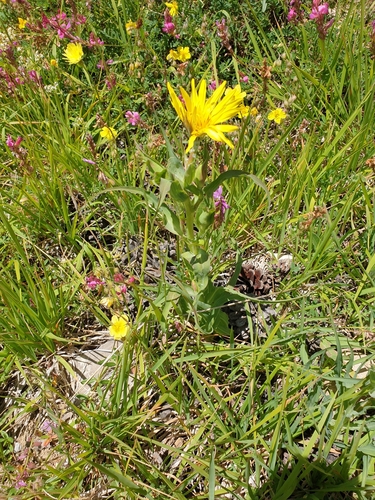
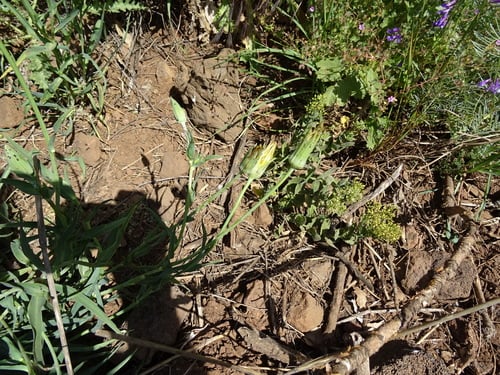
An annual herb. It grows 8-80 cm tall. It has shallow taproots. It has a single stem that is often red. The leaves are at the base and along the stem. The blades are broadly sword shaped or harp shaped. They are 5-30 cm long by 1-8 cm wide. There are teeth along the edge. There can be lobes along the stalk. There are 10-20 flower heads.
Edible Uses
The young leaves are boiled in mixtures and dressed with olive oil.
Traditional Uses
The young leaves are boiled in mixtures and dressed with olive oil.
This uses section is brief — help expand it
Distribution
It is a temperate plant. In the USA it grows between 50-500 m above sea level in southern states. In Argentine it grows below 500 m above sea level. Tasmania Herbarium.
Where It Grows
Argentina, Australia, Brazil, Chile, Europe*, Italy, Mediterranean, North America, Slovenia, South America, Tasmania, Uruguay,
Also Known As
Miristichella, ščetinasti dimek
References (5)
- Arch. Bot. (Leipzig) 1(2):1. 1797
- Biscotti, N. et al, 2018, The traditional food use of wild vegetables in Apulia (Italy) in the light of Italian ethnobotanical literature. Italian Botanist 5:1-24
- Facciola, S., 1998, Cornucopia 2: a Source Book of Edible Plants. Kampong Publications, p 37
- Paoletti, M.G., Dreon, A.L., and Lorenzoni, G.G., 1995, Pistic, Traditional Food from Western Friuli, NE Italy. Economic Botany 49(1) pp 26-30
- Tasmanian Herbarium Vascular Plants list p 6