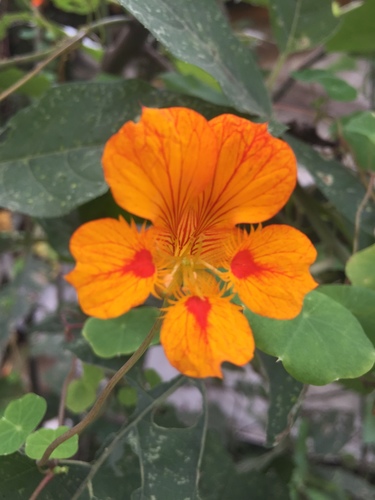
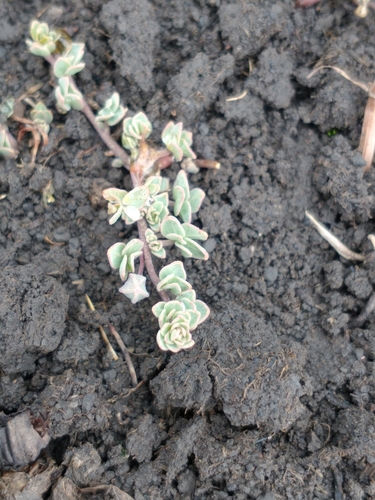
Tropaeolum sessilifolium
Poepp. & Endl.
iNaturalist· cc-by-nc
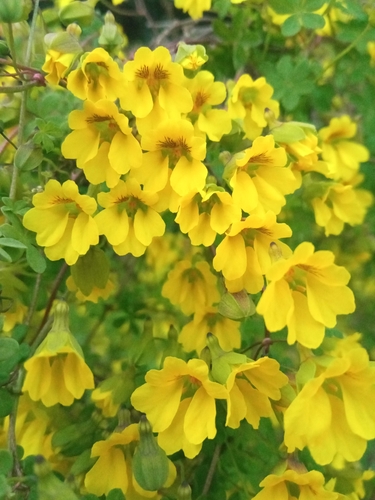
(c) Eitel Carlos Thielemann Pinto, some rights reserved (CC BY-NC), uploaded by Eitel Carlos Thielemann Pinto
iNaturalist· cc-by
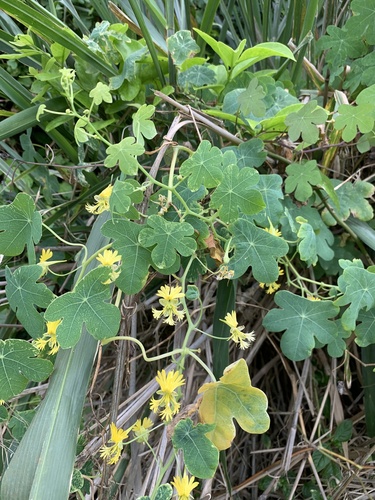
(c) Nolan Exe, some rights reserved (CC BY), uploaded by Nolan Exe
iNaturalist· cc-by
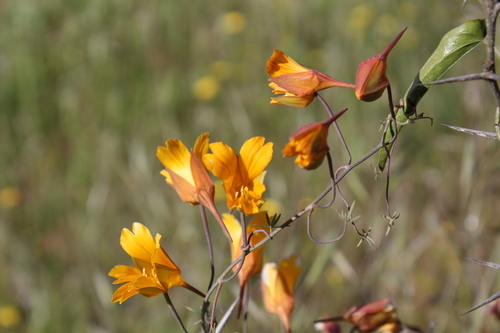
(c) Nolan Exe, some rights reserved (CC BY), uploaded by Nolan Exe
Summary
A perennial climber reaching 3 m tall. Hardy to UK zone 9 and frost tender. Flowers appear April to May. Hermaphroditic. Grows in light sandy, medium loamy, and heavy clay soils preferring well-drained conditions with mildly acidic to neutral pH. Requires full sun and tolerates dry or moist soil.
Description
A perennial climber reaching 3 m tall. Hardy to UK zone 9 and frost tender. Flowers appear April to May. Hermaphroditic. Grows in light sandy, medium loamy, and heavy clay soils preferring well-drained conditions with mildly acidic to neutral pH. Requires full sun and tolerates dry or moist soil.
Edible Uses
The tubers can be eaten raw or cooked and are considered among the best-flavoured in this genus, palatable enough to eat even when raw. They are on the small side.
Traditional Uses
The tubers are eaten raw or cooked.
This uses section is brief — help expand it
Medicinal Uses
None known.
Distribution
It is a tropical plant.
Where It Grows
Chile, South America,
Cultivation
Prefers a sunny position in a well-drained humus-rich neutral or slightly acidic loam. This species is not hardy in the colder areas of the country, it tolerates temperatures down to about -5°c and is usually best grown in a cold greenhouse or conservatory. This rather conflicts with the plants native habitat, since it grows in mountainous areas subject to snow. This should be a cold-tolerant species, adapted to a dry summer after brief spring rain and snowmelt. It might be safest to lift the tubers in the autumn after the plant has been cut back by frost, store them in a cool but frost-free place over the winter and plant them out in April. This species is succeeding outdoors in a garden in Lanarkshire where it is being grown on a bank of sharply draining soil and under some juniper shrubs which both give it protection and act as a support for its climbing stems. The plant sets seed when grown outdoors, but a better set is obtained when the plants are grown under protection. A climbing plant, it supports itself by twisting its leaf stalks around other plants etc. The caterpillars of the cabbage white butterfly can be a nuisance and often cause considerable damage to the leaves.
Propagation
Sow seed in early spring in a greenhouse; it normally germinates quite freely. Prick seedlings into individual pots once large enough to handle and grow on in the greenhouse through their first winter. Plant out in late spring or early summer after the last expected frosts. Divide tubers in autumn or spring; in cold-winter areas, harvest tubers in autumn after top-growth has died down, store in a cool frost-free place, and plant out in spring. Basal stem cuttings can be taken in spring, potted individually, placed in light shade in a frame until established, then planted out in early summer.
Other Uses
None known.
Notes
There are 80 to 90 Tropaeolum species.
References (2)
- Hedrick, U.P., 1919, (Ed.), Sturtevant's edible plants of the world. p 661
- Plants for a Future database, The Field, Penpol, Lostwithiel, Cornwall, PL22 0NG, UK. http://www.scs.leeds.ac.uk/pfaf/