Trillium sessile
L.
Toadshade, Red trillium, Wake robin, Sessile trillium
iNaturalist· cc-by-sa
(c) Fluff Berger, some rights reserved (CC BY-SA), uploaded by Fluff Berger
iNaturalist· cc-by-nc
(c) Greg Funka, some rights reserved (CC BY-NC), uploaded by Greg Funka
iNaturalist· cc-by-nc
(c) Jim Varick, some rights reserved (CC BY-NC), uploaded by Jim Varick
Summary
Source: WikipediaTrillium sessile is a species of flowering plant in the bunchflower family Melanthiaceae. The specific epithet sessile means "attached without a distinct stalk", an apparent reference to its stalkless flower. It is commonly known as toadshade (not to be confused with Trillium recurvatum, which is also known by that name), toad trillium or red trillium. It is also called sessile trillium or sessile-flowered wake-robin, however it is not the only member of the genus with a sessile flower. Trillium sessile is endemic to the eastern half of the United States. It has the widest range of any species of sessile-flowered trillium. There are two subpopulations geographically separated by a large gap in central Illinois where the species is strangely absent. Trillium sessile was one of three Trillium species described by the Swedish botanist Carl Linnaeus in 1753. It is a small perennial, herbaceous plant with three leaves, but unlike other sessile-flowered trilliums, the leaves are often not mottled. It has a single trimerous flower with three reddish-purple petals and six distinctive stamens that aid identification.
Description
A small plant. It grows 30 cm high and spreads 30-40 cm wide. The leaf like bracts are rounded or oval. They have dark mottling. These are often slightly drooping. They encircle the flower but seldom overlap. They are 7.5-10 cm long and 4-7 cm wide. They are pointed at the tip. The flowers have purple-red petals and sepals which are purple-red but with a green tinge.
Edible Uses
The young unfolding leaves can be eaten raw or cooked. Raw, they make an excellent addition to salads with a flavour somewhat like sunflower seeds. They can also be prepared as a potherb.
Traditional Uses
The young unfolded leaves can be added to salads. They can be boiled for 10 minutes and served with butter and vinegar.
This uses section is brief — help expand it
Medicinal Uses
A poultice made from bruised leaves and crushed roots has been applied to treat boils. A decoction of the whole plant has been used to treat general sickness.
Known Hazards
Although some accounts indicate that the cooked greens of this plant may be edible as an emergency food, the entire plant, and especially the root, is known to induce vomiting. The fruit is considered a suspected poison. Trillium sessile has been used medicinally to treat tumors. It is sometimes cited as having been used as a poultice for boils and as a panacea-like decoction, but this claim is doubtful since it is attributed to Native American tribes (the Yuki and the Wailaki) of California, where this plant is not known to occur. Trillium sessile is sometimes grown in woodland wildflower gardens. Like many trilliums, it often does not transplant successfully from the wild.
Distribution
It is a temperate plant. They do best in cool, moist soils and in shade. They are very frost hardy. It suits hardiness zones 4-9.
Where It Grows
Australia, North America*, Slovenia, Tasmania, USA,
Cultivation
Prefers a deep well-drained woodland or humus-rich soil in a somewhat shady position that remains moist in the summer. Prefers a neutral to slightly acid soil. Grows well in open woodland. Succeeds in deep shade. Succeeds in a sunny position if the soil does not dry out. Any transplanting is best done whilst the plants are in flower. Plants can flower in two years from seed. The flowers have a scent similar to a butcher's shop. Another report says that they are sweetly scented. Some named varieties have been selected for their ornamental value. Members of this genus are rarely if ever troubled by browsing deer or rabbits, though slugs are very fond of the leaves.
Propagation
Seed is best sown in a shaded cold frame as soon as it is ripe. Stored seed should be sown in late winter or early spring. Germination typically occurs within 1–3 months at 15°c, though one account notes that seeds produce a root after the first cold stratification but no shoot until after a second winter, and another reports germination can take up to 3 years. Seedlings are prone to damping off and must be watered carefully with plenty of fresh air. Overwinter young plants in a cold frame for their first year, then plant out in late spring. Pots must not become too dry or too wet. Divide carefully when plants die down after flowering. Larger divisions can go directly into permanent positions; smaller divisions are best potted up and grown on in light shade in a greenhouse or cold frame until well established, then planted out the following spring.
Other Uses
No other uses are known. The plant is noted for being scented.
Notes
There are about 46 Trillium species. Also put in the family Trilliaceae.
Synonyms
Also Known As
Sedečecvetni trolist
References (7)
- Cundall, P., (ed.), 2004, Gardening Australia: flora: the gardener's bible. ABC Books. p 1431
- Facciola, S., 1998, Cornucopia 2: a Source Book of Edible Plants. Kampong Publications, p 242
- Hibbert, M., 2002, The Aussie Plant Finder 2002, Florilegium. p 302
- http://www.botanic-gardens-ljubljana.com/en/plants
- Kermath, B. M., et al, 2014, Food Plants in the Americas: A survey of the domesticated, cultivated and wild plants used for Human food in North, Central and South America and the Caribbean. On line draft. p 878
Show all 7 references Hide references
- Loughmiller, C & L., 1985, Texas Wildflowers. A Field Guide. University of Texas, Austin. p 149
- Plants for a Future database, The Field, Penpol, Lostwithiel, Cornwall, PL22 0NG, UK. http://www.scs.leeds.ac.uk/pfaf/
More from Melanthiaceae
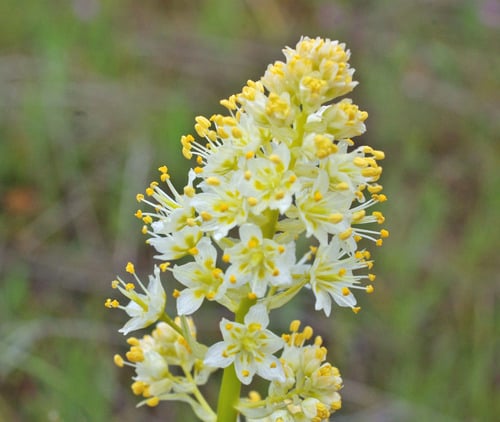
Toxicoscordion paniculatum
Foothill deathcamas
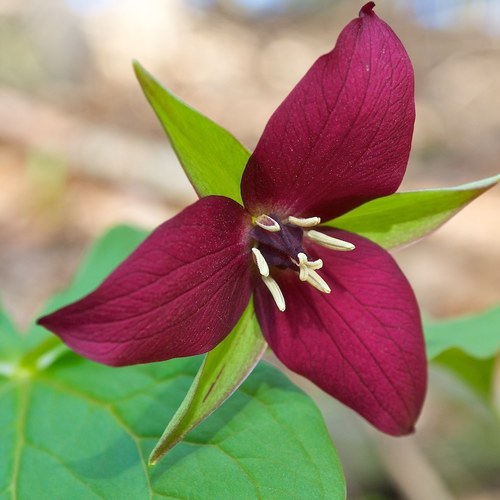
Trillium erectum
Beth root, Stinking Benjamin, Purple trillium, Birthroot, Red trillium
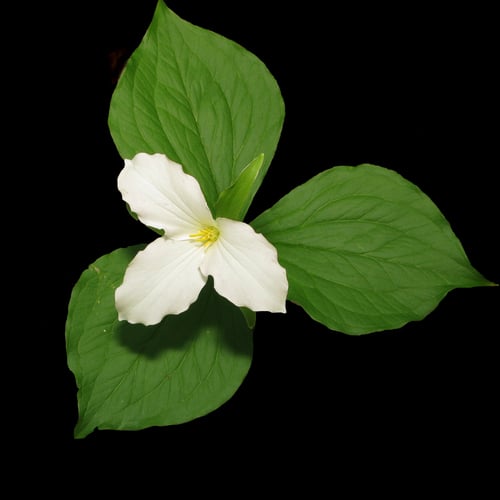
Trillium grandiflorum
White trilium, Wake robin, White wake robin, Grand trillium, Showy trillium, Large-flowered trillium
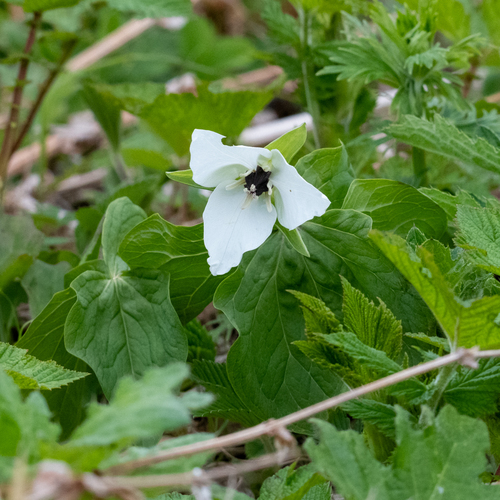
Trillium kamtschaticum
Trillium ovatum
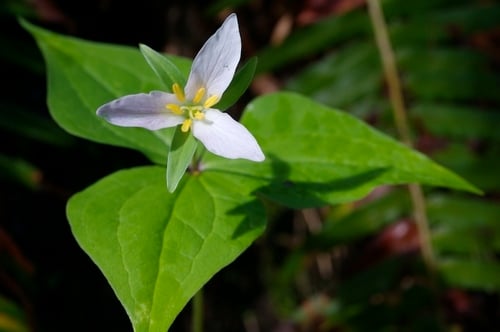
Wakerobin, Western trillium, Pacific trillium
Trillium petiolatum
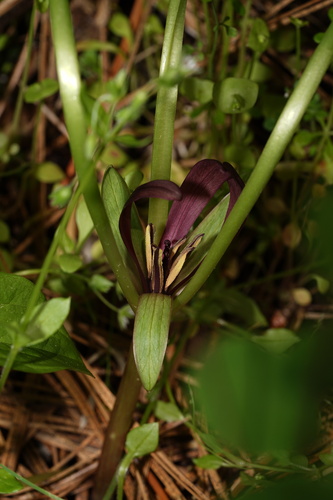
Idaho trillium, Purple trillium, Round-leaved trillium