Trillium kamtschaticum
Pall.
iNaturalist· cc-by-nc
(c) Carolyn Stewart, some rights reserved (CC BY-NC)
iNaturalist· cc-by-nc
(c) Natalya Vilyaeva, some rights reserved (CC BY-NC)
iNaturalist· cc-by-nc
(c) Natalya Vilyaeva, some rights reserved (CC BY-NC)
Summary
Source: WikipediaA compact perennial growing 30cm tall. Hardy to UK zone 5. Flowers appear June to July with seeds ripening in August. Hermaphroditic flowers develop on plants tolerating sandy, loamy, or clay soils with good drainage across mildly acidic to mildly alkaline pH. Grows in deep woodland shade, partial shade, or full sun while preferring moist conditions.
Description
A bulb plant. It grows 35-50 cm high. It has a stout rhizome or underground stem which is short. The stems occur in clumps. The leaves do not have leaf stalks. The leaves are broad and rounded. They are 10-17 cm long by 7-17 cm wide. The fruit stalk is 1.5-4 cm long. The flowers are 3-5 cm wide. They are white and green. The fruit is a berry which is round and 1.8-2.8 cm across.
Edible Uses
The fruit is edible, though no further details are recorded.
Medicinal Uses
The root contains steroidal saponins, which have hormonal effects on the body. These saponins are being used in gynaecological and obstetric medicine.
Distribution
It is a temperate plant. In China it grows near the edges of forests in moist places between 500-1400 m altitude. It suits hardiness zones 5-9.
Where It Grows
Asia, Australia, China, Japan, Korea, North America, Russia, Siberia, USA,
Cultivation
Prefers a deep well-drained woodland or humus-rich soil in a somewhat shady position that remains moist in the summer. Prefers a neutral to slightly acid soil. Grows well in open woodland. Succeeds in deep shade. Succeeds in a sunny position if the soil does not dry out. Any transplanting is best done whilst the plants are in flower. Plants can flower in two years from seed. Members of this genus are rarely if ever troubled by browsing deer or rabbits, though slugs are very fond of the leaves.
Propagation
Seed is best sown in a shaded cold frame as soon as it is ripe. Stored seed should be sown in late winter or early spring. Germination usually occurs within 1–3 months at 15°C, though some reports indicate seeds produce a root after the first cold stratification but no shoot until after a second winter; others suggest germination can take up to 3 years. Seedlings are prone to damping off and must be watered carefully with good air circulation. Young plants should be overwintered in a cold frame in their first year, then planted out in late spring. Pots must not become too dry or too wet. Divide with care when plants die down after flowering. Larger divisions can go directly into permanent positions; smaller divisions are best potted up and grown on in light shade in a greenhouse or cold frame until establishing well, then planted out the following spring.
Other Uses
None known.
Notes
There are about 46 Trillium species. Also put in the family Trilliaceae.
Also Known As
Emawri, Ji lin yan ling cao
References (4)
- Chen Xinqi, Liang Songyun, Xu Jiemei, Tamura M.N., Liliaceae. Flora of China. p 24
- Cundall, P., (ed.), 2004, Gardening Australia: flora: the gardener's bible. ABC Books. p 1430
- Plants for a Future database, The Field, Penpol, Lostwithiel, Cornwall, PL22 0NG, UK. http://www.scs.leeds.ac.uk/pfaf/
- Williams, D., 2017, Ainu Ethnobiology. Contributions in Ethnobiology. Society of Ethnobiology. p 114
More from Melanthiaceae
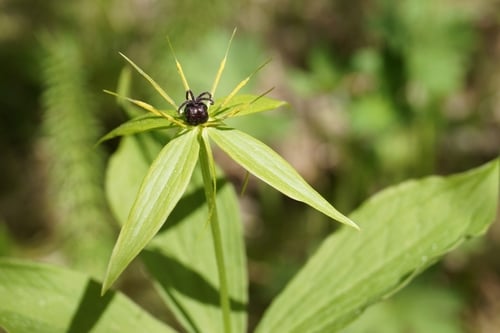
Paris verticillata
Sakkannamul
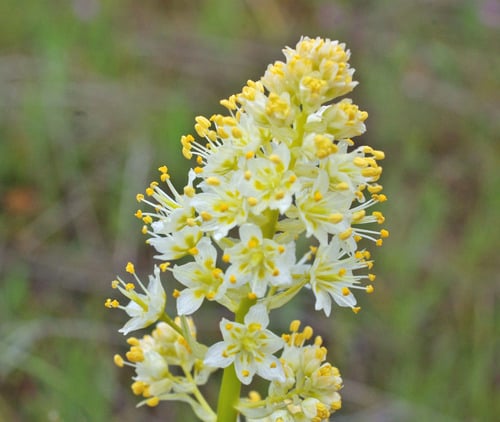
Toxicoscordion paniculatum
Foothill deathcamas
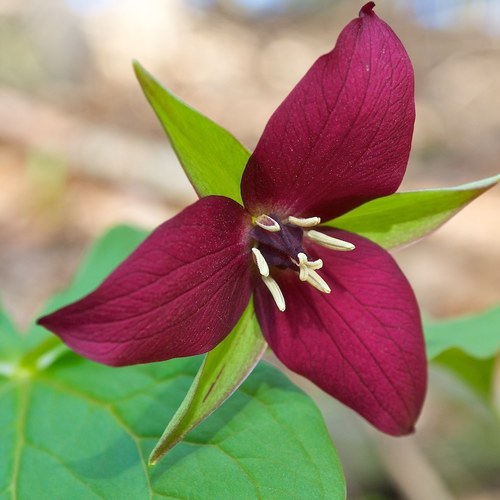
Trillium erectum
Beth root, Stinking Benjamin, Purple trillium, Birthroot, Red trillium
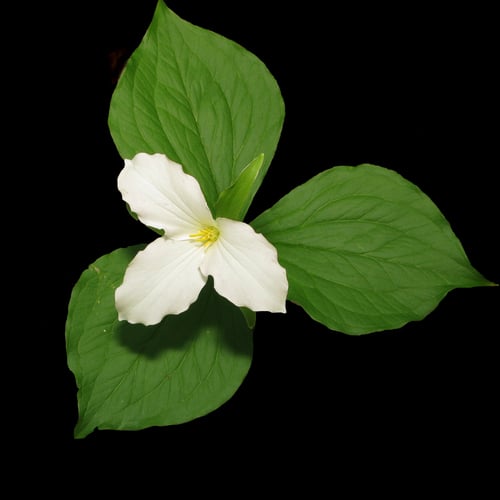
Trillium grandiflorum
White trilium, Wake robin, White wake robin, Grand trillium, Showy trillium, Large-flowered trillium
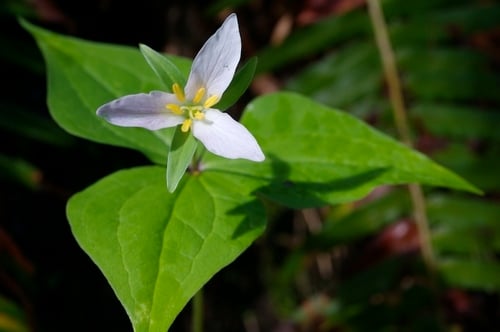
Trillium ovatum
Wakerobin, Western trillium, Pacific trillium
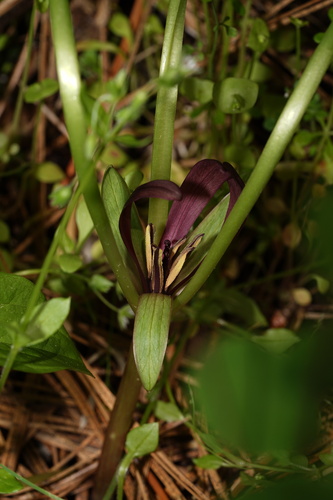
Trillium petiolatum
Idaho trillium, Purple trillium, Round-leaved trillium