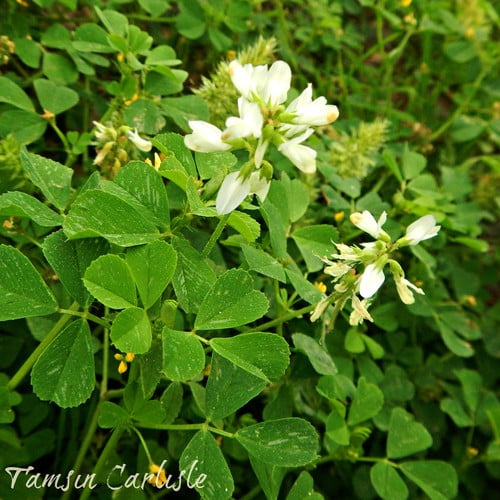
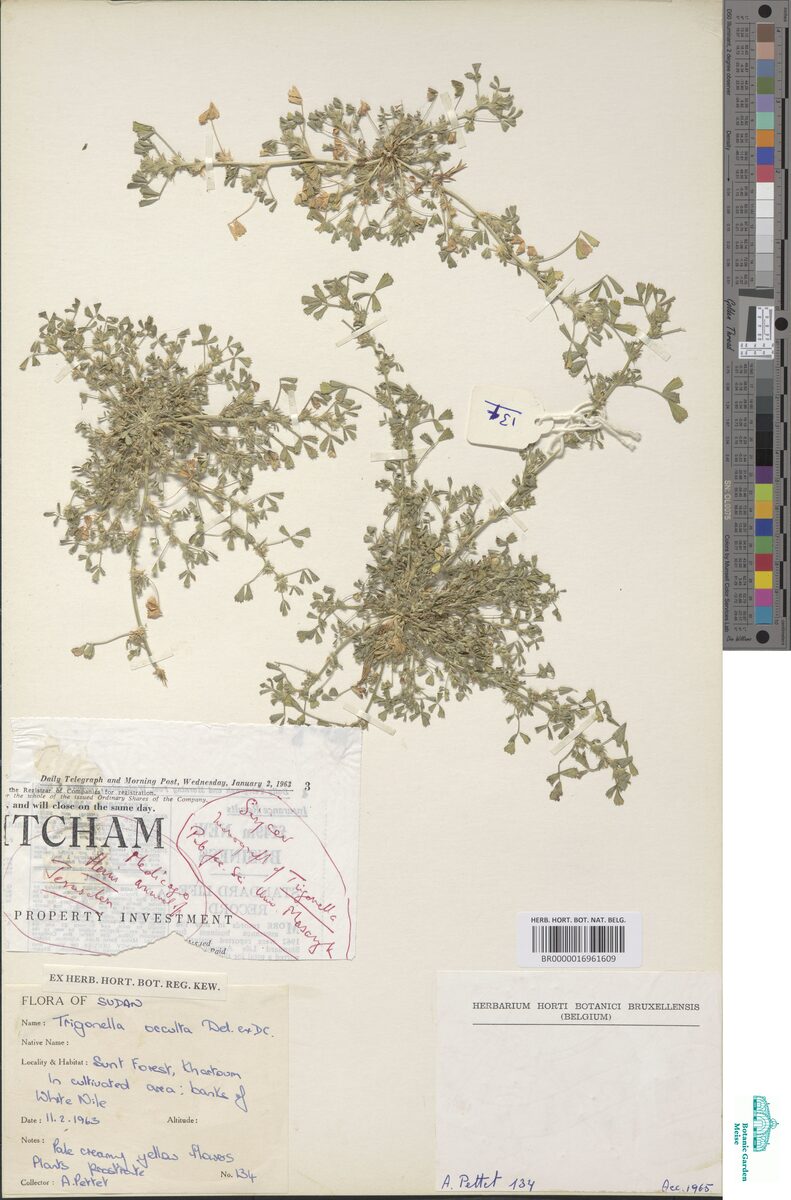
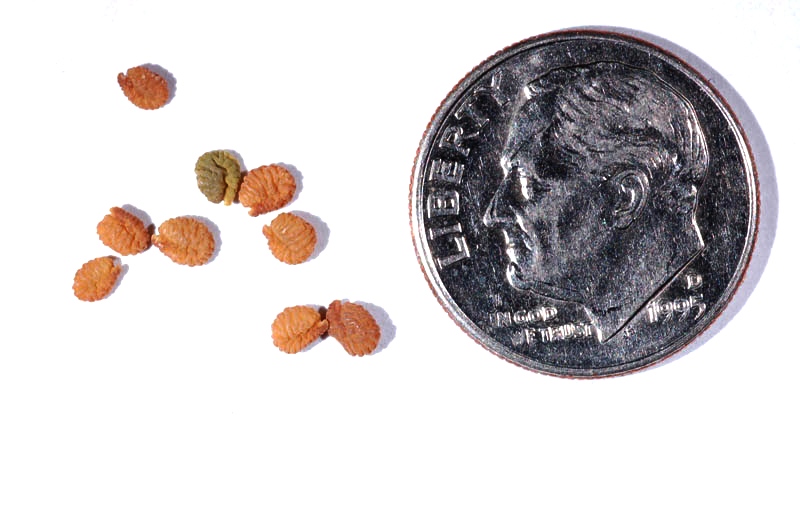
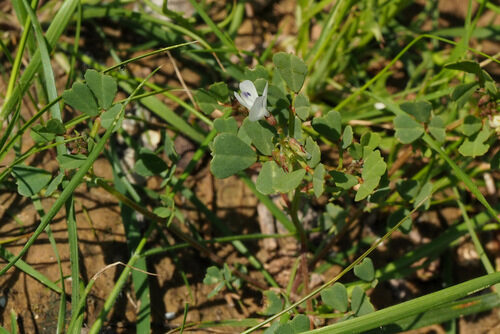
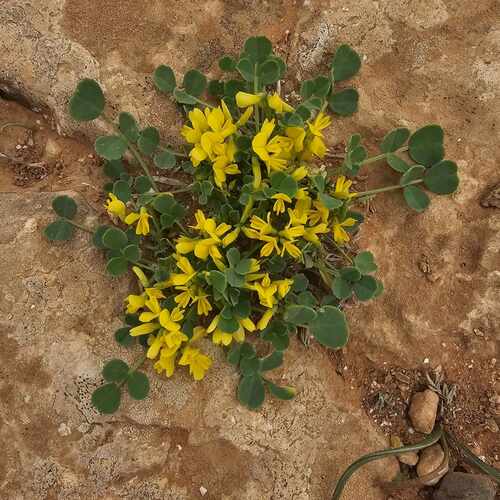
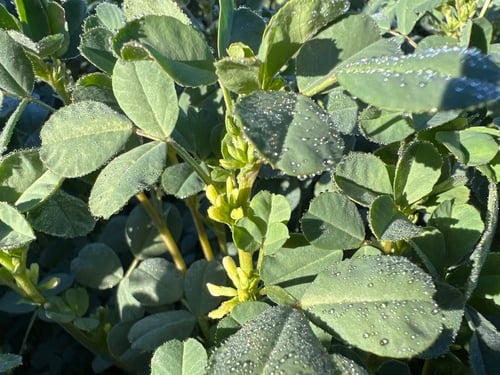
Trigonella ornithopodioides
(L.) Lam. & DC.
Bird’s Foot Fenugreek
gbif· cc-by-nc
GBIF
gbif· cc-by
Royal Botanic Gardens, Kew
gbif· cc-by
Meise Botanic Garden
Description
A herb. It can grow each year from seed or keep growing for a few years. It grows 20 cm tall.
This description is brief — help expand it
Edible Uses
The dried leaves may be used as a flavouring and as a substitute for fenugreek, though caution is advised.
Traditional Uses
The dried leaves may have been used as a substitute for fenugreek.
This uses section is brief — help expand it
Known Hazards
Caution advised with leaf use.
Distribution
It is a temperate plant. It grows in dry sandy places. It is usually near the coast. It needs to be in a sunny position. It can tolerate conditions near the coast.
Where It Grows
Africa, Australia, Britain*, Denmark, Europe, North Africa, Tasmania,
Notes
There are about 80 Trigonella species.
Synonyms
References (4)
- Curtis, W.M., 1956, The Students Flora of Tasmania Vol 1 p 147
- J. B. P. A. M. de Lamarck & A. P. de Candolle, Fl. franc. ed. 3, 4(2):550. 1805
- Lazarides, M. & Hince, B., 1993, Handbook of Economic Plants of Australia, CSIRO. p 241
- Mabey, R., 1973, Food for Free. A Guide to the edible wild plants of Britain, Collins. p 138