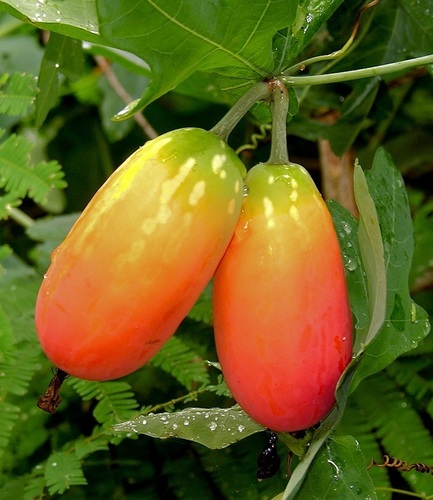
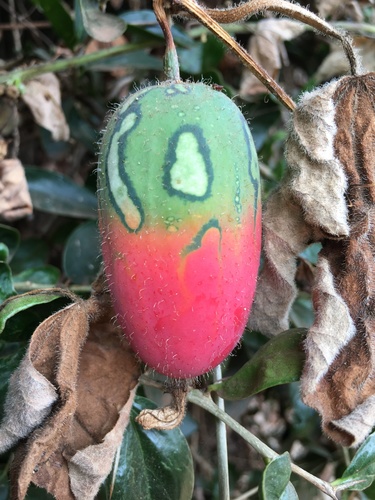
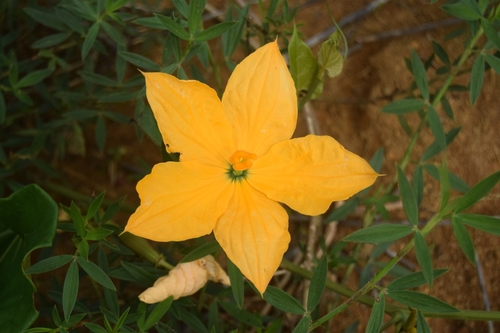
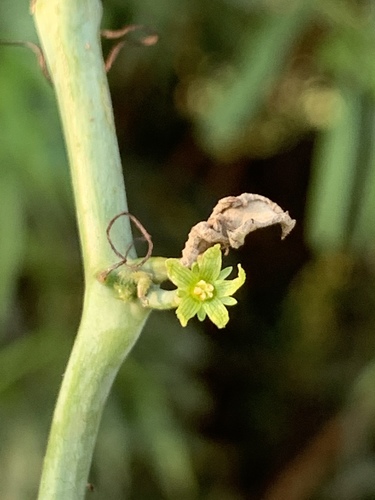
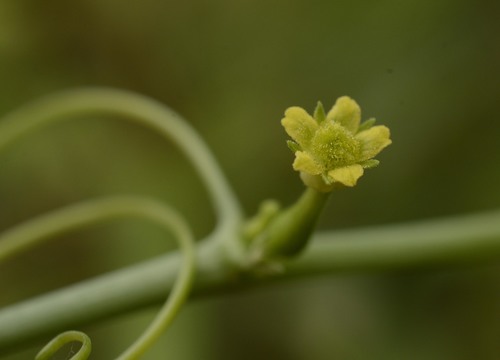
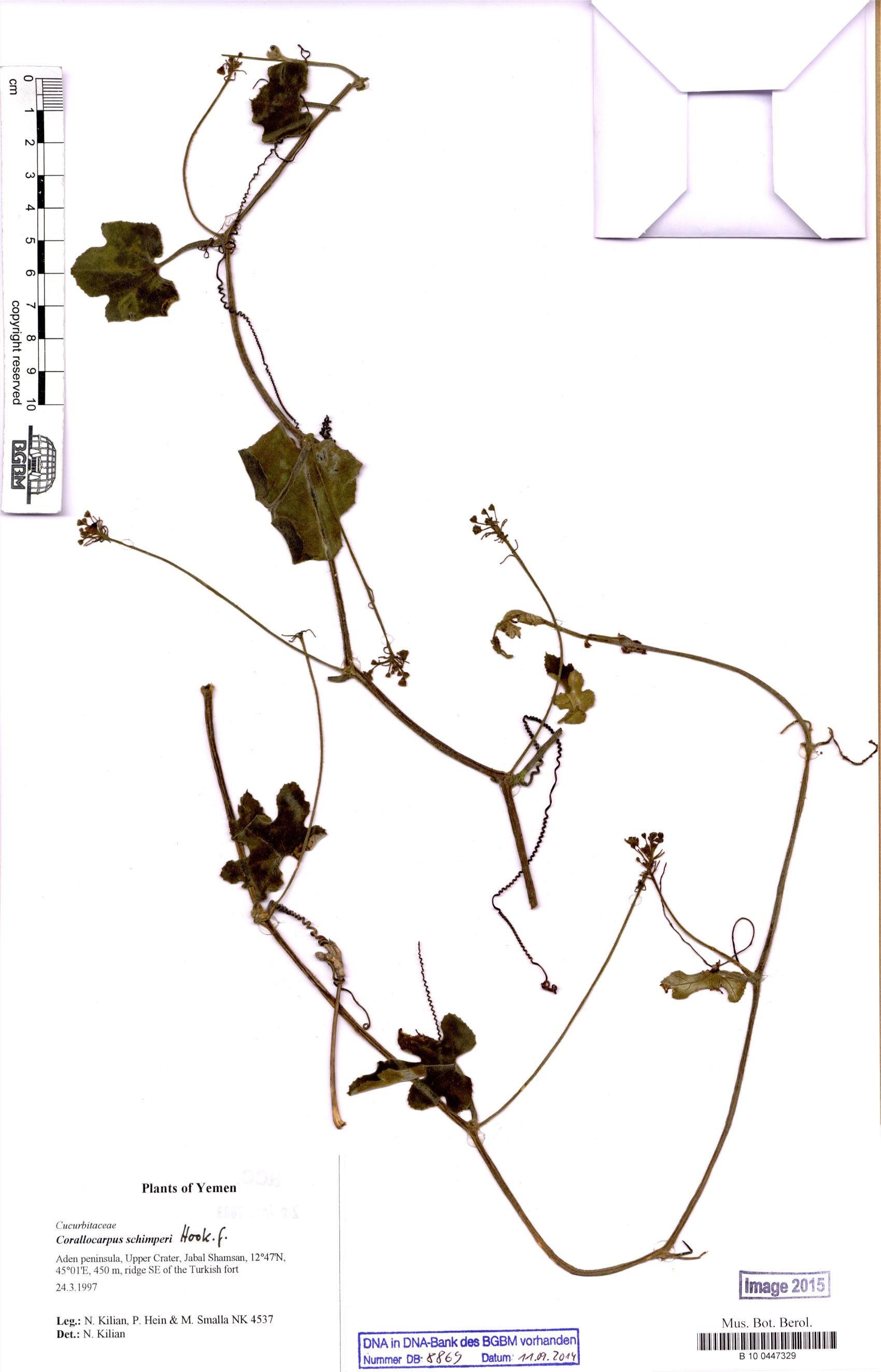
Trichosanthes multiloba
Miq.
gbif· cc-by-sa
GBIF
Summary
Trichosanthes multiloba is a fast-growing perennial climber, frost tender, flowering July to September. Monoecious with both male and female flowers on the same plant, it is pollinated by insects. Grows in light sandy, medium loamy, and heavy clay soils with good drainage and mildly acidic to basic pH. Requires full sun and prefers moist soil.
Description
A pumpkin family plant. It is a climber. Flowers are separately male and female.
This description is brief — help expand it
Edible Uses
An edible starch is obtained from the root, though it requires leeching. The root is harvested in autumn, cut into thick slices and soaked in water for 4–5 days, with the water changed daily, until the root disintegrates and can be mashed into a fine pulp. It is then steamed into cakes or used for making dumplings. The starch can also be mixed with wheat or rice flour to make crackers, dumplings, noodles and similar preparations.
Traditional Uses
The starchy root, is peeled, cut into slices, soaked in repeated changes of water for five days until they disintegrate, and then mashed to a pulp which is made into steamed cakes. The pulp of the fruit is also eaten.
Medicinal Uses
The plant has antitussive, astringent, diuretic, febrifuge and tonic properties.
Distribution
It is a temperate plant. It occurs between 600-1,800 m above sea level in the Himalayas. It is damaged by frost.
Where It Grows
Asia, China, Himalayas, Indochina, Japan, SE Asia, Vietnam,
Cultivation
Requires a rich well-drained soil and plenty of moisture in the growing season. This species is not winter hardy in Britain and usually requires greenhouse cultivation. However, it may be possible to grow it as a spring-sown annual in a very warm sheltered bed outdoors. Closely related to T. palmata, and possibly no more than a form of that species, it differs only in its fruit.
Propagation
Sow seed in March into pots in a warm greenhouse using a rich soil, placing 2–3 seeds per pot and thinning to the strongest plant. Grow on quickly and plant out after the last expected frosts, providing protection such as a frame or cloche until the plants are establishing well.
Other Uses
Oil from the seed is used for lighting.
Synonyms
References (4)
- Lim, T. K., 2015, Edible Medicinal and Non Medicinal Plants. Volume 9, Modified Stems, Roots, Bulbs. Springer p 82
- Plants for a Future database, The Field, Penpol, Lostwithiel, Cornwall, PL22 0NG, UK. http://www.scs.leeds.ac.uk/pfaf/
- READ,
- World Checklist of Useful Plant Species 2020. Royal Botanic Gardens, Kew