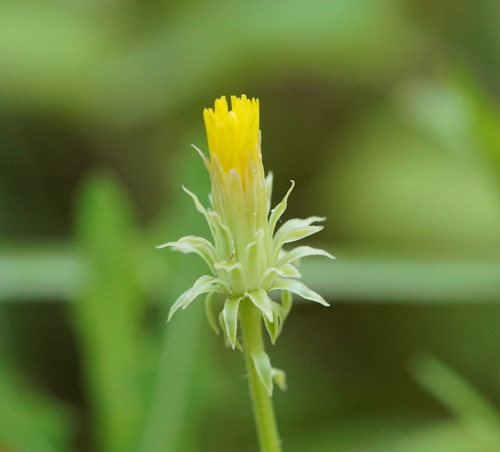
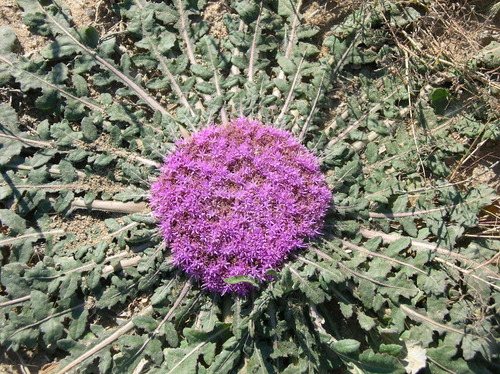
Tragopogon crocifolius
L.
iNaturalist· cc-by
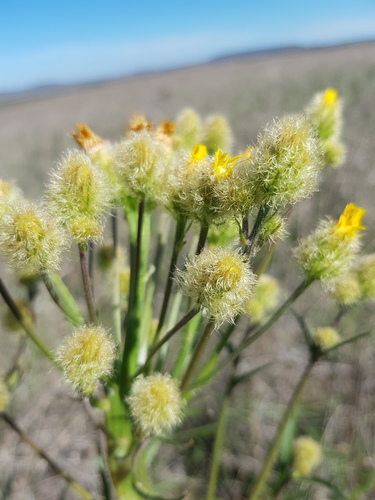
(c) Todd Boland, some rights reserved (CC BY)
iNaturalist· cc-by
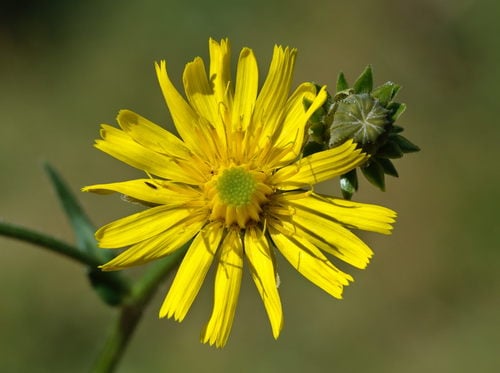
(c) Todd Boland, some rights reserved (CC BY)
iNaturalist· cc-by-nc
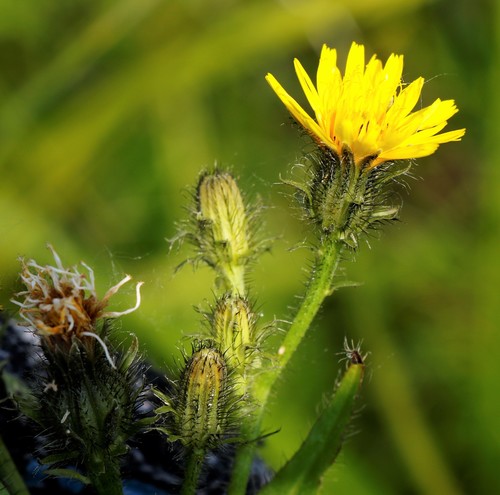
(c) Axel Albano, some rights reserved (CC BY-NC)
Summary
Source: WikipediaAnnual or biennial reaching 80 cm tall with hermaphrodite flowers appearing in July. Tolerates light sandy, medium loamy, and heavy clay soils with good drainage. Grows in mildly acidic to basic soils but requires full sun and consistently moist conditions.
Description
A herb. It is like salsify but the leaves do not widen much at the base. The flower heads are violet with the centre yellow.
This description is brief — help expand it
Edible Uses
The root can be cooked and eaten. Leaves can be eaten raw or cooked.
Traditional Uses
The leaves are eaten boiled in soups or raw in salads. They are seasoned with oil and salt.
This uses section is brief — help expand it
Medicinal Uses
None known.
Distribution
It is a Mediterranean climate plant. It grows on grassy and stony habitats in the Mediterranean.
Where It Grows
Africa, Egypt, Europe, France, Greece, Italy, Mediterranean, North Africa, Portugal, Sicily, Spain,
Cultivation
Succeeds in ordinary garden soils, including heavy clays.
Propagation
Sow seed in spring directly in situ. Water in well if the weather is dry.
Other Uses
None known.
Notes
There are about 50 Tragopogon species.
References (7)
- Blamey, M and Grey-Wilson, C., 2005, Wild flowers of the Mediterranean. A & C Black London. p 464
- Hedrick, U.P., 1919, (Ed.), Sturtevant's edible plants of the world. p 651
- Lentini, F. and Venza, F., 2007, Wild food plants of popular use in Sicily. J Ethnobiol Ethnomedicine. 3: 15
- Nebel, S., Pieroni, A. & Heinrich, M., 2006, Ta cho`rta: Wild edible greens used in the Graecanic area in Calabria, Southern Italy. Appetite 47 (2006) 333–342
- Pasta, S., et al, 2020, An Updated Checklist of the Sicilian Native Edible Plants: Preserving the Traditional Ecological Knowledge of Century-Old Agro-Pastoral Landscapes. Frontiers in Plant Science. Volume 11|Article 388
Show all 7 references Hide references
- Plants for a Future database, The Field, Penpol, Lostwithiel, Cornwall, PL22 0NG, UK. http://www.scs.leeds.ac.uk/pfaf/
- Tardio, J., et al, Ethnobotanical review of wild edible plants in Spain. Botanical J. Linnean Soc. 152 (2006), 27-71